
The Thanpyarkan oil Refinery Project, which will process two million tons of crude oil from the China-Myanmar crude oil pipeline, is being implemented in collaboration with Chinese energy organizations, said Union Minister for Energy U Ko Ko Lwin.
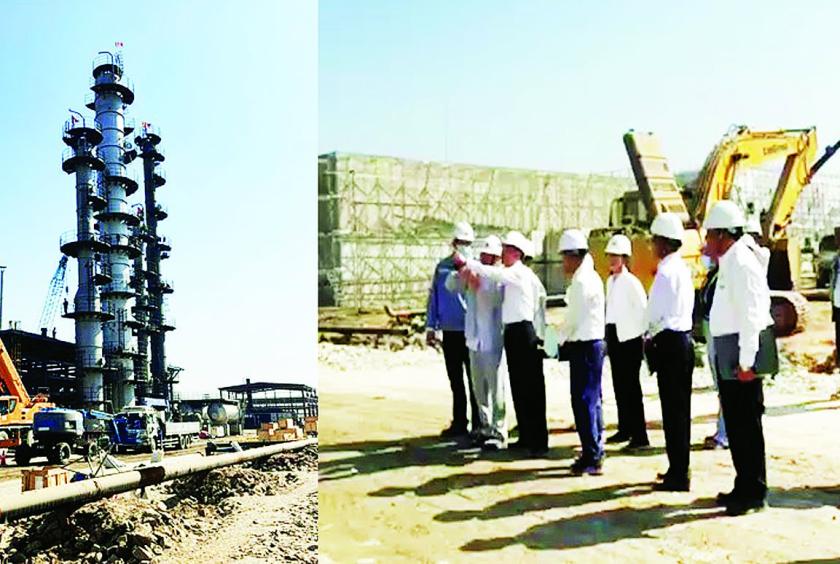
On January 21, Union Minister for Energy U Ko Ko Lwin inspected the ongoing projects at the Than Lyin Refinery along with officials from the departments and joint ventures under the ministry.
During the inspection, the Managing Director of the Myanmar Petrochemical Industry, the plant manager and officials explained the status of the new plant construction and the arrival and installation of equipment.
In response to the presentations, the Union Minister said that it is necessary to focus on completing the factory construction work within the specified time frame. It is necessary for responsible officials at all levels to supervise the installation of equipment to meet the specified standards. In order to avoid environmental damage and to make it economically viable, technology will be used to convert by-products into products and produce value-added products.
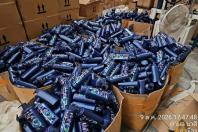
He added that by capturing carbon dioxide, which is a by-product of oil refining, and producing dry ice will save foreign exchange from importing dry ice, and the necessary equipment will be provided and installed. After the completion of this project, plans are being made to complete the construction of Phase 2 of the project as an oil refinery with a capacity of 3 million tons of crude oil per year by 2028. At the same time, the Thanpayarkan Oil Refinery Project, which will receive crude oil from the China-Myanmar crude oil pipeline and have a capacity of 2 million tons of crude oil, is being implemented in cooperation with state-owned energy organizations of China. Once these projects are completed, the domestic demand for motor oil will be fully met.
Then, the Union Minister and his team inspected the construction of the new factory and the installation of equipment, and gave instructions on how to ensure workplace safety.
Next, meeting with the Ministry of Energy staff at the Main Storage and Distribution Department (Dhanitaw) of the Myanmar Petrochemical Industry, the Union Minister ordered that in order to ensure the quality and quantity of imported motor oils, while the ministry is not yet able to produce its own, terminals and fuel bowsers should be inspected with standard scales, and the documents required for transportation should be checked for completeness and accuracy, and the capacity of fuel bowsers should be set to the international standard liter system.