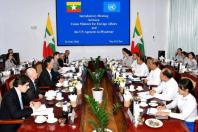

Senior General Min Aung Hlaing, Chairman of the State Administration Council (SAC), emphasized the need for systematic inspection and regulation to address rising prices of meat, fish, and essential food items during the Union Government Meeting held on December 3.
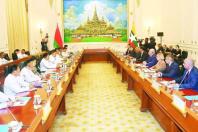
The meeting, attended by SAC Vice Chairman and Deputy Prime Minister Vice-Senior General Soe Win, Union Ministers, and senior officials, was joined via video conferencing by Chief Ministers of Nay Pyi Taw, regions, and states.
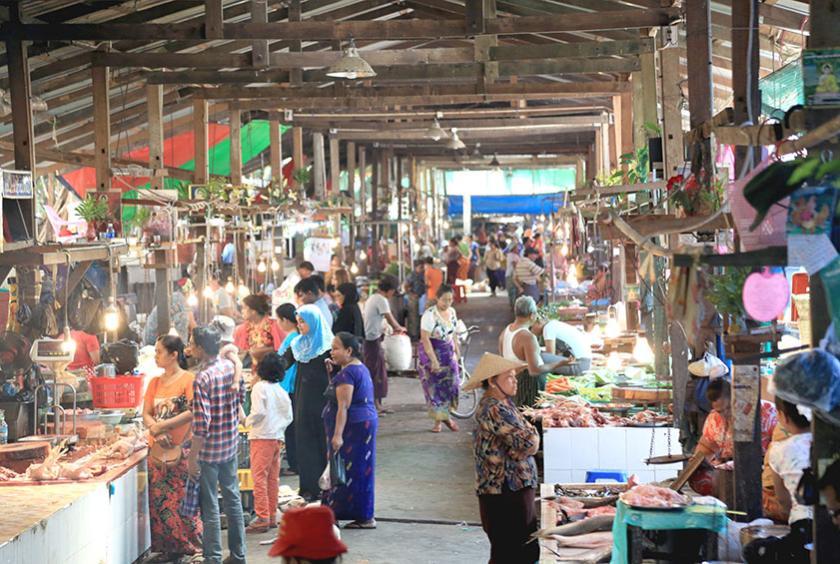
The Chairman highlighted the noticeable rise in prices of essential food items, urging producers to maintain reasonable profit margins and sell goods in larger quantities with lower profits to ease the financial burden on the public. He stressed the need for both Union and regional governments to regulate prices systematically, ensure fair pricing for basic food items, and work tirelessly with good intentions to stabilize the domestic market.
Additionally, he called for balancing national income and expenditures, ensuring food security across regions without dependency on government intervention. If regions and states are self-sufficient, there should be no cause for inflated prices of essential goods, he added.
The Senior General urged for enhanced production efforts to double the country's current export capacity. This requires creating employment opportunities, providing incentives for production businesses, and ensuring adequate input supplies for production. He stressed that production is indispensable for national growth and emphasized the need for market-oriented, high-quality goods.
The SAC Chairman also underscored the importance of accurate data and statistics. For instance, despite reports of rice surpluses, discrepancies exist between export data and actual shipments. He called for proper verification by relevant ministries to prevent inaccuracies and ensure that production figures align with ground realities.
Regarding economic and production-related ministries, he noted that while some departments deliver benefits, others lack success. Ministries responsible for unprofitable operations should reassess and halt non-viable projects. State-owned enterprises should contribute positively to the economy and operate with clear economic calculations, he added.
This comprehensive approach to stabilizing essential goods' prices and boosting production and exports aims to improve economic stability and public well-being across the country.