
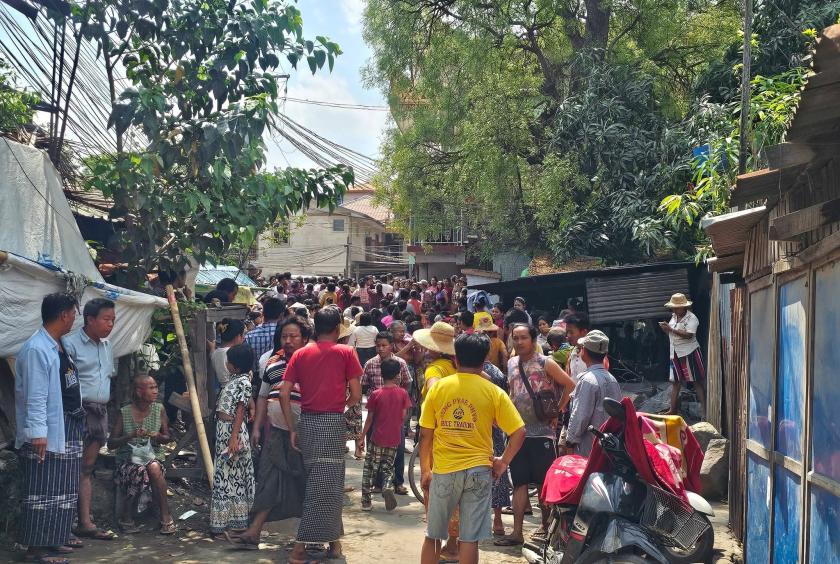
Residents of more than 200 houses in Mahaaungmyay Township, Mandalay, have reportedly submitted an appeal after receiving notices to demolish their homes, which have been designated as illegal squatters’ settlements.
The affected homes are located in the western part of Than Hlyet Hmaw Ward, Plot No. 405-A, where over 1,260 people currently reside. Authorities issued a notice ordering residents to clear and vacate the area by March 22.
According to U Aung Naing, a local ward administrator, the land originally belonged to a brick factory owner, U Nyo Yaung, who operated a brick-making business there. He later distributed the land to his workers and apprentices, whose families have lived there for generations—some for over 70 years.
“At that time, the land had little value and no one else wanted to live there, so the land grants were never renewed. Only in 2025 did the original owner’s family renew the land permits, which has now led to the residents being accused of trespassing and facing eviction,” he explained.
Although the land grant expired in 1969, it was not renewed, and the land remained classified as government property until 2025. In that year, six individuals, including Daw Than Than Nyunt, officially registered the land under their names. Residents argue that evicting families who have lived there for decades—many of whom are descendants of brick factory workers—is neither legally justified nor fair. They have submitted petitions to relevant authorities requesting compassion and reconsideration.
It is also reported that the residents were first verbally notified on December 24, 2025, and given 14 days to vacate. A second written notice was issued on March 15, 2026.
The notice states that plots No. 405-A and 405-B, covering a total of 11.72 acres, have been officially registered. It orders all individuals currently residing on the land without authorization to vacate and demolish their homes by March 22, warning that failure to comply will result in legal action and forced eviction in accordance with existing laws.