
The damaged parts of the Goteik viaduct are being rebuilt according to the original design, according to sources.
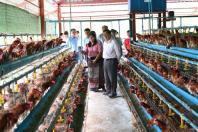
On September 15, Union Minister for Transport and Communications U Mya Htun Oo, along with officials from the ministry, inspected the Goteik Station and Goteik viaduct in Nawnghkio Township, northern Shan State.
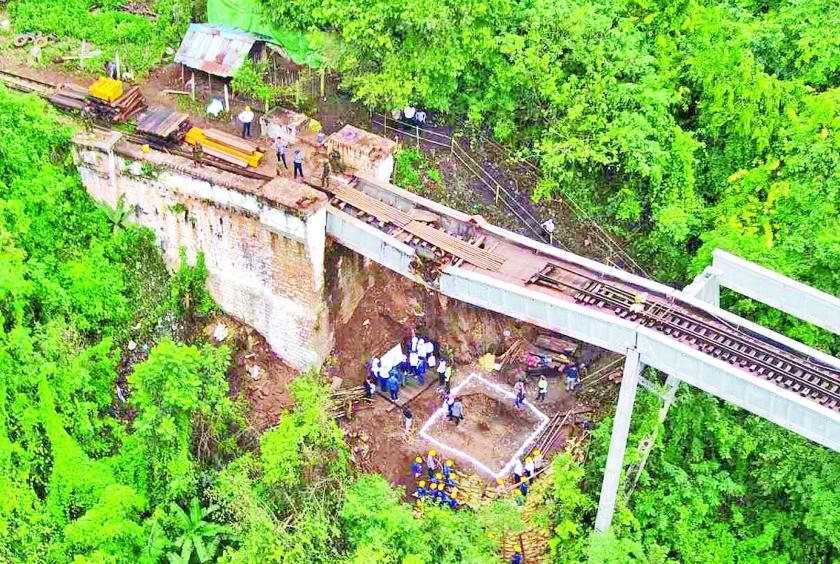
The Union Minister inspected the Goteik viaduct by railroad speeder via Nawnghkio Station in Nawnghkio Township, northern Shan State, and Myanma Railways officials explained that the bridge materials needed for the rapid repair of the bridge piers between the Lashio side pier and bridge pier No. 16 of the Goteik viaduct, which was damaged by explosives and sabotage by terrorists, have been completed, arrangements are being made to install temporary piers with temporary supporters, and plans to remove the damaged bridge parts and install new bridge piers.
Upon presentation, the Union Minister stated that the bridge is a historical heritage and that it should be rebuilt according to the original design, completed on time and according to the schedule, and that there should be safety at work. He inspected the railway tracks, concrete slabs, and areas where mines were planned to be detonated by terrorists in the 350-foot tunnel adjacent to the bridge.
Then, he examined rare documentary photos from the beginning of the construction of the Goteik viaduct, which are kept separately at the Goteik Station, and met separately with the station staff, the engineers working on the bridge renovation, and the staff of the departments and organizations working in Nawnghkio.
The Goteik viaduct is a bridge built between Nawnghkio and Kyaukme in northern Shan State on the Mandalay-Lashio railway line, spanning two mountain walls on either side of a ravine that is over 2,200 feet long and about 500 feet deep. The bridge was designed by Sir A.M.R Rendel & Co., of London, and built by the Pennsylvania & Maryland Bridge and Construction Co., of the United States in 1899. It was completed in 1900 and put into service in 1903. It has now been in use for over 120 years. The bridge is about 2,260 feet long, and the height of the bridge steel pillars is about 320 feet, so it is about 825 feet high from the ravine floor to the railway track surface, making it the tallest steel bridge in the world at that time. It constructed with 4,311 tons of iron and steel, and about one million rivets, and painstakingly constructed between steep mountain slopes, the steel bridge and the surrounding scenery that can be seen when riding the train are very famous and a stunning sight that Myanmar is proud of.
The bridge was recklessly detonated by the TNLA on August 24, according to state-run media, and now Myanma Railways engineers are rebuilding the damaged parts according to the original design.