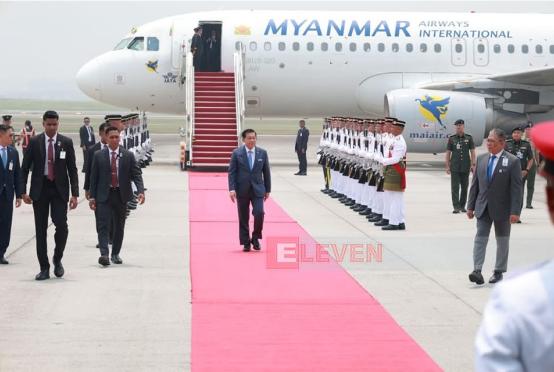

Myanmar’s State Security and Peace Commission Vice Chairman, Vice Senior General Soe Win, said the Myitsone Dam will be redesigned to withstand earthquakes stronger than the recent major Mandalay quake.
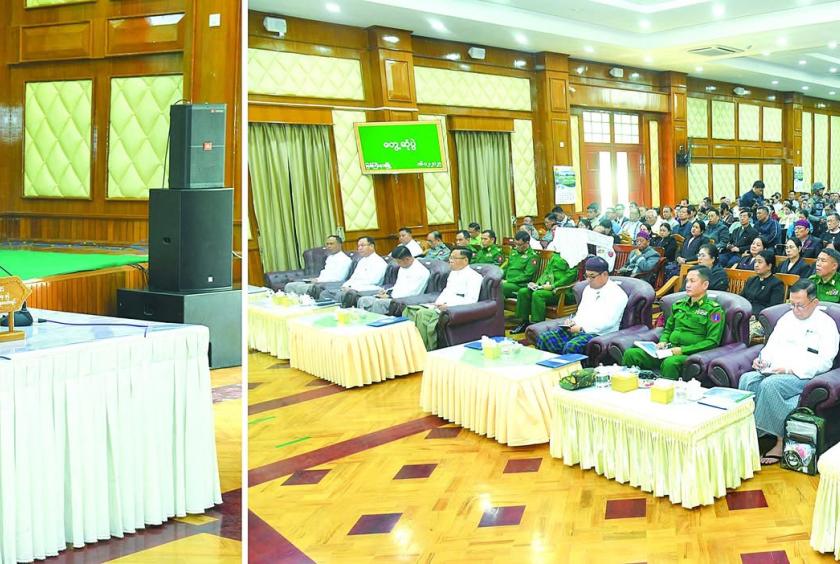
Speaking at a meeting with Kachin State government officials on December 16, he said the original dam design was calculated to endure a maximum credible earthquake (MCE) of magnitude 7.1, as the project site is about 25.4 kilometers from the Sagaing Fault. Experts from the Asia Charter Professional Engineer (ACPE) group will now reassess the design to further improve its seismic resistance.
He explained that the Myitsone hydropower project was initiated during his tenure as regional commander but was suspended near the final stage due to political instability and unforeseen circumstances. During consultations with local residents and religious leaders, concerns were raised about earthquake risks because the site lies on a seismic zone, prompting discussions on strengthening the dam’s earthquake-resistant design.
The project was originally planned as part of six hydropower projects along the Maykha and Malikha rivers, with a total planned capacity of 19,099 megawatts, including the 6,000-MW Myitsone project. The Ministry of Electric Power repeatedly discussed six proposal options on dam height and power output to preserve the symbolic significance of Myitsone and maintain the natural confluence of the Maykha and Malikha rivers. After screening the proposals, three economically viable and mutually beneficial options were shortlisted. The selected design is a Concrete Face Rock Fill Dam (CFRD) with an installed capacity of 5,600 megawatts.
Vice Senior General Soe Win noted that two nearby dams with earthquake resistance of up to magnitude 7.9 suffered no damage during the March 28, 2025 Mandalay earthquake, demonstrating the feasibility of safe dam construction.
He added that the project includes riverbed regulation works to help prevent annual flooding in Myitkyina and maintain stable water levels of about 10 meters year-round along the Ayeyawady River, enabling navigation from the delta to Kachin State. Sediments released from the riverbed could also be used as natural fertilizer for farmlands along the river.
If implemented successfully, the project would provide stable electricity, improve year-round inland water transport, and support economic development for both Kachin State and the country, he said.