
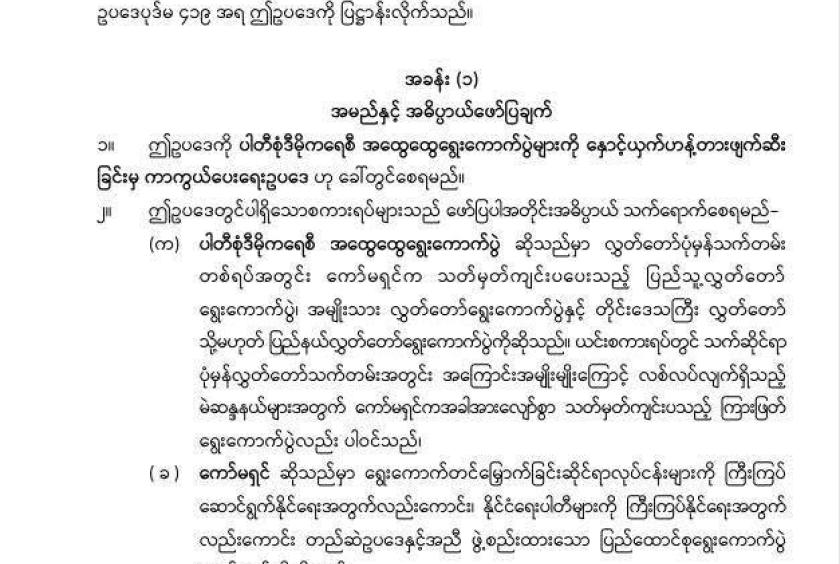
On July 29, the State Administration Council enacted a new law to prevent the disruption and obstruction of elections in Myanmar. The law sets out harsh penalties, ranging from a minimum of three years’ imprisonment to the death penalty, for those who interfere with election campaigns, voters, polling stations, or election officials.
The purpose of the law is to protect the democratic election process from disruption, ensure that political parties can campaign legally without obstruction, and guarantee that all eligible voters can cast their ballots freely and safely. It also aims to secure polling stations and allow election officials to carry out their duties without threats or interference.
Under the law, the Union Government must establish a Central Election Security Oversight Committee, which will be responsible for setting election security policies, overseeing regional and local security committees, and monitoring the activities of domestic and international groups that may affect election security. These regional committees will be formed at the levels of states, regions, districts, and townships, and will carry out duties under the supervision of the central committee.
The law allows election security committees to request protection for key election-related tasks, such as voter registration, setting up and inspecting polling stations, transporting and securing election equipment, and ensuring safety during campaign events. Candidates are also entitled to request security assistance during their campaigns. When such a request is made, the local security committee must notify the relevant local police force, which is then required to provide appropriate security. On election day, the committees must coordinate with the Myanmar Police Force in advance to ensure adequate security.
The law strictly prohibits any actions that aim to disrupt the election process. This includes obstructing or intimidating voters or candidates, making speeches or distributing materials to incite interference, and damaging or tampering with ballots, ballot boxes, voting machines, or other election equipment. It is also illegal to damage or destroy buildings used as election commission offices or polling stations.
Anyone found guilty of violating these provisions can face three to seven years in prison and fines. Those who commit such offenses as part of a group may face five to ten years in prison and additional fines. If the offense results in someone’s death, those involved may face the death penalty or life imprisonment. The same penalties apply to anyone who aids, encourages, or conspires to commit such crimes.
Prosecution under this law requires prior approval from the relevant election security committee. The law also states that, regardless of what may be written in other existing laws, offenses related to election disruption must be prosecuted under this new law alone.