
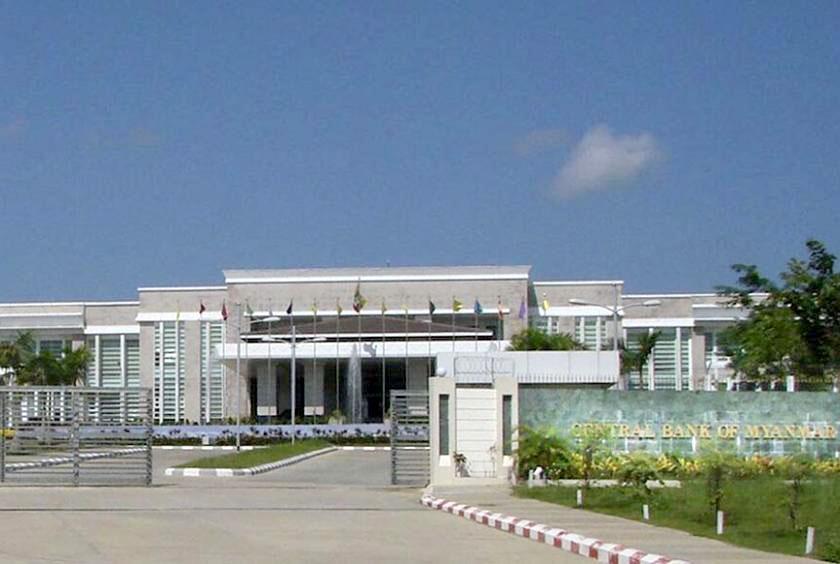
Inflation rates in Myanmar are increasing at a reasonable rate and the increase in the value of imports is not concerned with the increase in wages, the increase in the amount of currency and the increase in demand, but due to the increase in exchange rates, which should be valued in the calculation of the value of imports, said Dr Lin Aung, vice governor (2) of the Central Bank of Myanmar (CBM).
Due to the high trade deficit, the demand for foreign currency has increased, and the exchange rate has increased, causing the commodity prices to rise. This is due to the increase in the consumer price index. If developing countries, including Myanmar, take the method of raising interest rates to reduce the rate of inflation, it will affect the country's economic development due to the country's weak macroeconomic base. Therefore, developing countries did not raise interest rates. In the same way, in Myanmar, there was no need to increase the interest rate because it was necessary to encourage economic growth. However, depending on the country's economic growth, the CBM will continuously monitor and adjust interest rates as necessary, he said.
Since the financial condition of the banking sector has improved after October 2022, the minimum reserve ratio that must be kept in Myanmar Kyat in banks has been increased from 3% to 3.5% in order to indirectly control the inflation rate. In May 2023, this matter was carried out, and on the other hand, for the benefit of the banks, the banks have deposit accounts kept at the central bank. Since October 2022, interest has been paid on surplus private money that exceeds the minimum private money ratio that must be kept in account deposits. The financial circulation of banks is currently good and restrictions on withdrawals have been eased, he said.
In the fourth quarter of the 2022-2023 FY, Myanmar's average inflation rate rose to 27.51 percent between January and March 2023, according to a statement from the Central Statistics Organization.
During the first quarter of the 2022-2023 FY, Myanmar's annual rate of inflation was 18.45 percent, and year-on-year inflation was 18.46 percent. In the second quarter, the annual rate of inflation was 27.98 percent, and the year-on-year inflation was 28.04 percent. During the third quarter, Myanmar's annual rate of inflation was 34.97 percent, and the year-on-year inflation was 34.97 percent. The annual rate of inflation during the fourth quarter was 27.51 percent, and the year-on-year inflation was 27.50 percent.
In November 2012, the Central Statistics Organization conducted a household income and consumption survey on a total of 32,669 sample households in 82 townships in order to calculate the change in the consumer price rate and inflation rate for the entire country.
However, at present, the inflation rate situation is being calculated using Myanmar's consumer price index and inflation rate based on the base year of 2017, according to the Ministry of Planning and Finance.