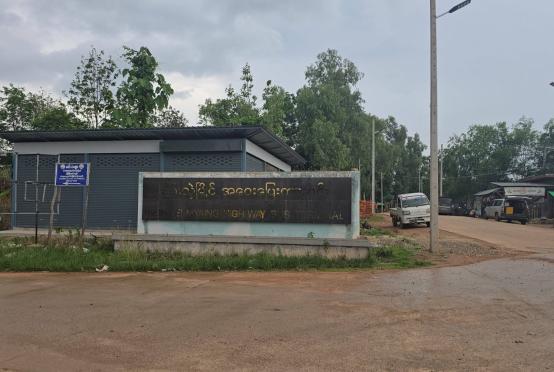

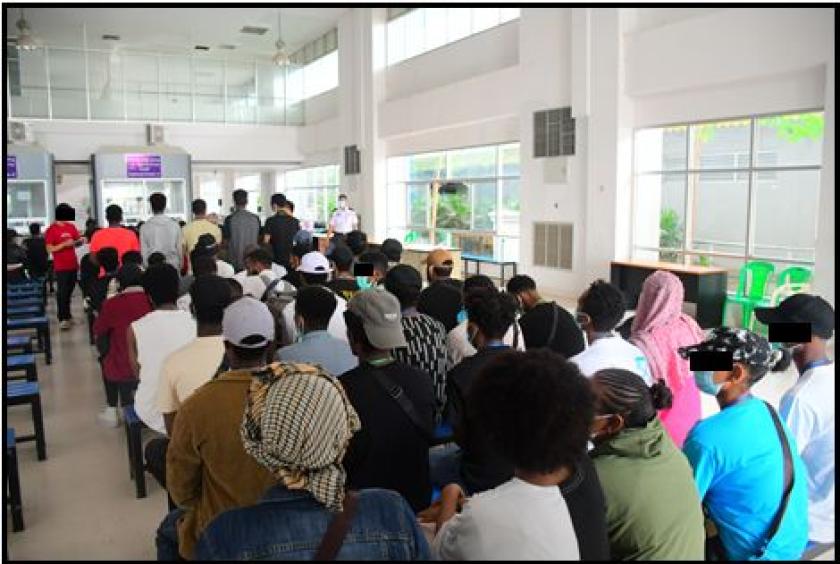
Myanmar authorities have deported 90 Ethiopian nationals involved in telecom fraud and transnational criminal activities, handing them over to the Ethiopian government via the Myanmar–Thailand Friendship Bridge No. 2 on May 14. An additional 11 foreign nationals were also detained on the same day for illegal entry through unofficial routes and are under investigation for potential links to similar crimes.
The transfer of the Ethiopian nationals was carried out in accordance with international law and humanitarian considerations. The operation was part of Myanmar’s broader effort to combat cross-border online scams and criminal networks, in cooperation with neighboring and international partners.
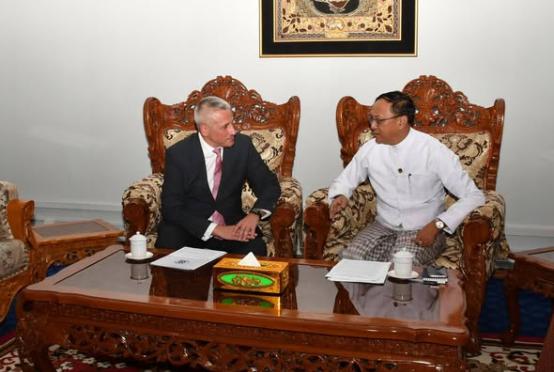
The deportation ceremony was attended by Karen State Minister for Social Affairs U Saw Tun Aung, Myanmar officials, Mr. Wendwosen Melkamu, Second Secretary at the Ethiopian Embassy to India, and representatives from the Thai Immigration Department in Tak District. Official documentation was formally handed over between respective authorities to complete the deportation process.
The operation is part of a continued crackdown on illegal activities, especially in border regions such as Myawaddy, Shwe Kokko, KK Park, and Kyauk Khet, where numerous foreign nationals have been found entering the country via unauthorized routes. The 11 newly detained individuals are currently being processed for repatriation, with their personal data and records being collected by an inter-agency task force.
Between January 30 and May 14, Myanmar intercepted and detained a total of 9,070 foreign nationals who had entered the country illegally. Of these, 8,222 individuals have already been repatriated through Thailand, and the remaining 848 are currently being held pending deportation. Authorities confirmed that all detainees are being held in safe and secure conditions.
The Myanmar government reaffirmed its commitment to investigating and taking action against illegal online scam operations within its borders. Efforts are ongoing, in collaboration with regional and international organizations, to dismantle criminal networks—particularly those engaged in online gambling, telecom fraud, and financial scams—that threaten the security and stability of the region.