
A lawmaker has urged the Myanmar government to introduce student loans to help financially disadvantaged students continue their university and higher education, but the Ministry of Education said no such scheme is currently planned.
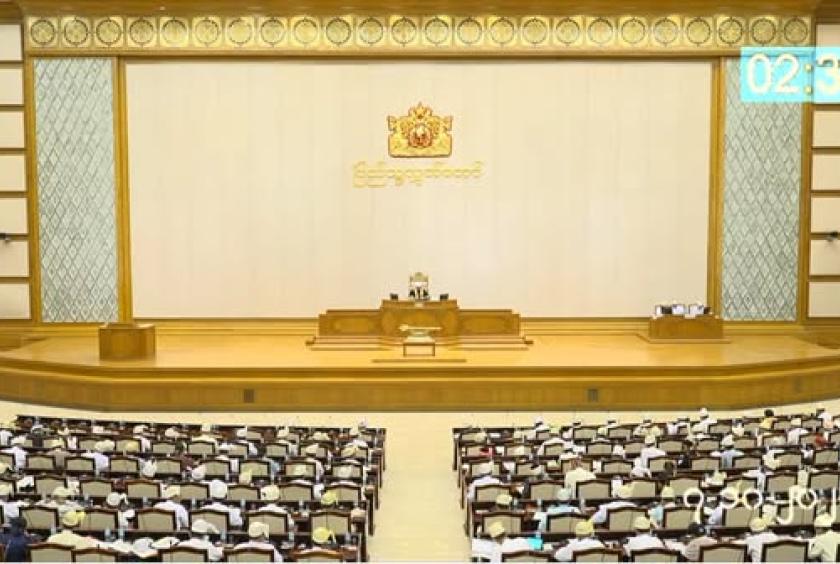
Ba Hmaw Township lawmaker U Thet Naing Oo raised the issue during a session of the People’s Assembly on Tuesday, saying many students who pass university entrance exams cannot continue their studies because their families cannot afford the costs.
He said 255,228 students sat the 2026 university entrance examination, with 133,673 passing. Among them, he said, many came from poor families who had made significant sacrifices to keep their children in school.
U Thet Naing Oo said a government-backed student loan scheme could help financially struggling families, allow talented young people to continue their education and strengthen the country’s human resources.
Deputy Education Minister Dr. Zaw Myint said the ministry currently provides stipends to students from genuinely poor families. Eligible first-year day-course students receive 30,000 kyats per month for 10 months each academic year, with support continuing until they obtain their first degree.
He said universities also offer distance-learning programmes, allowing students from disadvantaged backgrounds to work while pursuing higher education.
The ministry also provides food and accommodation for students attending education universities and colleges, who are later employed as teachers after completing their training.
Regarding student loans, Dr. Zaw Myint said the system was a useful long-term approach in which students repay loans based on their income after graduation and employment. However, he said only Singapore and Malaysia among ASEAN countries had successfully implemented comprehensive student loan systems, while several other countries were still developing theirs.
Myanmar currently has no plan to provide sufficient student loans for university students, he said, although the government continues to provide stipends to disadvantaged students attending day courses.
U Thet Naing Oo questioned whether the current 30,000-kyat monthly stipend was adequate under present economic conditions. He also rejected the argument that such programmes should only be introduced after the country becomes wealthier.
“If we wait until the country becomes rich to implement these programmes, all of us lawmakers might as well go home and sleep,” he said, arguing that parliament exists to address problems that need to be solved rather than wait for ideal conditions.
The lawmaker said potential difficulties with a student loan programme should be addressed rather than used as a reason to abandon the proposal.
Dr. Zaw Myint said he supported the lawmaker’s recommendation and that the ministry would consider whether such a system could be implemented in the long term.
He added that greater government support for education would depend partly on economic development, including increased agricultural production, exports, import substitution and foreign-exchange earnings.