
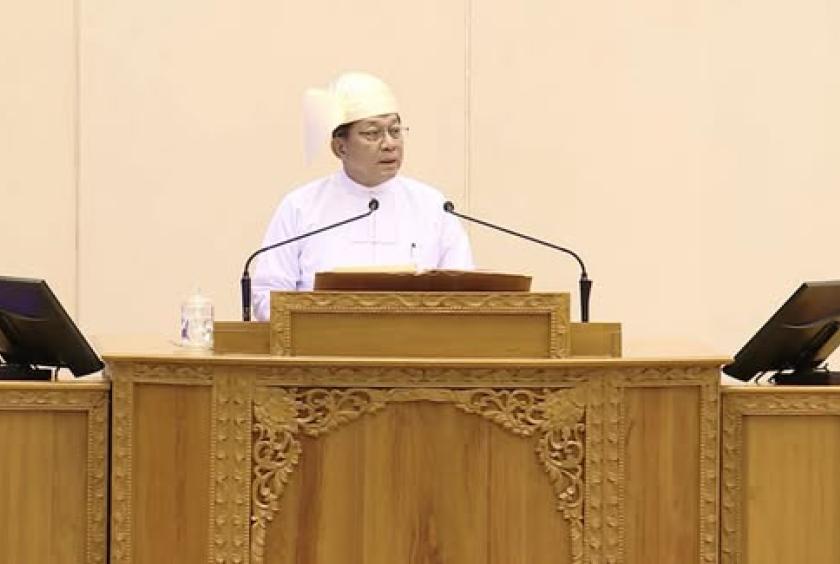
Nay Pyi Taw - President U Min Aung Hlaing announced that the new government successfully held peace talks with 13 ethnic armed organizations (EAOs) during its first 100 days in office.
The President made the remarks while delivering the government's 100-day policy address before the Union Parliament on July 31. During the speech, he outlined the administration's efforts to advance the peace process and promote national stability.
He said the government remains firmly committed to keeping the door to peace permanently open and continues to invite all ethnic armed organizations to engage in dialogue.
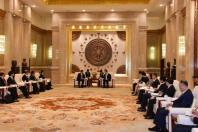
"Our government has always maintained that the door to peace will remain open. We continue to invite all ethnic armed organizations to hold discussions. We have extended invitations to both signatories and non-signatories of the Nationwide Ceasefire Agreement (NCA), without imposing any preconditions. As a result, we were able to hold discussions with 13 ethnic armed organizations," the President said.
President U Min Aung Hlaing also recalled that, on the day he took the oath of office, he had pledged that restoring peace and stability and achieving national development would be the government's top priorities.
He said that since assuming office, the administration has accelerated efforts to achieve these two key objectives: ensuring national peace and stability and promoting the country's development.
The President emphasized that achieving peace is essential for building a democratic and federal Union. He added that lasting peace and stability are prerequisites for improving the people's socio-economic well-being and strengthening the national economy.
"Peace is indispensable for building a democratic and federal Union. Only when the country enjoys peace and stability can we improve the livelihoods of our people and achieve sustainable economic development," he said.
The President said that section (1), (2) and (3) of the Union Agreement, which were negotiated and signed at the Union Peace Conference under the Nationwide Ceasefire Agreement (NCA), have been submitted to the Union Parliament for ratification in accordance with the NCA, and that 43 amendments to the 2008 Constitution of the Republic of the Union have also been sent to the Union Parliament.
"Therefore, I would like to strongly urge you to resolve the differences and demands you are facing peacefully through political means and not through armed means," the President said.
At present, all ethnic groups need to unite and build a new country together, and the strength of this unity will remain an invaluable historical legacy for future generations, the President said.
The President said that constructive discussions are ongoing with armed groups through the National Unity and Peacemaking Coordination Committee (NSPNC), and therefore, instead of demanding the impossible, it is necessary to negotiate what is possible and consistent with the modern system in order to achieve peace as soon as possible.
The responsibility to strive for lasting peace is not only the responsibility of the government, but also the responsibility of all ethnic people, including the government, the military, the parliament and political parties. The President urged the people and the representatives of the Pyidaungsu Hluttaw to cooperate to the best of their ability in achieving lasting peace throughout the country.