
India has called on all parties in Myanmar to make full use of the Nationwide Ceasefire Agreement (NCA) mechanism and engage in meaningful dialogue to achieve a transparent and sustainable peace based on democracy and federalism.
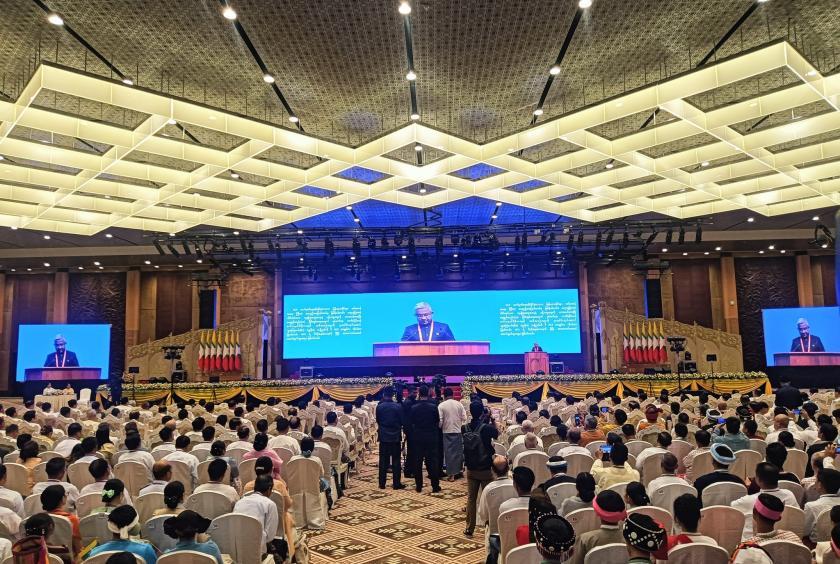
Delivering a felicitation address on behalf of the Indian Foreign Secretary and the Indian Ambassador to Myanmar, H.E. Shri Abhay Thakur emphasized India’s support for Myanmar’s peace process during the 10th anniversary ceremony of the NCA held at the International Convention Centre-1 in Nay Pyi Taw on October 15.
“We strongly urge both sides to make full use of the NCA mechanism and strive for a transparent and sustainable outcome based on democracy and federalism. The cessation of violence and the maintenance of peace and stability in Myanmar are of utmost importance to us,” Ambassador Thakur said.
He noted that India shares a 1,643-kilometer land border and a 1,060-kilometer maritime border with Myanmar, making peace and stability in the country vital for the region. “The conflict in Myanmar has a direct impact on us. Therefore, it is of utmost importance for us to ensure that violence ends and peace and stability are maintained,” he added.
The Indian Ambassador stressed that Myanmar’s peace process must be inclusive and built on compromise and political dialogue among all stakeholders. “The goal of a federal democratic republic can be achieved through dialogue and negotiations based on a free, fair, and credible democratic process,” he said.
He further expressed hope that the NCA would continue to promote inclusive dialogue without setting unrealistic preconditions, adding that peace in a diverse and resource-rich country like Myanmar can only be achieved through mutual compromise.
Describing the NCA as a turning point in Myanmar’s history, Ambassador Thakur said it represents a shared commitment among ethnic groups to put aside conflict and work towards a federal democratic framework for lasting peace. “The essence of the NCA must be further strengthened,” he said.
India welcomed the theme of this year’s anniversary, “Shaping the Future with Sustainable Peace through the NCA,” reaffirming that the agreement remains the only framework available to resolve Myanmar’s long-standing internal issues. “The future of Myanmar truly depends on the success of the NCA process,” the Ambassador stated.
Ambassador Thakur also highlighted India’s cooperation in sharing its federal experience through lectures and workshops covering legislative and executive powers, taxation, and revenue sharing between the Centre and the States. Discussions also included Schedule 6 of the Indian Constitution, which grants autonomy to certain ethnic regions in Northeast India.
He reiterated that India supports peace process led by Myanmar and a solution most suitable for its country and underlined Myanmar’s importance in India’s key foreign policy priorities, including the Neighbourhood First, Act East, and MAHASAGAR (Maritime Security and Growth for All in the Region) initiatives.
“India has always stood by Myanmar as a trusted neighbour and partner, sharing longstanding cultural, religious, and people-to-people ties,” Ambassador Thakur concluded.