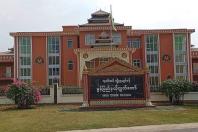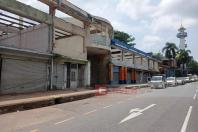

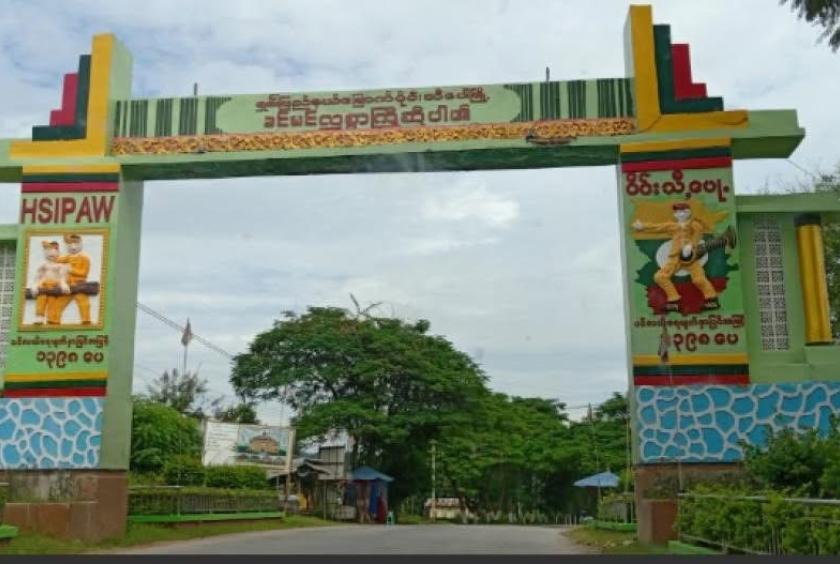
The Shan State Joint Action Committee (SSJAC) issued a statement on February 10 strongly condemning the replacement of the Shan symbol with a Palaung symbol at the entrance to Hsipaw town, Shan State (North).
The SSJAC statement stated that since February 7, 2025, the Shan symbol at the Hsipaw town entrance has been replaced with a Palaung symbol.
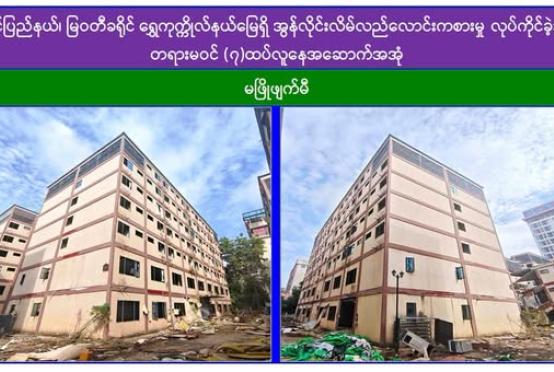
The SSJAC statement also mentioned that on August 7, 2023, the old palace wall of Sao Sek Han Fa, the most revered figure of the Shan people, in Selant Village, Muse Township, was destroyed by bulldozers.
The SSJAC statement said that at the time of the destruction of Sao Sek Han Fa's palace wall, Shan organizations took a peaceful approach by discussing and resolving the issue instead of resorting to military means to avoid ethnic conflict.
The SSJAC statement further stated that the TNLA has been carrying out similar actions in the past years in areas such as Mongyu region in Kutkai Township and Mongyin region in Nammatu Township, including the current replacement of the Shan symbol with a Palaung symbol at the Hsipaw town entrance.
The SSJAC stated that such undemocratic actions in northern Shan State disregard the wishes of the local people, disrespect the sovereign people, pursue only the interests of their own group, contradict the essence of democracy and the goals of the current revolution, and go against the peaceful coexistence of ethnic groups. Therefore, the SSJAC strongly condemns the TNLA's actions.
The Shan State Joint Action Committee (SSJAC) is formed by the Shan State Progress Party/Shan State Army (SSPP/SSA), the Shan Nationalities League for Democracy (SNLD), and the Sein Kyawt People's Militia.
Shan civil society organizations have also demanded that the TNLA maintain the original Hsipaw town entrance and stop committing human rights abuses against the local people.
The statements from Shan civil society organizations stated that according to the 2014 census, there are 135,363 Shan people living in Hsipaw Township, accounting for 79.889% of the urban population, and that various ethnic groups, including Bamar, Palaung, and Lisu, live peacefully in the area. The statements also said that Shan people and other ethnic groups have lived together in friendship since the time of the ancient Shan Sawbwas.
The Shan civil society organizations' statements stated that the TNLA's unilateral change of the Hsipaw town entrance to a form representing only one ethnic group without the consent of the local people could lead to the assumption that they are practicing colonialism.