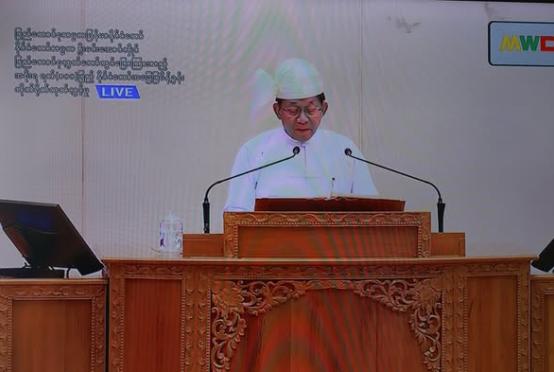

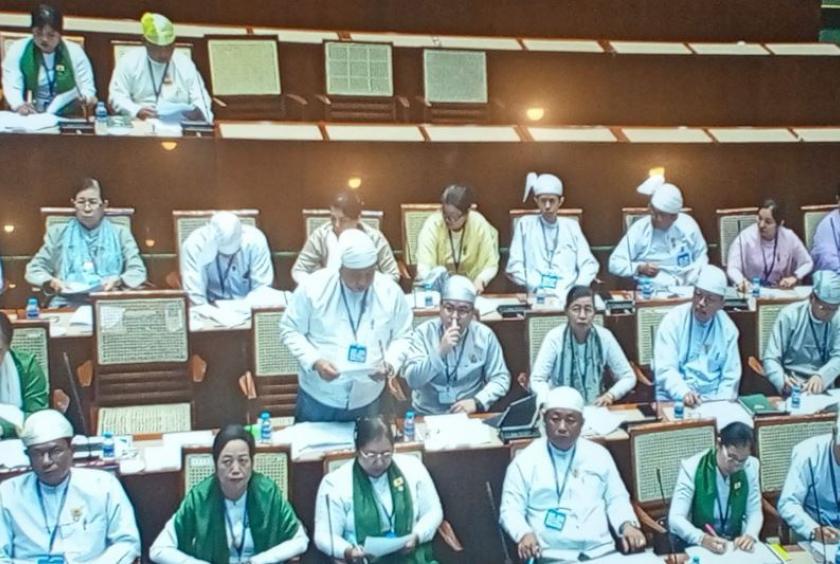
Kyauktada Township lawmaker U Thein Naing has called for comprehensive short-term and long-term measures to ensure a stable and sufficient electricity supply across Yangon Region during the fifth day of the second regular session of the third Yangon Region Hluttaw held on June 19.
During the session, U Thein Naing, the representative for Kyauktada Township Constituency No. 1, asked whether the Yangon Region Government had concrete plans to guarantee an adequate electricity supply both during the summer and over the long term.
He also inquired whether there were plans to accelerate the development of alternative energy sources such as solar power, wind power, and waste-to-energy projects by utilizing vacant land and the large volume of waste generated daily in Yangon. In addition, he asked whether power substations and transmission lines would be upgraded to improve the electricity distribution network, stabilize voltage, reduce transmission losses, and in which fiscal year such projects would be implemented.
The lawmaker noted that Yangon Region is Myanmar's economic hub, the country's most densely populated region, and home to the largest number of industrial zones, consuming nearly half of the nation's electricity.
He said the recurring power shortages, particularly during the summer months, and the reliance on rotating electricity outages have severely affected people's daily lives, education, healthcare, industrial production, and the overall economy. The unstable electricity supply has also discouraged foreign investment. Furthermore, the widespread use of diesel generators during blackouts has increased fuel consumption, resulted in unnecessary foreign exchange spending, raised production costs, and ultimately driven up consumer prices.
U Thein Naing questioned what strategic measures would be taken to narrow the gap between electricity demand and generating capacity during the annual summer peak. He also pointed out that relying on LNG-powered floating power plants during periods of high demand is only a temporary solution that comes with high operating costs.
Referring to the successful operation of a gas turbine plant in the Thilawa Industrial Zone, he suggested installing similar gas turbines in industrial zones in Yangon’s Northern and Eastern districts. Such projects, he said, would reduce the burden on the national power grid, allowing more electricity to be supplied to residential areas. He also recommended upgrading substations and establishing backup power systems to ensure a more reliable electricity supply for industries and businesses.
The lawmaker added that Yangon Region currently depends on electricity generated from hydropower, natural gas, and coal-fired power plants located far from the city. As electricity is transmitted over long distances, power losses occur, while damage to transmission towers caused by sabotage has also contributed to frequent outages.
Responding to the questions, Dr. Myo Thaw, Yangon Region Minister for Electricity, Energy, Industry and Transport, provided the regional government's reply during the Hluttaw session.