
UNICEF Myanmar has announced that USD 286 million is required in 2025 to deliver emergency services to 4.1 million people in Myanmar, including children.
Myanmar has endured escalating conflicts for the past four years, severely impacting children. Violence, displacement, and the collapse of essential services such as healthcare and education have threatened their survival and well-being, according to UNICEF.
One in three displaced persons is a child, now facing an uncertain future after being forced from their homes. In 2024 alone, 750 children were killed or injured due to ongoing conflicts, with the number continuing to rise.
The already fragile public healthcare system, weakened by COVID-19, has further deteriorated due to conflict, insecurity, and the exodus of healthcare workers. Over a million children have been deprived of critical vaccinations, making Myanmar one of the countries with the highest number of unvaccinated children globally.
Nearly five million children are currently out of school, losing essential learning opportunities. Many are also at risk of forced recruitment into armed groups, child labor, early marriage, and even beheadings, UNICEF warned.
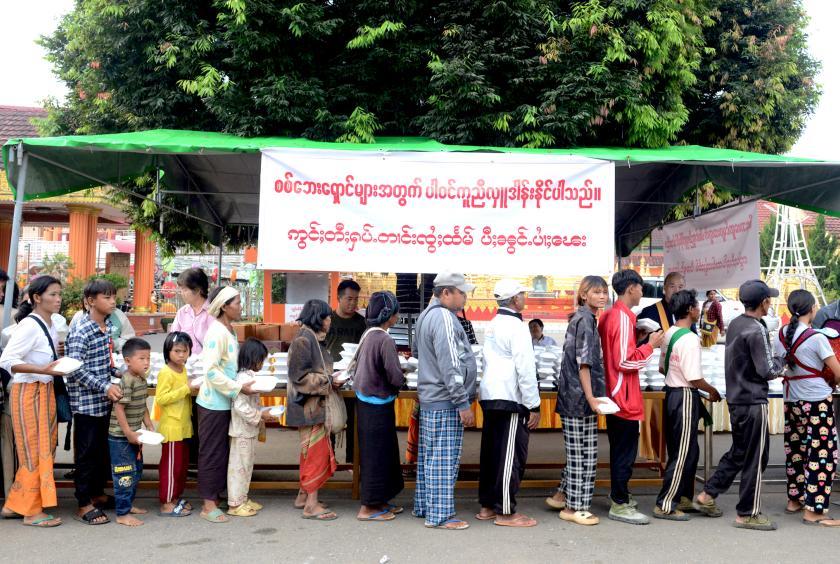
Food insecurity and malnutrition have reached alarming levels, with 55% of children living in poverty. Many displaced families struggle to meet basic needs, while children with disabilities and their families are among the most vulnerable due to the collapse of social safety nets and the lack of financial resources for special care.
In 2024, Cyclone Mocha affected over 300,000 children, destroying schools and worsening living conditions in overcrowded refugee camps and vulnerable communities. The resulting waterborne disease outbreaks and deteriorating living conditions are expected to persist into 2025.
UNICEF reported that in 2024, only 25% of the required $208 million in aid was secured, leaving many children without essential support. Without the necessary $286 million funding for 2025, millions of children in Myanmar risk severe malnutrition, disease outbreaks, lack of clean water, and the loss of educational opportunities.