

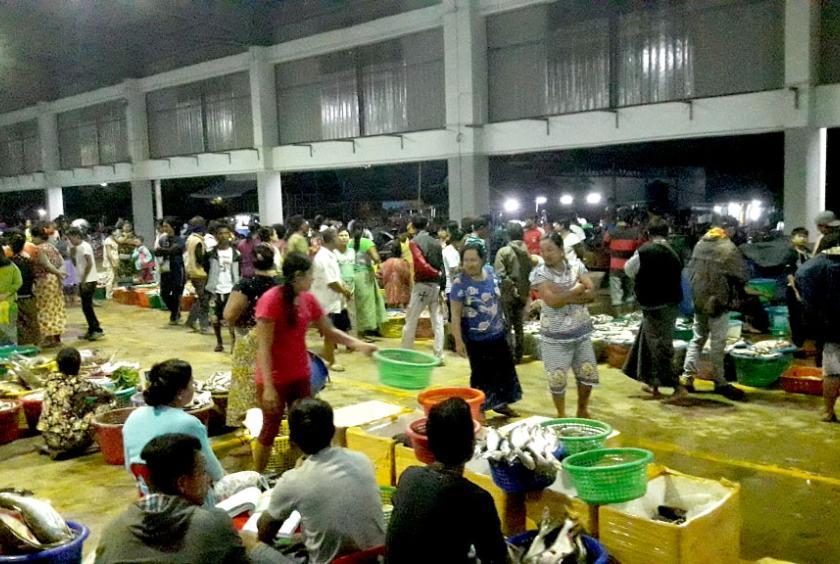
Due to the lack of a domestic fish market, the market in Thailand caters to buyers' preferences, causing annual difficulties for Myanmar's fishing industry operators, according to fishermen and related industry personnel.
Although the fishing season has arrived in Myanmar's seas, operators are facing difficulties due to low prices in the fish market and high production costs. The market is driven by buyers' preferences, leaving fishing and transport boats in almost constant difficulty each year.
"The Thai market is buyer-driven, and the regulations here are lenient, which Thailand is aware of. Ideally, considering the long-standing mutual benefits we've had in Myanmar's waters, things should be fair. Previously, A-grade prawns sold for $30 per kilo, but now prices are not only stagnant but have dropped. This benefits Thailand more and reduces profits for our country's fishing industry operators," said Daw Htay Htay Win, Managing Director of the Myanmar International Fish Auction Market.
In Myeik, Taninthayi Region, there is an international-standard fish auction market, but it has been overlooked in the past, leading to the Thai market's dominance.
"In the current fishing season, we go out to sea. After fishing for about 10 days, we can catch only 30 to 40 barrels of fish. Each barrel sells for 2,000 Thai Baht (over 200,000 Myanmar Kyats). The fishing permit lasts for 60 days, so we can catch about 240 barrels in total. The revenue from selling fish and prawns does not even reach 50 million Kyats, while the production cost per boat is around 100 million Kyats. We know we could get better prices by selling each type of fish separately, but there is no market for it here. The market is in Thailand, so we have to sell at the given price. If we bring the catch back, it costs us labor and transport fees. And where would we sell it? The current situation leaves us making minimal profits and facing usual losses. We continue because otherwise, our fishermen would become jobless, and the boats would deteriorate. Sometimes, we continue in the hope of making a profit," said a fishing boat operator from Myeik.
The fish and prawns caught by fishing boats are transported to Ranong, Thailand, where a significant fish market has thrived for over three decades.
"At this point, retaining foreign investments within the country is crucial. Despite various challenges, we've never left. We've consistently presented our issues to higher authorities, but they've been ignored. Consequently, the fish market for our catch is not in our country but in another. If local industry operators unite, it's possible to establish a real fish market here," said Daw Htay Htay Win.