
YANGON – Five months after the military takeover of the country, Myanmar’s banking sector has yet to return to normalcy.
Long queues are still being formed outside bank branches and ATMs and demand for cash transactions among businesses have become a norm as economic outlook is plagued with uncertainties.
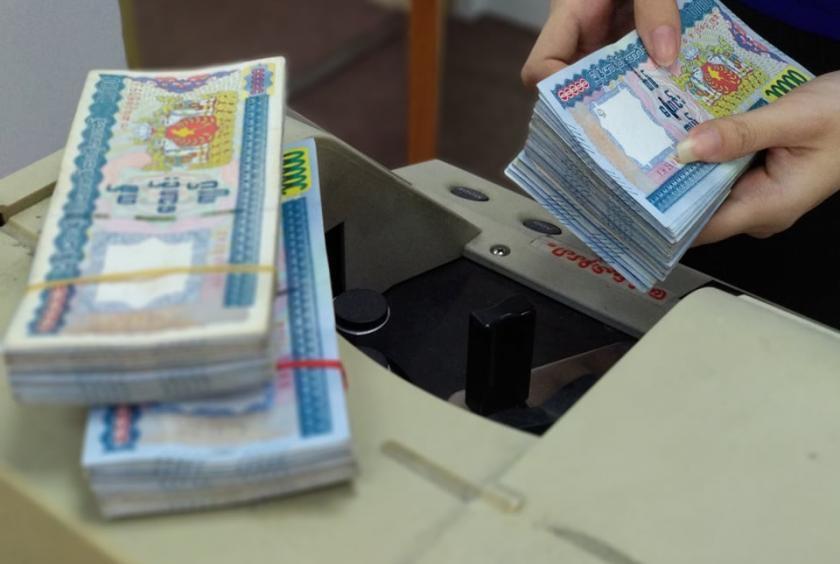
Myanmar banks have imposed limits on an amount the depositors can make cash withdrawal each time – and a rush for cash meant that people are still queuing up as early as 4 am each day to compete for cash withdrawals despite promises of refills by the banks.
KBZ, Myanmar’s biggest private bank, is only allowing a withdrawl of 400,000 Kyats per ATM card while Yoma Bank’s limit is 300,000 Kyats.
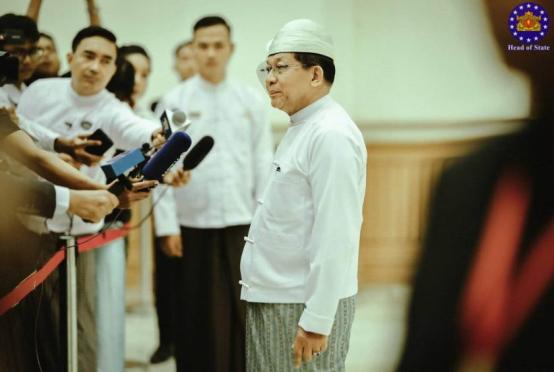
The Central Bank of Myanmar (CBM) has tried to calm public’s anxiety by issuing several announcements. It has largely blamed “fake news” for undermining public’s confidence in the banking system and reined in the banks to return to normal services.
But the financial market can take on a life of its own when the barometers of “trust” is undermined. Myanmar is caught in a perfect storm of “political, economic and public health” crises – none of which is showing signs of quick ending.
In a crisis situation – opportunists prevail. People with a lot of cash make it available to those in need. Non-cash amount is exchanged for cash with discounted interest or a fee. This fee has climbed from 3-5 per cent to 10 per cent, reflecting deteriorating in the economic situation.
The authorities have gone after those “shark” lenders but not with much success. The demand automatically creates its own supply
."We have to rely on those high lending cost services. We need them to keep things going. For some, it isn't too bad but for those with low margin business they are hurting," said a business owner.
Telecommunication is another problem in banking as the authorities have continued to limit access on the population. The central bank tried to alleviate the situation by allowing five private banks to resume online banking.
The five banks are AYA, KBZ, Innwa, CB and A Bank.
Applications for mobile and internet banking, mobile top-ups, bill payments and so on have been partially restored and more resumption of services will be announced, says the Central Bank.
For the trading, normal business situation is far from restored as demand for cash replaced much of the money transfers through banks that used to prevail.
"For consumers, they have a hard time withdrawing cash so they want to pay through cards. But since distributors and importers are demand cash mostly, we can only accept digital payment of a certain amount. Exporters are not bringing back overseas earnings due to the risk,” said a business owner.
The central bank is only allowing 20 million Kyats cash availability per week per company. So there are many companies that are not able to pay importers from," he added.
Another business owner named Dr.Soe Tun wrote on social media that normal business environment will only return when bank account transfers, CBM Net, Cheque Clearings are allowed without any restrictions.
"A bank sent a directive that if CBM Net is used to transfer from bank to another bank, the money must stay in a fixed deposit account for at least three months. This action goes directly against the efforts to reduce reliance on cash,” he wrote.
Cheque clearing system is another option but new format cheque books is still not made available even though the service came into being on June 1,” wrote Dr. Soe Tun.
The CBM, on June 16, said that online transactions made through the banking system will only be allowed to withdraw their earnings only up to 50 percent per month.
The CBM also said saving deposits are not be treated as current deposits and easily withdrawed but should be instead transferred to current accounts with limitations while there is limits on savings account withdrawal.
The government meanwhile is paying its suppliers mostly via bank transfers, crossed cheques and non-cash method. This obviously adds to the dynamic of unofficial cash discount market. But the fee is still very high as the discount rate rose to 10 per cent.
"The percentage went down and settled at around six percent but spiked back up to 10 percent afterwards. Many were thinking that it will be better if it was at around 3 to 5 percent. At least at 5 percent, we may not be earning profit but at least the business can continue to operate," said a business owner.
Businesses await the days when all restrictions are lifted.