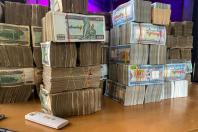

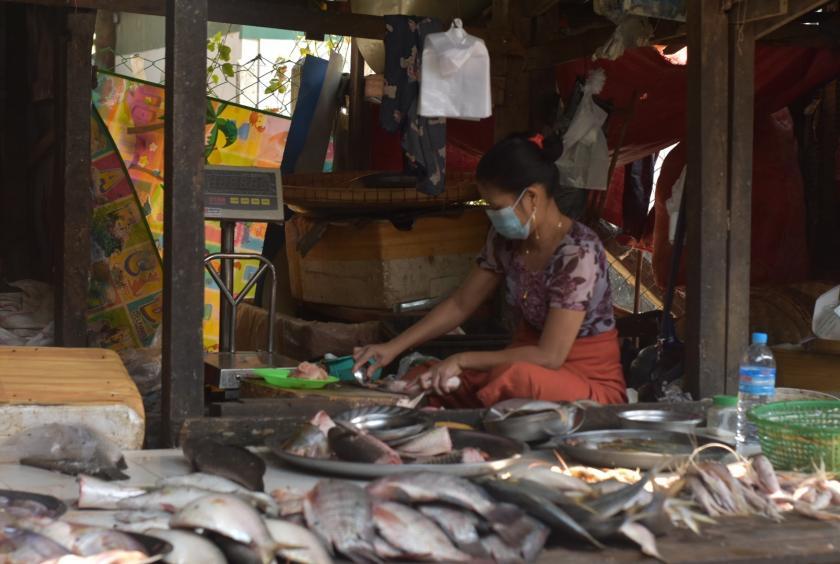
The recent turn of events had rock the US dollar market in Myanmar, and it is impacting the people.
From around June of 2018, the price of the dollar slowly climbed to record breaking rates, finally peaking at Ks 1650 per dollar in September the same year. It flactuated up and down in 2018, finally settling at Ks 1297 per USD to the end of the year.
In February 2021, the dollar hovered at around 1340 ~ 1475. The global index rate for the dollar as of April 24 is at around 90.00~, bringing the local rate to Ks 1610 per dollar.
The factors influencing the flacutations in foreign currency exchange market is the current situation of the local foreign currency market, the volume of export and import, the nation's economic growth and budget lists and the cost of products and services within the economy.
As the dollar climbed, the cost of fuel, telecommunication equipment, medicine food stuff and other assorted items, mostly imported, climbed together. The raise in prices for consumer goods will also mean that the inflation rate will also increase.
"Local products such as Rice, Oil, Salt, Pepper, Onions, Potatos and such did not climb much. Maybe oil went up a little bit. But all imported products cost higher now, especially kitchen related goods from Thailand. I don't know whether it's because the Kyat is also depreciating. Anyway, we sell items we get from the wholesale distributor at a little markup. That's the only way we get profits," said a general goods store owner from Tamwe.
Thingangyun Township's pharmacies also report that there have been price hikes as well as complete stoppage of some products.
"Everytime the dollar goes up,so do the medicine. Most are the medicines that people generally use. Some companies are not increasing their prices but instead just stopped. Business has been bad, real bad. I see it happening to most stores," said a person in-charge from a pharmacy in Thingangyun Township.
Myanmar has a sizable poor-to-rich gap and the impact that is rocking the business world will no doubt affect the low-income earners, one of lowest minimum wage levels amongst regional countries, the most. The poor already has an issue of imbalance of between income and expense, of which will be exercebated due to the dollar price hike and the Kyat dive.
As of now, the current price for a bag of rice is at Ks 48,000. In November 2 2020, a bag of Shwe Bo Paw San rice went between Ks 50,000 Ks 58,000 and was between Ks 45,000 and 48,500 by April 2 2021. It was a similar situation for Pathein Paw San with Ks 38,500 - 41,000 in November 2020 and Ks 36,000 and 38,000 on April 20.
In the 2020-2021 fiscal year, between October 1 to April 2, 1.131 million tons of broken rice and rice were exported to over 30 countries worldwide but it was a decline of 500 thousand tons from the same period previous fiscal year, a drop of 74.409 million in revenue.
According to the Myanmar Rice Federation, rice and broken rice are exported the most to China as well as Belgium. Other officials figure also suggest that while local general consumer market prices for rice, poultry and such rose very little.
For petrol, the Global Petro Prices Website for Asean nations claim that as of April 19 2021, Myanmar saw an increase of 2.90 percent while Thailand saw 1.80 and Singapore 1.20 percent. The rest of the countries remain unchanged. Local rates also suggest that while it is not skyrocketing yet, it is climbing steadily.
As a country extremely reliant on imported products, Myanmar will surely be hit harder and harder. The first and second outbreak of Covid-19 had taken the wind out of Myanmar's already sluggish economy and the recent turmoil plus another potential outbreak of Covid-19 may be the nail in the coffin for not only the poor and vulnerable but also across all income classes.