
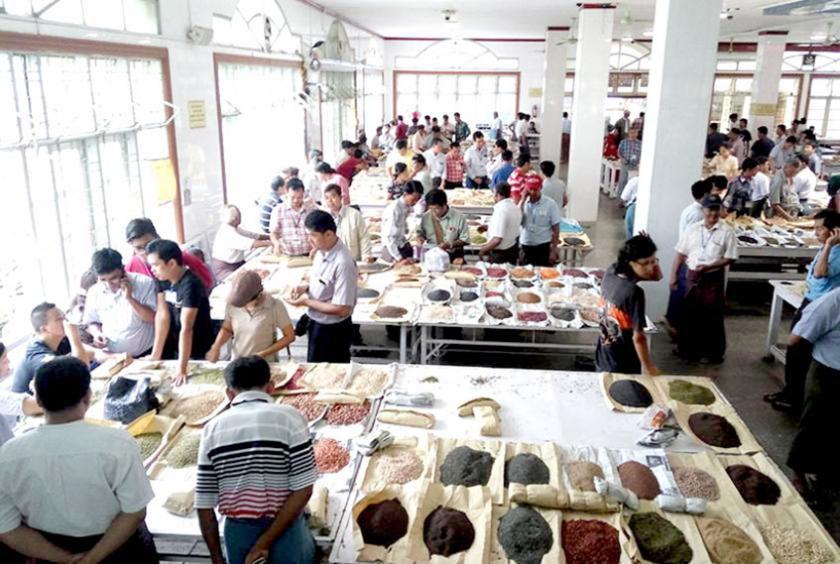
India has extended the import permission for black gram (urad beans) and pigeon peas from Myanmar for another year, according to reports.
Following negotiations between the governments of Myanmar and India, India’s Ministry of Commerce and Industry issued official notifications on March 31, 2026, announcing that the free import of black gram and pigeon peas has been extended until March 31, 2027.
According to Myanmar’s Ministry of Commerce, the two countries had previously signed a Memorandum of Understanding (MoU) allowing India to import 250,000 tons of black gram and 100,000 tons of pigeon peas annually through private trade from the 2021–2022 fiscal year to the 2025–2026 fiscal year.
Negotiations for a government-to-government (G-to-G) MoU on cooperation in the trade of black gram and pigeon peas between Myanmar and India began in 2016.
Under the agreement, India committed to importing the specified volumes annually over a five-year period (April to March) from the 2021–2022 to the 2025–2026 fiscal years. The current extension grants an additional one-year continuation of this arrangement.
It is also noted that the G-to-G MoU does not affect India’s annual international pulse import quota. Myanmar exporters will continue to benefit from participation in the global quota system as well.
In the 2019–2020 fiscal year, Myanmar exported over 1.6 million tons of various pulses, generating nearly USD 1.2 billion in revenue. Although export volume decreased by more than 230,000 tons compared to the previous year, export earnings increased by nearly USD 190 million.
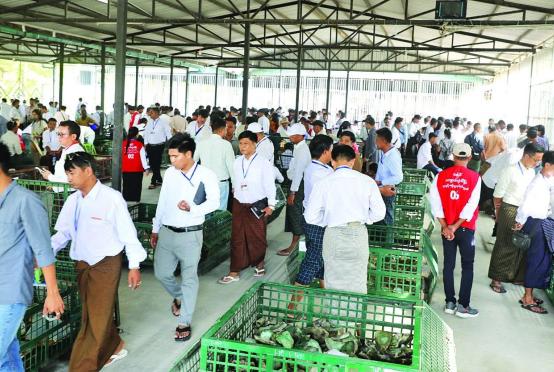
Among Myanmar’s domestically produced pulses, black gram, green gram (mung beans), and pigeon peas are the top three export crops. Of these, black gram and pigeon peas are primarily exported to India, while green gram is mainly shipped to China and some European countries.
Myanmar cultivates over 11 million acres of pulses annually, with more than 35 percent of the acreage dedicated to black gram and pigeon peas.
In total, about 11.45 million acres are used each year to grow 18 types of pulses in Myanmar. Of this, green gram accounts for 26 percent, black gram 25 percent, pigeon peas 15 percent, and chickpeas about 8 percent of total production.