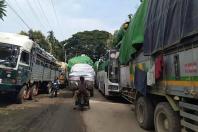

In 2019-20 fiscal year, Myanmar’s economic growth is expected to increase by seven per cent thanks to the good prospects of domestic transport and travel and tour services, according to the 2019-20 FY budget.
The economic growth in 2018-19 FY, was projected to hit 6.8 per cent (based on the regular price of 2015-16 FY), thanks to increased exports, the expansion of local travel and tour services, monetary services and communications services and increased production by small and medium-sized enterprises.
According to the National Planning for 2019-20 FY, the Gross Domestic Product (GDP) is projected to hit Ks 119,023.4053 billion (based on year-on-year price) and the economic growth, to seven per cent (based on the regular price).
The projection is linked to the massive influx of foreign investments, the implementation of works included in China—Myanmar Economic Corridor and good prospects of local transportation and travel and tour services and other services.
In 2019-20 FY, the growth in the farming sector is estimated to increase by 2.4 per cent, the industry sector, 8.6 per cent and the services sector, 8.1 per cent.
The farming sector is expected to boost exports, produce marketable and high-yield seeds, expand fish and prawn breeding and improve technology.
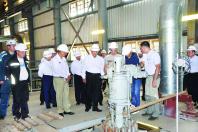
The industry sector plans to assemble Toyota cars, increase the productivity of CMP garment and small-scale industries, produce high-quality products through the PPP system for State-owned plants and increase off-shore gas production.
The construction sector is expected to build elevated roads in Yangon, upgrade Thandwe Airport, roads, Union Roads, district-to-district roads and build rural development roads and implement low-cost and fair-priced housing and public rental housing projects.
The services sector is expected to promote transport, communications and monetary services and develop the trade sector. The monetary sector plans to keep the stability of foreign currency exchange rate and control inflation rate and cooperate production, consumption and commodity flows.
The finance sector is projected to increase revenue incomes, manage the government’s expenditures more effectively, develop economic infrastructures, increase public expenditures for education, health and social protection and build good foundations for businesses and investments.