
Myanmar and Thailand have reaffirmed that Thailand will continue to work closely with and support Myanmar in securing its full and equal participation in ASEAN mechanisms and processes, in accordance with the ASEAN Charter, principles, and established procedures.
The commitment was included in the joint statement issued by President U Min Aung Hlaing and the Thai Prime Minister during the Myanmar President's official visit to Thailand.
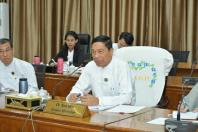
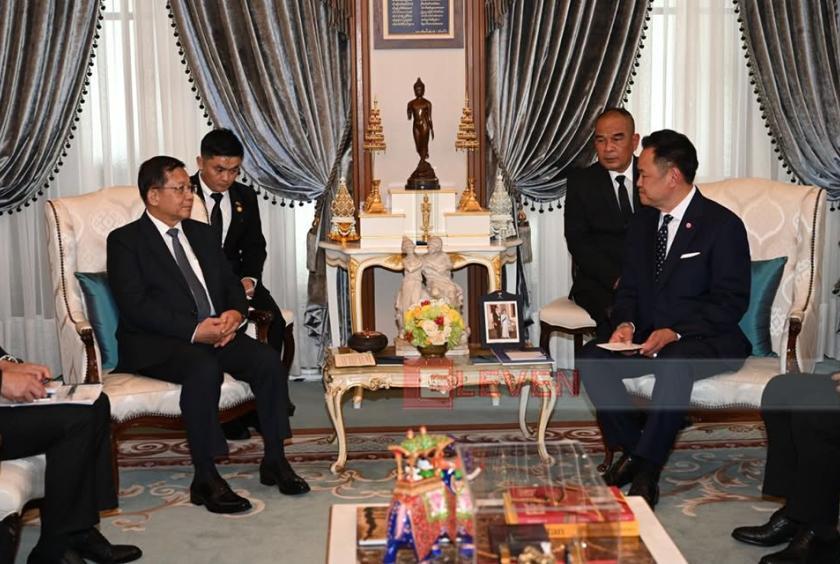
President U Min Aung Hlaing paid an official visit to Thailand from 6 to 7 August 2026 at the invitation of the Prime Minister of Thailand, Mr. Anutin Charnvirakul. During the visit, the leaders of the two countries held friendly bilateral meetings.
The two sides reaffirmed that Thailand will continue to work closely with and support Myanmar in securing its full and equal participation in ASEAN mechanisms and processes, in accordance with the ASEAN Charter, principles, and procedures. They also expressed appreciation for Thailand's constructive role in assisting Myanmar's efforts to restore its normal engagement with ASEAN.
Thailand welcomed Myanmar’s continued commitment to advancing peace negotiations with a view to achieving a lasting peace through Myanmar’s own path, led by Myanmar, and welcomed Thailand’s close consultations with Myanmar in this regard.
President U Min Aung Hlaing’s official visit to Thailand is a further step in the long-standing friendship and close partnership between Myanmar and Thailand, Reaffirming the mutual commitment of both countries to further strengthen cooperation in the interests of both countries, both sides agreed to continue close engagement at all levels. The President expressed his sincere gratitude to the Royal Thai Government for the warm hospitality extended to the President and the Myanmar delegation during his visit, and invited the Prime Minister of the Kingdom of Thailand to visit Myanmar at a mutually convenient time.
The two leaders expressed satisfaction with the long-standing friendship, cooperation, and good-neighborly relations between Myanmar and Thailand. They reaffirmed their commitment to further strengthening cooperation across all areas of mutual benefit to advance the shared development and prosperity of both countries and the region. The leaders also underscored the importance of deepening bilateral cooperation in key sectors.
In addition, both sides agreed to deepen dialogue and high-level visits at all levels to strengthen bilateral cooperation in all areas, including the early convening of the Joint Commission (JC), and welcomed the further enhancement of cooperation between the two foreign ministries through political consultations, capacity building programs for new and mid-level diplomats of Myanmar, exchange of diplomats between the two countries, and the collaboration between the Myanmar Diplomatic Academy (MDA) and the Devawongse Varopakarn Institute of Foreign Affairs (DVIFA) of Thailand.
Both sides welcomed the strong and long-standing partnership in defence and security cooperation between Myanmar and Thailand. They noted the continued progress achieved through existing bilateral mechanisms, including the 38th Regional Border Committee (RBC) meeting held in Kengtung from June 29 to July 1, 2026. The two sides also expressed their expectation that the 9th Myanmar–Thailand High-Level Committee (HLC) meeting between the two armed forces would be held in Bangkok from August 19 to 21, 2026.
Both sides also welcomed the upcoming Security Dialogue between the National Security Advisor of Myanmar and the Secretary-General of the National Security Council of Thailand to strengthen security cooperation between the two countries at the strategic level, and expressed their joint commitment to promoting peace and stability along the Myanmar-Thailand border to ensure the safety, security and better access to basic social needs of the people of both countries.
In addition, both sides agreed to enhance joint efforts in combating transnational crimes, especially online fraud and drug trafficking, and to enhance coordination between relevant organizations to crack down on online fraud centers along the Myanmar-Thailand border through joint operations and information sharing to disrupt the financial flows of transnational criminal networks. They agreed to further strengthen existing cooperation between the two countries’ anti-money laundering authorities, particularly through capacity-building programs. Thailand continued to support Myanmar’s membership of the Egmont Group to facilitate the sharing of financial intelligence.
The two leaders also reaffirmed their commitment to strengthen cooperation in the prevention and control of drugs and the chemicals used in their production, and called for closer cooperation between the Myanmar Parliament and the Thai Parliament.
The two sides agreed to work closely to promote and facilitate bilateral trade to achieve the bilateral trade target of US$12 billion. The leaders welcomed the 8th Joint Trade Commission Meeting scheduled to be held in Thailand in 2026 to address regulatory and other challenges to facilitate trade between the two countries, and encouraged relevant authorities to explore ways to facilitate legitimate cross-border trade and investment.
Similarly, the two leaders welcomed the reopening of the No. 2 Myanmar-Thai Friendship Bridge (Myawady-Mae Sot) border gate, which plays a crucial role in the border trade between the two countries. Both sides discussed ways to facilitate and expedite cross-border trade through the designated border gate, which will enhance trade and connectivity between the two countries. Both sides agreed to consider reopening the remaining border gates and trade gates, subject to bilateral agreements and the security situation on the ground, to further enhance the trade and connectivity between the two countries.
The two leaders also reaffirmed their commitment to strengthening transport networks through improved transport and infrastructure links, and stressed the importance of establishing a “Myanmar-Thailand Joint Working Group on Transport Network Enhancement” to coordinate the overall multi-modal connectivity plan, including road, sea, port and cross-border routes, and to harmonize relevant policies, procedures and regulations of the two countries, where appropriate, in accordance with the domestic laws of the two countries. Areas for future discussions include the development of mutually beneficial maritime connectivity between Ranong Port and appropriate ports in Myanmar, in accordance with the bilateral agreement of both countries, relevant feasibility studies, and relevant domestic laws and procedures, and the promotion of potential commercial coastal shipping services, the development of the Phu Nam Ron-Htikhi-Dawei transport corridor, and the upgrading of the India-Myanmar-Thailand Trilateral Highway project, facilitating cross-border transport, and establishing appropriate Special Economic Zones and logistics hubs along the border. The two leaders expressed their hope that such efforts would enhance trade, facilitate logistics facilities, facilitate trade and investment, and strengthen connectivity and they also welcomed the support of Thailand’s Neighbouring Countries Economic Development Cooperation Agency (NEDA) for Myanmar’s infrastructure development.
Both countries recognized energy security as a strategic priority and agreed to cooperate in the energy sector. In particular, they reaffirmed their commitment to further enhance the exploration and development of natural gas resources to ensure stable and reliable energy supply and promote sustainable economic growth. Both sides agreed to support the continuation of existing projects and facilitate the ongoing process of future projects to enhance energy security and mutual benefit between the two countries.
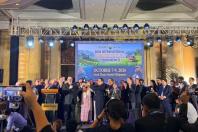
Both sides also welcomed the signing of a new Memorandum of Understanding on Labour Cooperation and an Agreement on Employment of Workers between the two countries. The leaders of the two countries welcomed the convening of the Myanmar-Thailand Business Forum in Bangkok on 6 August 2026 to promote networking and cooperation between the private sectors of the two countries. They also encouraged closer engagement between private sector organizations, including the Union of Myanmar Federation of Chambers of Commerce and Industry (UMFCCI), the Thai-Myanmar Business Council (TMBC), and the Thai Business Association Myanmar (TBAM), and direct cooperation between regional chambers of commerce in border areas.
The two leaders reaffirmed their commitment to strengthen cooperation in addressing transboundary environmental challenges, including haze pollution, open burning, and water pollution. Both sides welcomed continued cooperation in forest fire prevention and control, including through the development of a forest fire monitoring system and training courses, and stressed the importance of close cooperation, continuous information sharing, and capacity building, including through the Trilateral Joint Action Plan on Transboundary Haze Pollution Control (CLEAR Sky Strategy) and bilateral cooperation, in advancing effective and sustainable solutions.
The two leaders welcomed the signing of the Terms of Reference (TOR) of the Joint Working Group on Water Quality Management of Border and Transboundary Rivers between the two countries, and instructed relevant departments to closely cooperate in the field of water quality management and to convene the meeting of the Joint Working Group as soon as possible and at a mutually convenient time. The two leaders emphasized that people-to-people exchanges are a cornerstone of the long-term friendship between Myanmar and Thailand.
At the 17th Thailand–Myanmar Technical Cooperation Meeting, both sides looked forward to the adoption of the Myanmar–Thailand Three-Year Development Cooperation Plan (2026–2028). The plan reflects the commitment of both countries to strengthening cooperation for mutual benefit in capacity building, human resource development, and sustainable socio-economic development, particularly in the areas of health, education, the development of micro, small and medium-sized enterprises (MSMEs), agriculture, and environmental sectors. The leaders also welcomed the resumption of additional Bangkok–Yangon flights by Thai Airways in the fourth quarter of 2026, which is expected to further improve connectivity between the two countries and enhance tourism and economic exchanges.
The two leaders welcomed the signing of a Memorandum of Understanding (MoU) between the Myanmar Space Agency (MSA) and Thailand’s Geo-Informatics and Space Technology Development Agency (GISTDA) to promote cooperation in Earth observation technology and its applications, particularly in disaster management, agriculture, and environmental management. Both sides agreed to enhance cooperation and mutual support through regional frameworks, including ASEAN, BIMSTEC, the Ayeyawady–Chao Phraya–Mekong Economic Cooperation Strategy (ACMECS), and Mekong sub-regional mechanisms, to promote regional peace, stability, sustainable development, and shared interests. Thailand also reaffirmed its continued support for Myanmar’s role as the chair of ACMECS and expressed its expectation for the successful convening of the 11th ACMECS Summit.