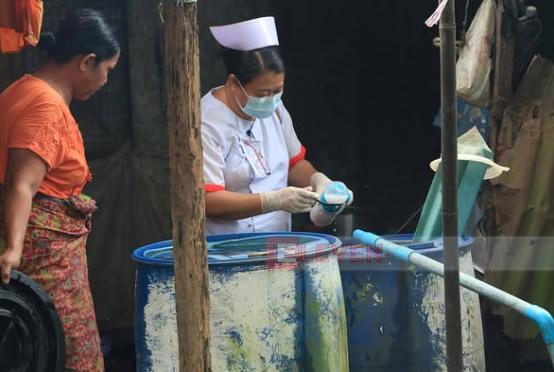

The chlorine booster dosing project is being implemented in eight townships in Yangon to ensure access to clean drinking water and help prevent the spread of diarrheal disease, according to Daw Thwe Naing Oo, Deputy Head (Director) of the Engineering Department (Water and Sanitation) of the Yangon City Development Committee (YCDC).
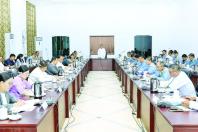
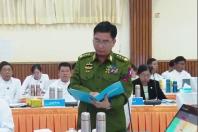
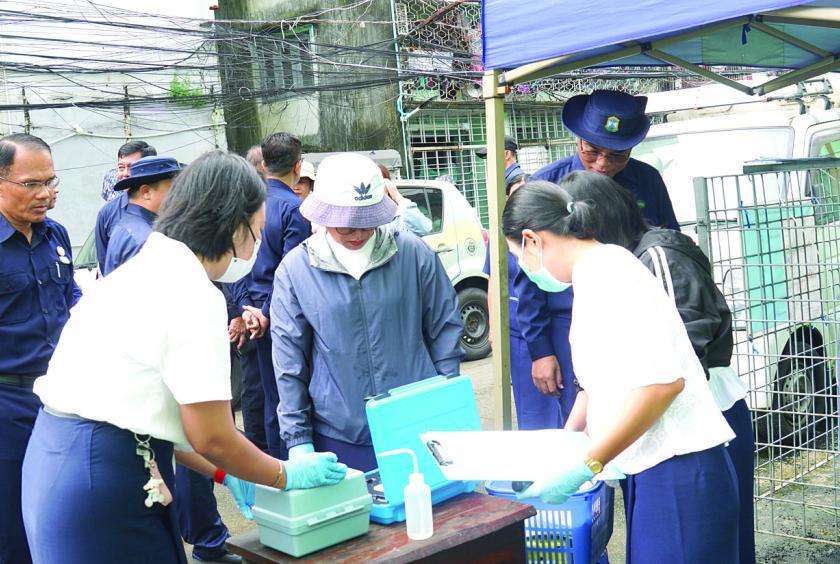
Speaking about the department’s daily distribution of clean and safe drinking water to Yangon residents, Daw Thwe Naing Oo said that a joint team comprising the YCDC Chairman (Mayor), Secretary, Joint Secretary, committee members, department heads, officials from the Yangon Region Health Department, and district and township administrators is conducting daily field inspections and monitoring chlorine booster dosing in water distribution networks.
She said chlorine booster dosing, or super chlorination, is currently being carried out at 21 locations across eight townships: eight locations in Latha Township, five in Lanmadaw Township, one in Ahlone Township, one in Pazundaung Township, one in Mingalar Taungnyunt Township, two in Kyauktada Township, two in Pabedan Township and one in Dagon Township.
“We are collecting water samples and monitoring water quality to analyze residual chlorine levels in the distribution network following chlorine booster dosing. The results show that the initial residual chlorine levels are within a reasonable and appropriate range,” she said.
Meanwhile, Dr. Nanda Win, Head of the Yangon Region Public Health and Medical Services Department, said that many cases of diarrhea have been reported in Latha and Lanmadaw townships. He said 18 central hospitals and 65 hospitals under the Yangon Region government have been supplied with medicines and medical equipment to treat diarrheal patients, dismissing reports that Yangon General Hospital has stopped accepting outpatients and inpatients as false.
“The number of cases has decreased slightly compared with previous days. If we continue these efforts, the number of patients is expected to decline within five days to a week. Doctors and hospitals under the Department of Public Health are working to ensure that patients who seek treatment do not die from the disease. All 18 central hospitals and 65 hospitals in Yangon Region have been prepared and supplied with medicines and medical equipment for diarrhea treatment,” Dr. Nanda Win said.
Diarrheal disease occurs annually during the rainy season and remains a challenge for Yangon Region. On August 8, 9 and 10, 20 diarrhea cases were reported in Lanmadaw Township, 20 in Latha Township and 14 in Dagon Seikkan Township.
Dr. Nanda Win said health authorities are continuously monitoring cases using Google searches and other disease surveillance and recording systems. The monitoring has shown a high number of cases in Lanmadaw and Latha townships, particularly among people living between 1st and 24th streets in Lanmadaw Township, an area that includes Yangon’s Chinatown.