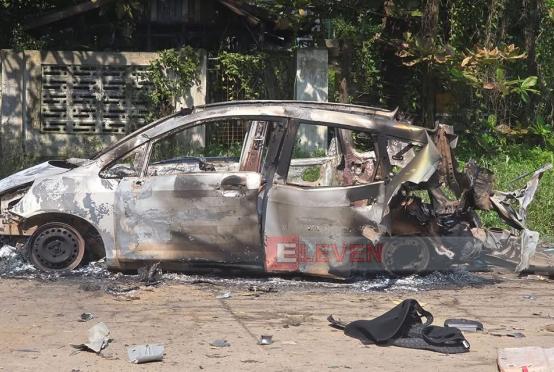

Reconstruction work is under way at the Upper Yeywa Hydropower Project in northern Shan State after damage caused by terrorist attacks resulting in losses estimated at nearly K26 billion.
According to official information, armed groups attacked the project’s base camp in Kyaukme and the construction site in June 2024, damaging or looting buildings, state-owned machinery, construction equipment, generators, quality control office equipment, meteorological and hydrological instruments, imported electrical equipment, substations, power lines, transformers and related facilities. An office building at the Kyaukme base camp and a staff residence at the project site were also set on fire.
Authorities said the Kyaukme base camp sustained losses of around K800 million, while damage at the Upper Yeywa project site, including civil works, machinery, substations and transmission lines, was estimated at nearly K26 billion. The value of damaged imported electrical equipment is still being assessed jointly by the foreign contractor responsible for supplying the equipment and engineering specialists.
Following improvements in the security situation, mine clearance operations were carried out before reconstruction began. Repairs to office buildings and staff housing at the Kyaukme base camp were completed during the 2025–2026 fiscal year. Work to reinstall transformers and restore power lines will continue once the national electricity supply is restored to Kyaukme.
At the project site, road rehabilitation, repairs to staff accommodation and project facilities, restoration of water and electricity services, and reconstruction of construction power lines have been under way since the start of the 2026–2027 fiscal year. The government said the repair costs would be covered by the Union budget.
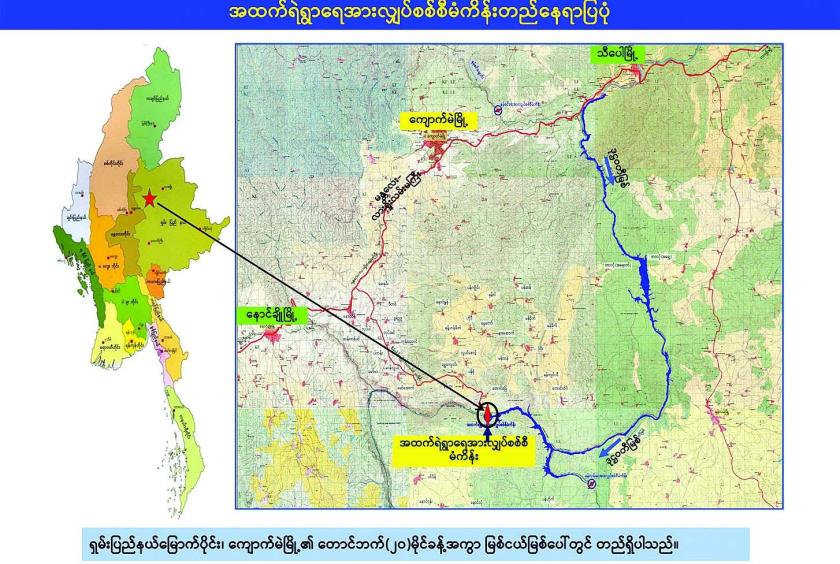
The 280-megawatt Upper Yeywa Hydropower Project, located on the Myitnge (Dokhtawady) River about 20 miles south of Kyaukme, has been under construction since the 2010–2011 fiscal year. Officials said the project is 53.95 per cent complete and is scheduled for completion in the 2029–2030 fiscal year. Once operational, it is expected to generate an average of 1,409 million units of electricity annually, supplying power to around 3.7 million people, including residents of Shan State.