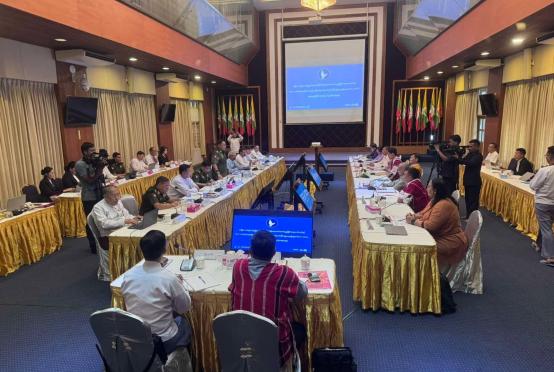


On May 10, twenty-three political parties convened for an informal meeting at the Union Solidarity and Development Party (USDP) headquarters in Yangon. The parties discussed how to collaborate in ensuring a successful election, emphasizing that it is in the best interest of all citizens.
The USDP stated that representatives from 23 political parties attended in person, while an additional nine parties endorsed the discussions through written support, bringing total participation to 32 parties.
Participants affirmed that democratic elections are the only legitimate path to achieving a multi-party democracy. While each party must explain and promote its own policies, the group agreed that they can play a greater role by working together to solve pressing national issues.
A key topic of discussion was the need to educate the public about the constitution. The parties expressed a shared belief in the importance of constitutional understanding and committed to a joint public education effort.
The meeting acknowledged that, under the current constitution, Myanmar must pursue a multi-party system. However, participants raised concerns about political fragmentation, warning that too many disunited parties could contribute to instability and even armed conflict. They emphasized the importance of party unity to create a peaceful political environment.
The parties also compared their current influence to that of small armed groups, acknowledging their limited reach and calling for collaboration with the state to strengthen political solutions.
Despite differences in policy, all parties agreed on a common objective: to work for the good of the country. They noted a decline in public trust and engagement with political parties, citing frequent criticism and misunderstandings. As a result, they agreed on the urgent need to accelerate joint actions to support the state's initiatives during the lead-up to the election.
Participants also discussed how some ethnic armed organizations are using ethnic identity to undermine unity. In response, the parties pledged to promote ethnic harmony through political means.
Concerns were raised about potential voter turnout suppression due to violence by terrorist groups, despite the state and Union Election Commission’s (UEC) efforts to conduct free and fair elections. The parties stressed that voting is crucial for the nation’s future and suggested promoting nonpartisan voter awareness campaigns until the public fully grasps the significance of participation.
The group affirmed that while each party has unique goals, they share a common vision for the country. They described the current political landscape as fragmented, like small fences, and called for solidarity to build a strong and united political front.
They also welcomed and supported the government’s decision to extend the ceasefire period to May 31, 2025, viewing it as an essential step toward lasting peace. The need for inclusive dialogue and implementation was highlighted.
Finally, concerns were expressed about how self-interested or commercially driven organizations—especially those engaging directly with the public—can distort perceptions of state policy. The parties agreed this issue must be addressed by ensuring accurate information reaches policymakers.
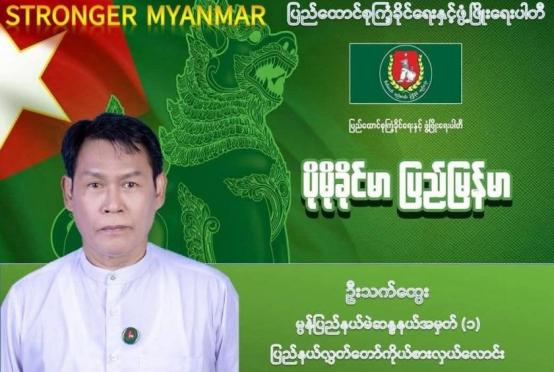
Political parties attending the meeting included the Union Solidarity and Development Party, Myanmar People's Democratic Party, New Democracy Party (Kachin), National Unity Party, Rakhine Leadership Party, Lisu National Development Party, Shan and Ethnic Democratic Party, and Myanmar Farmers' Development Party.