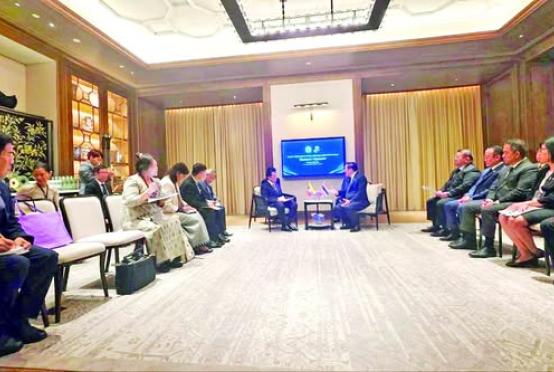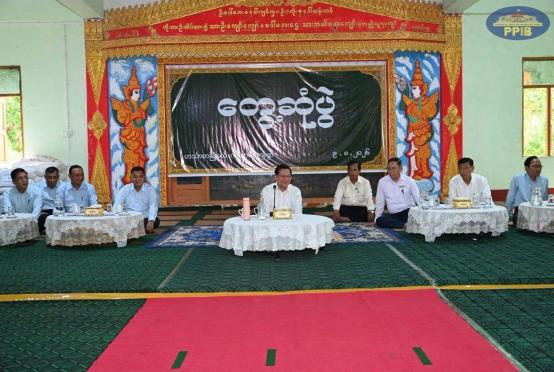

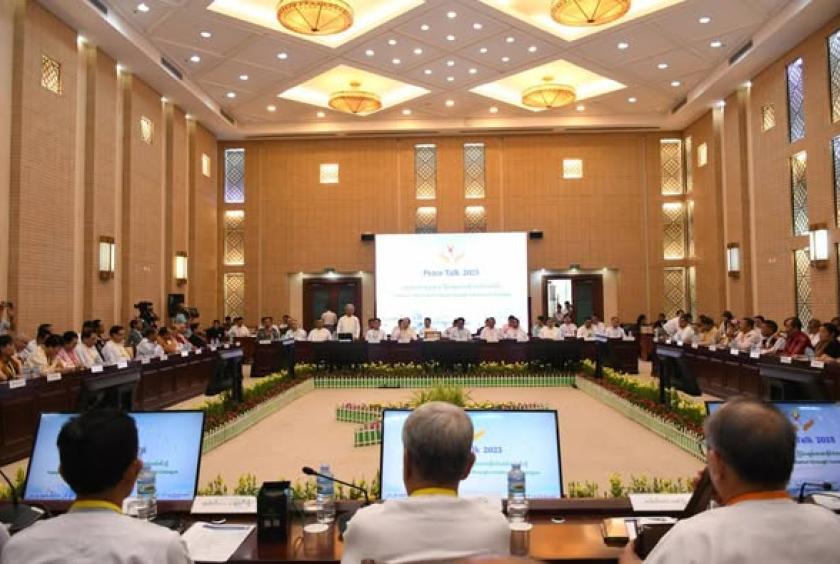
The Peace Dialogue (PEACE TALK 2025) concluded on March 26 after a three-day meeting at the International Convention Center-2 in Nay Pyi Taw. Discussions focused on political and security matters, as well as economic and national development. The meeting resulted in 12 short-term recommendations and 10 long-term action points aimed at advancing the peace process.
Secretary of National Solidarity and Peacemaking Negotiation Committee (NSPNC) Lt-Gen Min Naing stated that the recommendations were carefully developed after extensive deliberations. He noted that additional points could be added after further review of the discussions.
Among the key recommendations, the meeting emphasized the urgent need to implement a ceasefire, reactivate the Joint Monitoring Committee (JMC) and the Union Peace Dialogue Joint Committee (UPDJC) under the Nationwide Ceasefire Agreement (NCA), and initiate a review and modification of the NCA. Local pilot projects were proposed to reduce conflict, with a focus on humanitarian aid, education, and healthcare, involving local leaders and government officials.
To build trust between the government and the public, the dialogue highlighted the importance of implementing public service reforms and swiftly carrying out agreements reached in past peace conferences. Preparations for the post-election peace process were also recommended, along with efforts to facilitate negotiations through third-party mediators and ensure inclusivity and transparency in political reforms.
Election security emerged as a crucial issue, with calls for enacting an effective law to safeguard the electoral process. The discussions also stressed the importance of providing stakeholders with advance information on election-related issues, such as the electoral system, constituency designations, and election laws. To foster political dialogue before the elections, the meeting suggested creating a dedicated forum for stakeholders to engage in discussions.
Among the long-term proposals, the meeting called for initiating roundtable discussions on constitutional amendments before the formation of parliaments and continuing them post-election. Public awareness of the peace process was highlighted as a priority, with plans to collaborate with the media and civil society organizations through the National Unity and Peacemaking Coordinating Committee (NSPNC). Given that many conflict-affected areas are in border regions, participants recommended strengthening border development efforts to build trust between the government and local communities.
The dialogue also stressed the need for a proactive foreign policy approach, improving relations with neighboring and regional countries, as well as maintaining strong ties with major global powers such as the United States and Russia. Recognizing the growing influence of political, economic, military, and artificial intelligence (AI) power, the meeting suggested implementing measures to strengthen these sectors.
As non-traditional security threats continue to emerge, including cyber-related risks, participants urged the development of long-term cybersecurity strategies. Resettlement, recovery, and redevelopment efforts for displaced populations were also prioritized, alongside ensuring greater inclusion of youth and women in the peace process. Additionally, physical and psychological reconstruction initiatives were recommended to support communities affected by conflict.
Lt. Gen. Min Naing, Secretary of the NSPNC, emphasized that PEACE TALK 2025 was an ongoing process, stating that discussions would continue and the action plan would be actively pursued. He reiterated the commitment to ensuring all stakeholders remain engaged in future peace efforts.
The closing ceremony, titled "From Dialogue to a New Peaceful Nation," included reviews of political, security, economic, and national development discussions. The event featured presentations of discussion outcomes, votes of thanks from representatives of both discussion groups, and a closing speech by the Chairman of the NSPNC.