
Nay Pyi Taw – Senior General Min Aung Hlaing, Chairman of the State Administration Council (SAC), announced that Myanmar's digital payment system can now be used for various transactions, including tax payments, electricity bills, tourism, payroll, petrol stations, and private hospitals.
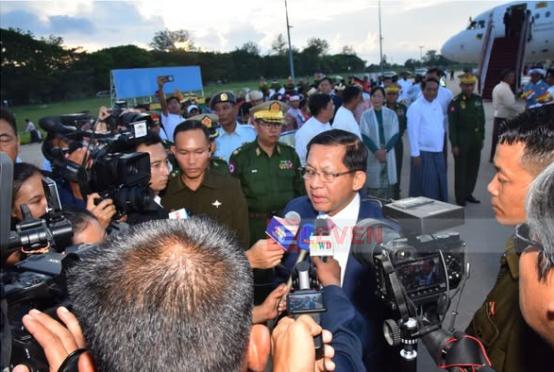
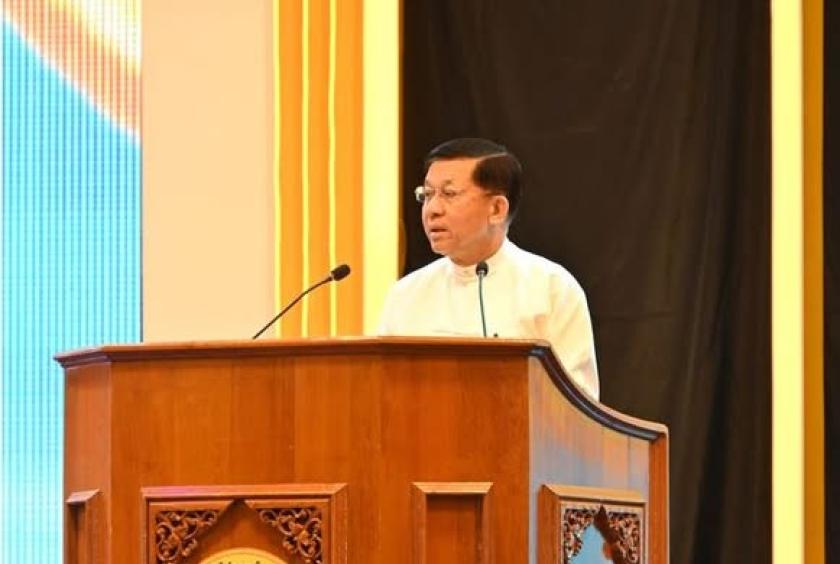
He made the statement at the launch ceremony of Myanmar’s National QR Standard for digital payments, MMQR, in Nay Pyi Taw on February 27.
The event was attended by SAC officials, including the Joint Secretary General Ye Win Oo, Council members, Union Ministers, members of the Central Bank of Myanmar’s Board of Directors, as well as representatives from banks, financial institutions, and technology companies.
Senior General Min Aung Hlaing inaugurated the launch of MMQR by pressing a button. He described the new system as a significant milestone in Myanmar’s financial sector, highlighting that it was developed in line with international standards to facilitate quick and easy payments.
He outlined the evolution of Myanmar’s payment infrastructure, noting that the Myanmar Payments Association was established in 2011 to develop the sector. Over the years, the country has gradually adopted digital payment methods, including local and international debit and credit cards. In 2016, the Central Bank of Myanmar introduced an inter-bank payment network, enabling large-scale tax payments through local banks.
With increasing mobile phone usage, digital financial services have become essential, particularly in areas without traditional banking access. To support this, the Central Bank of Myanmar has issued regulations covering mobile banking, internet banking, mobile financial services, and merchant clearing services. These efforts have enabled systematic digital transactions for government-related payments, including electricity bills, taxes, employee salaries, insurance premiums, and micro-credit services.
To enhance digital banking and streamline transactions between different financial platforms, the Myanmar QR (MMQR) system has been introduced. This system connects various QR codes across different banks and mobile money service providers, making payments easier, faster, and more affordable. The SAC Chairman emphasized the importance of educating users on how to make transactions using MMQR to promote wider financial inclusion.
MMQR will facilitate transactions for both banked and unbanked populations, reducing cash dependency and improving financial accessibility. It will enable seamless transfers between different bank accounts and digital wallets while enhancing financial management for businesses and consumers. The system is expected to be widely used in government payments, taxation, utilities, tourism, salaries, pensions, small businesses, fuel stations, healthcare, education, and retail transactions.
Senior General Min Aung Hlaing stated that MMQR, as a national standard set by the Central Bank of Myanmar, will support international financial transactions and promote the country’s digital economy. However, he stressed the need for strict supervision to prevent online fraud and ensure the secure operation of the system as digital technology continues to evolve.