
YANGON (AFP) - Protesters hit the streets across Myanmar on Wednesday (July 7) to mark the anniversary of student protests in 1962 against the country's first military government, vowing defiance against its latest incarnation more than five months after it seized power.
Myanmar has been in turmoil since the military's generals ousted elected leader Aung San Suu Kyi's government in February, with pro-democracy protests met by a brutal crackdowns.
The economy is in free fall, with thousands of civil servants and doctors on strike and coronavirus cases in the impoverished country spiking.
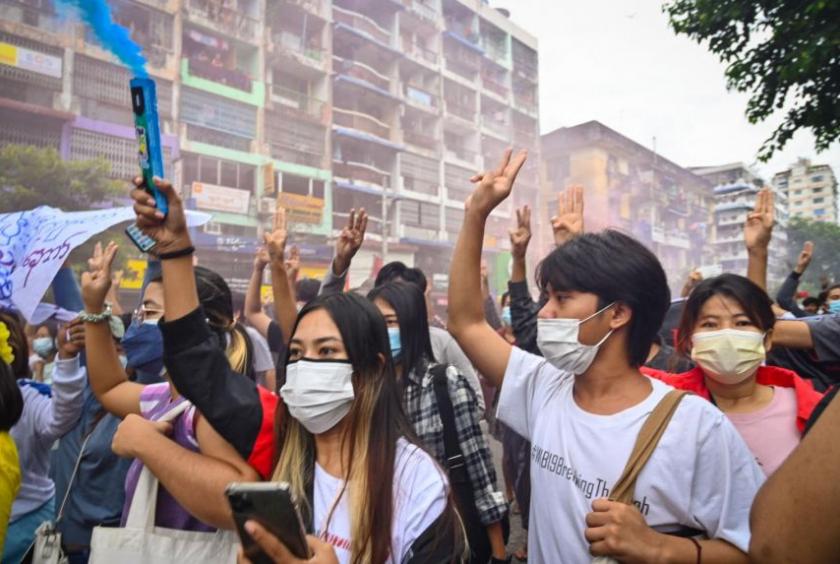
Around 100 protesters moved quickly through the commercial capital Yangon early on Wednesday, AFP reporters said, to mark the 1962 Yangon university protests against the first imposition of military rule in Myanmar.
Hundreds were killed by troops and thousands disappeared in a brutal crackdown that many see being repeated almost seven decades later.
"Let's root out the fascist army," they chanted, as some let off smoke bombs in orange and blue. "Keep the spirit of July 7 and fight the military dictatorship."
Two minutes later, they were gone - scattering quickly down side streets or jumping into waiting cars. Informants have tipped off police to previous flash mobs and protesters have been arrested.
Dozens also gathered in the city of Mandalay, holding signs. In the central Sagaing region, protesters burned an army flag, images on local media showed.
Myanmar has been ruled almost continually by the military since 1962, just over a decade since independence from Britain.
It emerged from outright military rule in 2011, enacting economic and political reforms, including multi-party elections.
Ms Suy Kyi's National League for Democracy won a thumping majority in elections in 2015 and again in 2020, relegating the main military-backed party to the opposition.
Protests that drew hundreds of thousands onto the streets in February and March have given way to more nimble rallies in the face of a brutal crackdown that has seen security forces use semi-automatic weapons on protesters.
The military government has justified its power seizure as a means to protect democracy, alleging electoral fraud in November elections, which Ms Suu Kyi's party won in a landslide.