
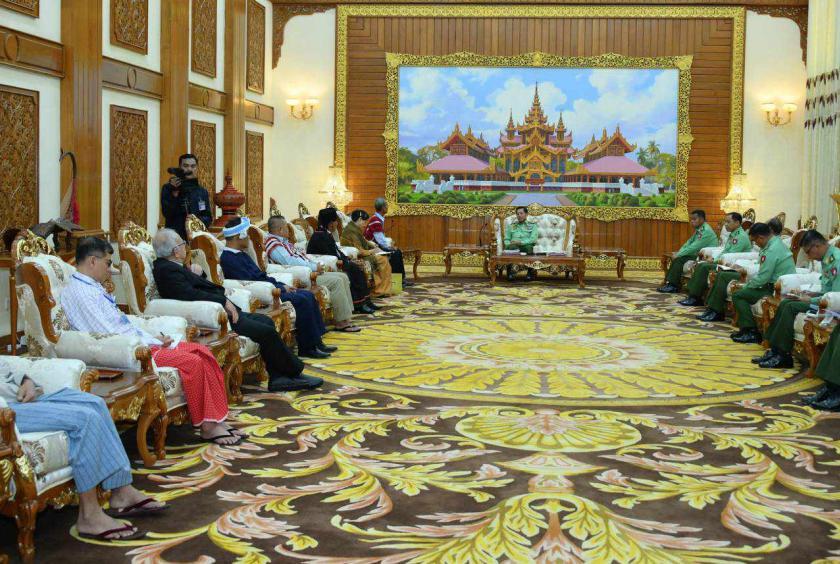
Major General Zaw Min Tun, spokesperson for the State Administration Council (SAC), warned that the nation faces the risk of disintegration if internal unity falters amid global competition between powerful nations and therefore EAOs and PDF are invited to solve political crisis through political dialogue.
He made this statement while discussing the military's invitation to address Myanmar's political crisis through political dialogue.
"The country's stability and the socio-economic development of the people have been severely impacted by ongoing violence. This is the reason for issuing this statement. The decision is based on three factors: (1) the current situation in Myanmar, (2) shifting international dynamics, and (3) the agreement of organizations and individuals seeking peace," said Maj. Gen. Zaw Min Tun.
He also reiterated that the military's involvement in politics was necessary due to alleged electoral fraud in the 2020 election.
"This is political dishonesty, or you could call it political corruption. It’s a political issue that the military sought to resolve through political means. We pursued solutions via parliament, the Constitutional Court, the Supreme Court, and key government officials, but none worked. Instead of a political resolution, they chose an armed path against democracy, forming terrorist groups like the NUG and PDF, committing violence, and terrorizing the public," he added.
As of September 27, violence across Myanmar has resulted in widespread disruptions, with education and healthcare sectors heavily affected by attacks from PDF groups. A total of 75 teachers, 17 healthcare workers, and over 6,700 individuals, including 84 monks, have lost their lives. Additionally, more than 9,000 bomb explosions have occurred, and over 1,300 cases of arson and destruction have targeted schools, monasteries, factories, workshops, banks, and homes, according to Major General Zaw Min Tun.
"The election process has begun to restore the multi-party democratic system, which is the will of the people. Every citizen, regardless of their location, should have the right to participate in this democratic system and freely choose their government. For this, security and stability are crucial, and this announcement is made to ensure that," said Maj. Gen. Zaw Min Tun.
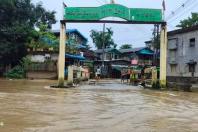
He also highlighted that many regions in Myanmar are currently suffering from monsoon floods, and recovery efforts are urgently needed. He called for peace, stressing the importance of stability in rebuilding communities affected by natural disasters.
"Furthermore, in the current global context, competition among world powers is intensifying, with the Russia-Ukraine conflict, the Middle East situation, and tensions in the South China Sea as clear examples. Small nations like ours must maintain internal unity to survive in such an environment. If we lose that unity, we risk being overtaken by international forces. This is why this announcement focuses on promoting internal unity," he added.
Maj. Gen. Zaw Min Tun also expressed gratitude to various ethnic armed organizations (EAOs), international groups, and individuals who have called for peace and a political resolution. The military has consistently engaged in peace efforts, and in April 2022, a peace declaration was issued by the Chairman of the State Administration Council, inviting ethnic armed groups for direct talks. Between May 2022 and January 2023, the government held three rounds of discussions with 10 groups, including those who have signed and have not signed the Nationwide Ceasefire Agreement (NCA).
Through these talks, agreements on building a democratic federal system, peace, and regional development were achieved. The National Unity and Peacemaking Coordination Committee held 98 meetings with EAOs, political parties, religious leaders, and peace mediators, underscoring the military's ongoing commitment to dialogue.
"Due to the ongoing armed conflict, our country has suffered significant losses in human resources, infrastructure, and lives. We urge ethnic armed organizations, terrorist insurgents, and PDF groups to abandon violence and pursue political dialogue through democratic channels, including party politics and elections. Let us focus on peace, reject violence, and work together on resolving the people's issues," Maj. Gen. Zaw Min Tun concluded.
On September 26, the State Administration Council's press release urged ethnic armed organizations (EAOs) and People’s Defense Forces (PDFs) to abandon armed conflict and pursue lasting peace and development through political dialogue. The Council called for all groups fighting against the state to engage in peaceful communication and seek solutions through political means.