

President U Min Aung Hlaing has stressed that while the government must implement its policies and objectives, it should not ignore the wishes and concerns of the public.
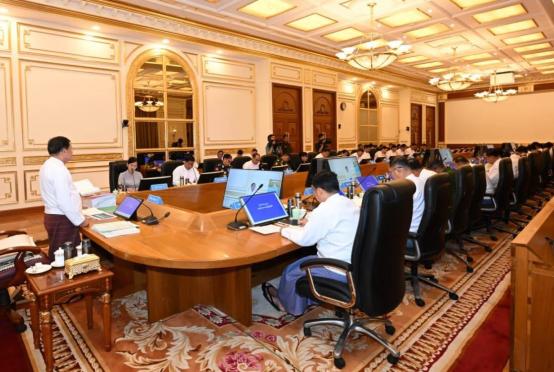
Speaking at a Union Government meeting held at the Presidential Office in Nay Pyi Taw on 23 June, the President said government officials at all levels should maintain good relations with both civil servants and the public, while ensuring fair and balanced administration.
He called on ministers, chief ministers and local authorities to help address the professional and personal difficulties faced by government employees and to work towards resolving the challenges confronting ordinary citizens. He added that effective public relations were essential for understanding people’s needs and responding to them appropriately.
The President noted that public expectations vary across sectors such as education, healthcare and social welfare, and said policymakers must remain aware of public opinion to ensure government policies align with citizens’ aspirations and contribute to national socio-economic development.
He also urged regional and state governments to work together to successfully implement development projects, particularly in education and transport infrastructure during the coming fiscal year.
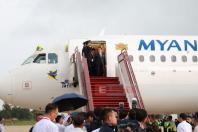
Highlighting the country’s weak manufacturing sector, the President said recent visits to India and China had included discussions with business leaders aimed at increasing trade, investment and domestic production. Greater local and foreign investment, he said, would create jobs and strengthen industrial output.
He further called on relevant ministries and regional governments to ensure manufacturers have access to the resources needed to operate at full capacity. Myanmar possesses abundant natural resources, he said, but greater effort, skills development and employment opportunities are needed to unlock the country’s economic potential.
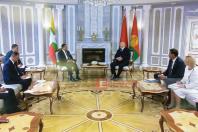
The meeting was attended by Vice-Presidents U Nyo Saw and Daw Nan Ni Ni Aye, Union ministers and the Chairman of the Nay Pyi Taw Council, while regional and state chief ministers joined via video conference.