
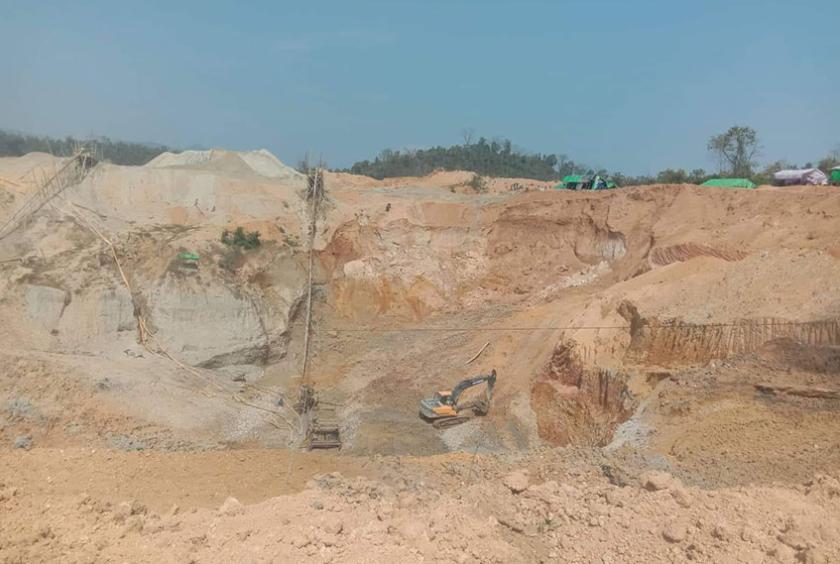
Gold mining re-starts in Indawgyi, Moehnyin Township, Kachin State according to locals.
In early October, 45 backhoes were seized at gold mines between Ma Monkaing village and Indawgyi (Lonetone). Afterwards, most of the gold mining was stopped but during this week, some were re-starting gold mining.
“We’ve seen tens of backhoes digging gold at the road side fencing zinc sheets. Although locals don’t like illegal gold mining, those groups which are doing illegal gold mining got prevention from armed groups. So, no one dares to prevent them,” said a local.
45 backhoes which were digging gold in early October were forced to drive to Hopin based military unit and these backhoes were auctioned in Myitkyina according to a man close to a backhoe owner.
The backhoes which were listed were seized. Owners gave Ks.3.5 million to Ks.10 million to get back their backhoes but it was in vain. When these were auctioned in Myitkyina, locals bought about 6 backhoes. Some owners from here unable to buy their backhoes and therefore, businessmen bought them. These backhoes were sold between Ks.50 million to Ks.200 million. Now, the owners heard that there will be surprise check and as a result, backhoes are ready to drive away from here, continued the man.
Illegal gold mining is carried out around Maing Naung creek, between Maing Naung and Indawgyi, upper Nyaungbin village and along Nant Tain creek which is among Indawgyi bio reserve.
Gold mining began in Indawgyi region after 2000. Since then, there have been such consequences as damaged forests and farmlands and depleting fish species. Moreover, local people around the area had to stop their reliance on the lake for drinking water.
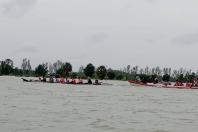
With excessive mining, locals can no longer drink water from the lake. The main thing is that the lake is drying up. There is large amount of silt. Fishermen are facing fish shortages. Indawgyi Lake was designated as Indawgyi, a Wildlife Sanctuary (1999), and a UNESCO Biosphere Reserve (2017). It is the largest inland lake in Myanmar.