
The groups involved in the production and trafficking of illicit drugs are increasingly operating through interconnected networks and adopting more sophisticated technologies, making it difficult to arrest drug kingpins and collect evidence, said Police Brigadier General Thant Lwin Maung, Joint Secretary of the Central Committee for Drug Abuse Control (CCDAC) and the Myanmar Police Force’s Drug Enforcement Division.
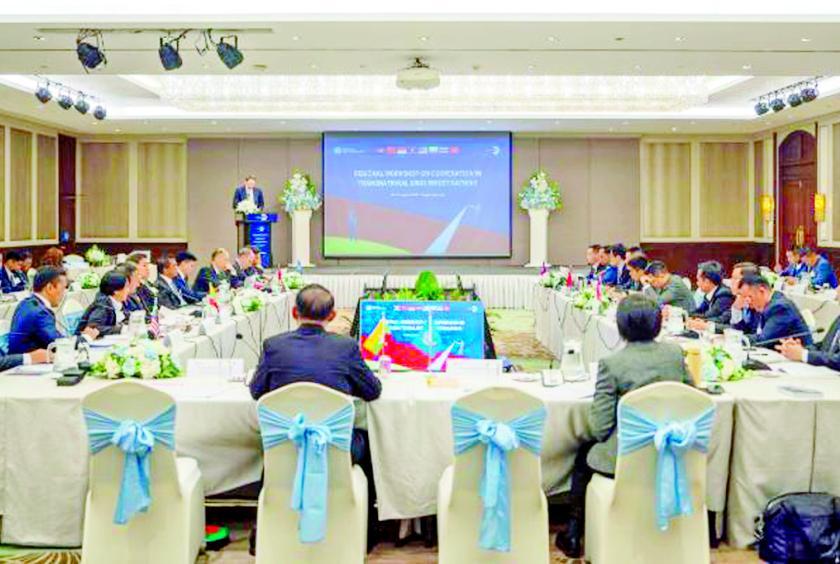
He made the remarks at a regional workshop on investigating transnational drug crimes, jointly hosted by the Central Committee for Drug Abuse Control (CCDAC) of Myanmar and the United Nations Office on Drugs and Crime (UNODC) at the Chatrium Hotel in Yangon on August 25.
At the workshop, Police Brigadier General Thant Lwin Maung said the regional drug trafficking situation is changing rapidly. Drugs are being produced in one location and transported and sold to multiple countries, while the resulting profits are being concealed in countries under separate jurisdictions. He said drug production and trafficking groups are increasingly operating through interconnected networks and making more innovative use of technology. Based on drug seizures in Thibaw and Mongyai, transnational drug gangs have begun switching to new chemicals that are not included on the list of controlled chemicals and modifying their chemical formulas to evade investigations. They have also started hiring foreign chemists who illegally enter the country through border areas.
He further said authorities face difficulties in arresting drug kingpins and collecting evidence, as well as significant challenges in transferring suspects across borders. Therefore, regional cooperation should be given priority. He noted that delays in the exchange and sharing of information under legal and investigative systems, unclear procedures, incomplete documentary evidence and difficulties in multi-level communication processes could allow offenders to evade legal punishment. He said countries would work together to identify obstacles that cause delays and find practical ways to overcome them.
The workshop discussed cooperation challenges commonly encountered in transnational drug cases, country-specific presentations, the exchange of evidence and information, documentation and language requirements, extradition, deportation, and cooperation in the transfer and acceptance of suspects in border areas.
The meeting continued with the participation of eight representatives led by Police Lt. Colonel Ma Pyone from the Drug Enforcement Division, 42 representatives from Mekong member countries and UNODC, and eight representatives from partner Southeast Asian countries Indonesia and Malaysia, for a total of 58 participants. The meeting will continue until August 27.