
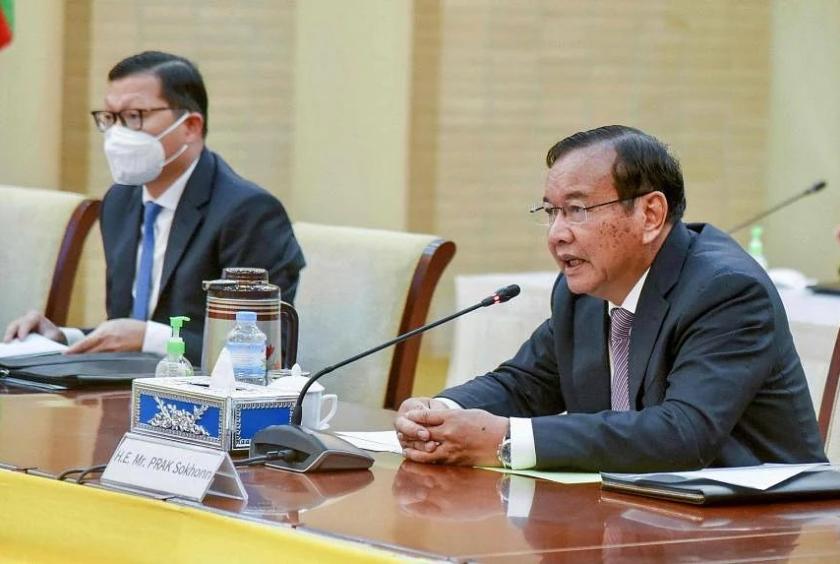
BANGKOK - Asean will not put its unity at risk as it goes about trying to help Myanmar resolve its political crisis, said the regional bloc's special envoy Prak Sokhonn on Thursday (July 21).
Speaking during a webinar organised by the ISEAS - Yusof Ishak Institute in Singapore, the Cambodian foreign minister urged people to be "fair and respectful" about all the effort expended so far to address the turmoil triggered by the Myanmar military takeover on Feb 1 last year.
"Whatever we do and will do to help Myanmar, our efforts, actions and dedication shall never put at risk, in any way, our unity, the Asean unity," he said.
The 10-nation bloc has been criticised for being too soft on the Myanmar ruling military, which has made little meaningful progress in implementing a road map drawn in April last year.
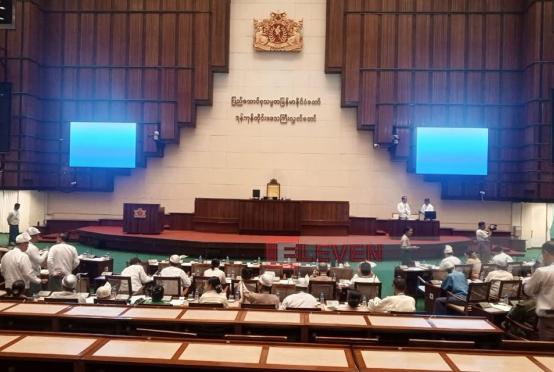
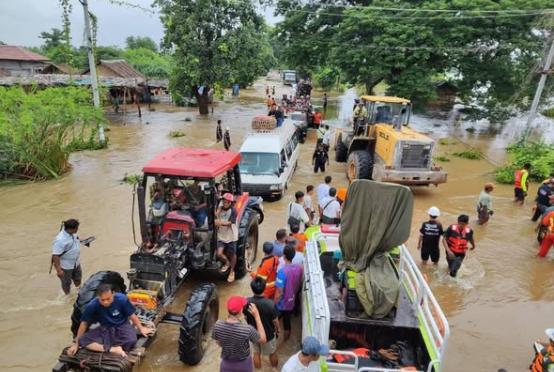
Instead, armed conflict has flared up as the rival National Unity Government (NUG) - which comprises ousted parliamentarians and allied groups - wrestles with the ruling military for legitimacy. The military government continues to detain deposed state counsellor Aung San Suu Kyi alongside thousands of political prisoners.
The World Bank expects Myanmar's economy to grow 3 per cent in the year ending September, after suffering an 18 per cent contraction in the previous year. About 40 per cent of its population is living below the poverty line.
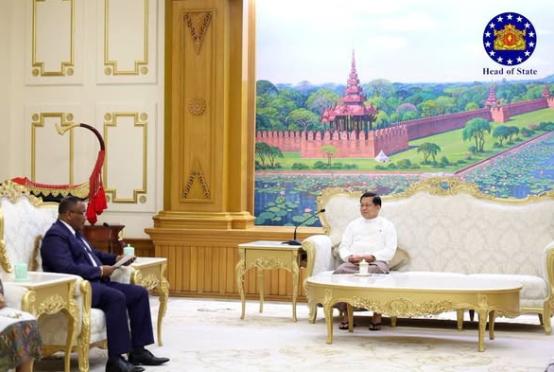
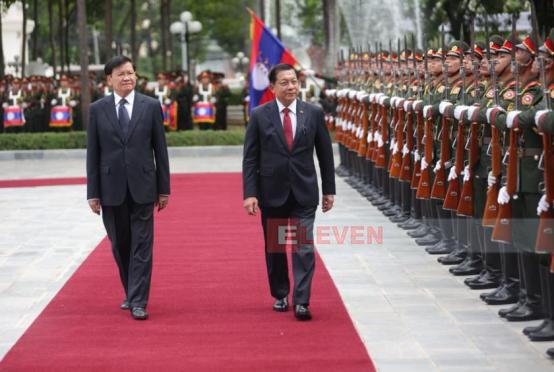
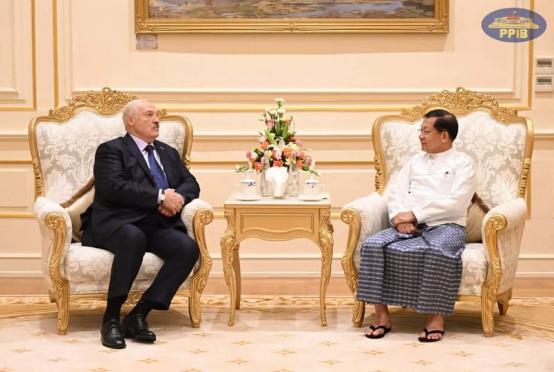
Senior General Min Aung Hlaing and foreign minister Wunna Maung Lwin have been shut out of high-level Asean meetings - including the Asean Foreign Ministers' Meeting and related meetings which begin on July 31 - as the bloc insists that Myanmar send a "non-political representative".
Bilateral approaches, however, have differed among Asean member states, with some, like Thailand, being more forthcoming about acknowledging the ruling military’s authority. In March this year, the Thai outgoing ambassador to Myanmar met Senior General Min Aung Hlaing.
Mr Prak Sokhonn, who has visited Myanmar twice in his capacity as special envoy, said that he has managed to open new space for political dialogue, albeit with conditions imposed by the ruling military.
The military government, which calls itself the State Administration Council (SAC), regards the NUG and various "people's defence forces" resisting military rule as terrorists.
The SAC reportedly said it was open to negotiating with those classified as terrorists if they do not try to destroy or replace the government - conditions slammed by critics as one-sided.
But Mr Prak Sokhonn stressed: "For the first time in over a year, I managed to open the door for a possible talk between the SAC and those designated as terrorists... I have managed to unblock the wheel of peace talks."
The Cambodian minister also addressed consistent calls by democracy activists for Asean to openly engage the NUG - something it has not done so far. He said he had "searched for ways and means" to meet all concerned parties to enable the start of political dialogue.
"But in doing so, we don't need to shout from the rooftop on whom, on how, on when or on where we engage with those actors deemed important for the political dialogue," he said. "Negotiations are most of the time done in a discreet, if not secret, manner."
He said that the ruling military has turned down his requests to meet Ms Suu Kyi. Detained since the military takeover, the 77-year-old Nobel Prize winner has been slapped with several charges, including corruption, that would effectively end her political career.
"We view that Daw Aung San Suu Kyi is one of the most important actors in advancing inclusive dialogue and promoting the principle of non-violence," said Mr Prak Sokhonn.
At the same webinar, Myanmar analyst Min Zin warned against putting Ms Aung San Suu Kyi "on the spot" because she has limited information about the current situation. Myanmar's democratic movement has moved beyond individual figures, said the executive director of the Institute for Strategy and Policy (Myanmar) think-tank.