
Businesses which want to employ more than ten security personnel must apply for a permit from the relevant Private Security Services Supervisory Committee, said Lt. Gen. Tun Tun Naung, Union Minister for Home Affairs.
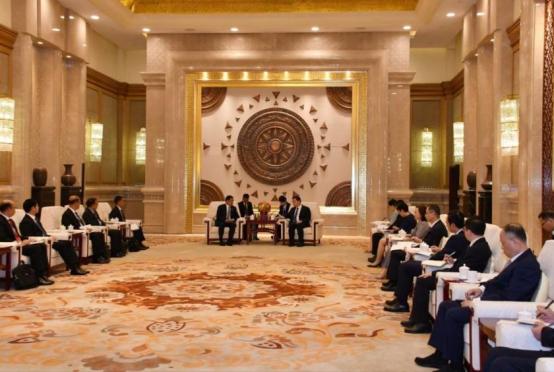
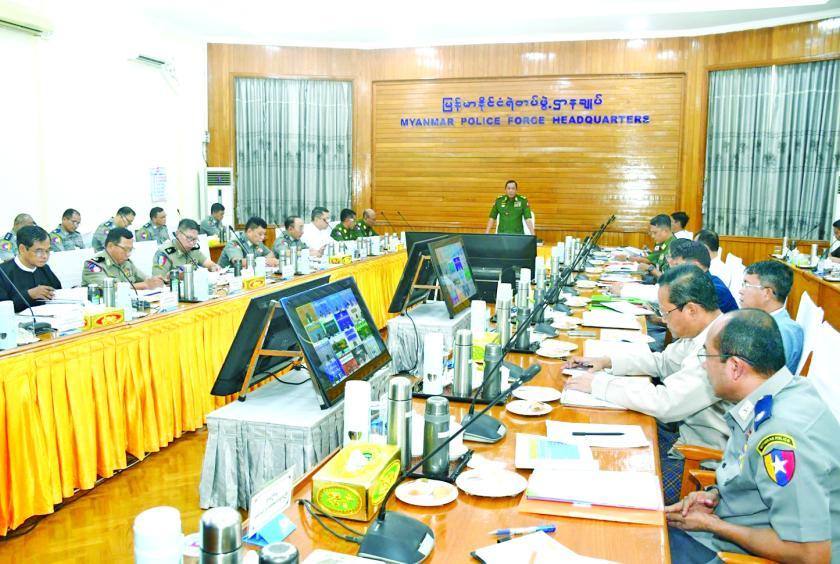
He made the remarks at the Private Security Services Supervisory Central Committee Meeting No. (1/2025) held at the Myanmar Police Force Headquarters Meeting Room (1) on June 19.
Lt. Gen. Tun Tun Naung, Chairman of the Private Security Services Supervisory Central Committee, said that the Private Security Services Law was enacted by the State Administration Council Law No. (4/2025) on February 18, 2025. The Private Security Services Supervisory Central Committee has approved and issued a directive on applying for a private security service license or permit under Section 55 Sub-section (b) of the Private Security Services Law through the Central Committee Notification No. (16/2025) on June 18, 2025. The Private Security Services Law consists of Chapters 1 to 13 and Sections 1 to 55. Companies and entrepreneurs who want to operate private security services must fully understand and comply with the requirements for applying for a license, applying for a permit, the responsibilities and rights of the licensee, the responsibilities and powers of private security personnel, prohibitions, and penalties. In addition, the Central Committee issued Notification No. (16/2025) on June 18, 2025, which fully describes the application forms for applying for a license and permit, and the instructions 1 to 59 to be followed.
Companies that want to operate private security services must apply for a private security service license to the relevant Union Territory, Region, and State Private Security Service Supervisory Committee in accordance with the directive and in accordance with the specifications. Entrepreneurs who want to employ more than ten security personnel in their own businesses and subsidiaries must apply for a permit from the relevant Union Territory, Region, and State Private Security Service Supervisory Committee. Applications must be submitted to the Regional and State Private Security Service Supervision Committee. The Union Territory, Regional and State Private Security Service Supervision Committee will review the applications for compliance with the requirements and submit the compliant applications to the Central Committee with comments. The Supervisory Committees will issue licenses or permits to the applicants based on the decisions of the Central Committee. The Private Security Service Supervision Committees need to supervise companies that will provide private security services in accordance with the law and regulations to support national security, rule of law, and public peace and security, and to develop human resources and become international-level private security services.
Next, members of the Central Committee for Supervision of Private Security and members of the Union Territory, Regional and State Private Security Service Supervision Committees presented and discussed issues related to private security services in their respective sectors.
The meeting was attended by the Chairman of the Central Committee for Supervision of Private Security Services, Union Minister for Home Affairs, Lt. Gen. Tun Tun Naung, members of the Central Committee and members of the Committee for Supervision of Armed Forces in the Regions, and the Chairman and Secretaries of the Union Territory, Region and State Private Security Services Supervision Committees attended via video conference.