
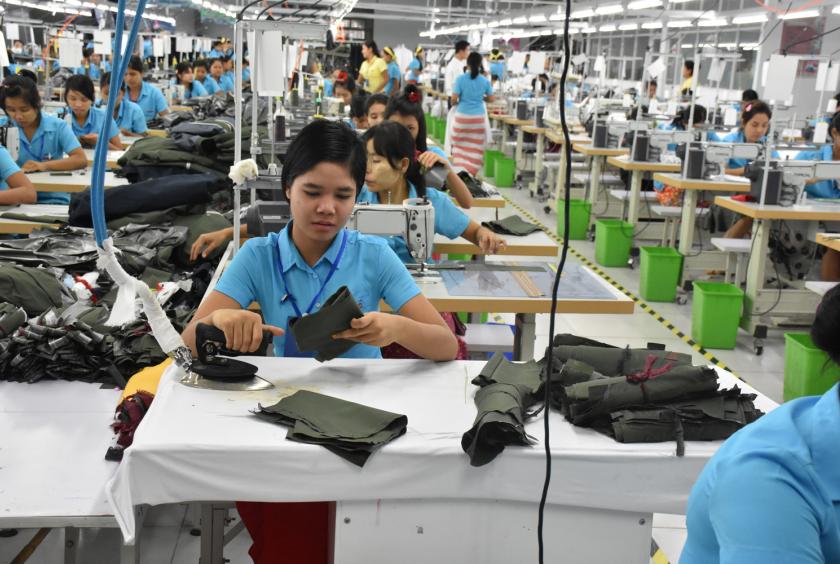
More than half of female garment workers may become jobless if the EU withdraws the Generalized Scheme of Preferences (GSP) rights, said Myint Soe, President of Myanmar Garment Entrepreneurs Association (MGEA).
On October 25, the EU ambassador said it planned to revoke the GSP rights granted to Myanmar soon. The EU’s withdrawal of GSP may hamper Myanmar’s democratic reform processes. A decline in the garment industry may also have a knock-on effect on button and pocket production,” he added.
EU Trade Commissioner will send commission to Myanmar to observe for consideration to revoke GSP. During the three-day tour, the commission will conduct field works and meet with ILO, labour Union, factory owners and CSOs.
Lower House MP Bo Bo Oo representing Sanchaung Township Constituency said: “The EU and international organizations don’t understand Myanmar’s democratic reforms and pay attention to the Rakhine issue alone. The EU may thoroughly think about the case that will make more than 500,000 Myanmar workers jobless.”
“Female workers from the garment industry have nothing to do with the Rakhine issue. The EU’s withdrawal of GSP’s rights may hamper not only the economic reform but also the political transition in Myanmar,” MP Bo Bo Oo added.
The EU plans to revoke the GSP rights granted to Myanmar as more than 700,000 people have fled to Bangladesh due to the Rakhine issue. More than 100,000 garment workers lost their jobs as the EU suspended the GSP rights in 1997.