
The death toll from the suspected COVID-19 has dropped slightly since July, but has not returned to normal, according to some charities.
In July, the death toll from suspected COVID-19 rose in Yangon Region, with charities carrying at least 20 bodies a day.
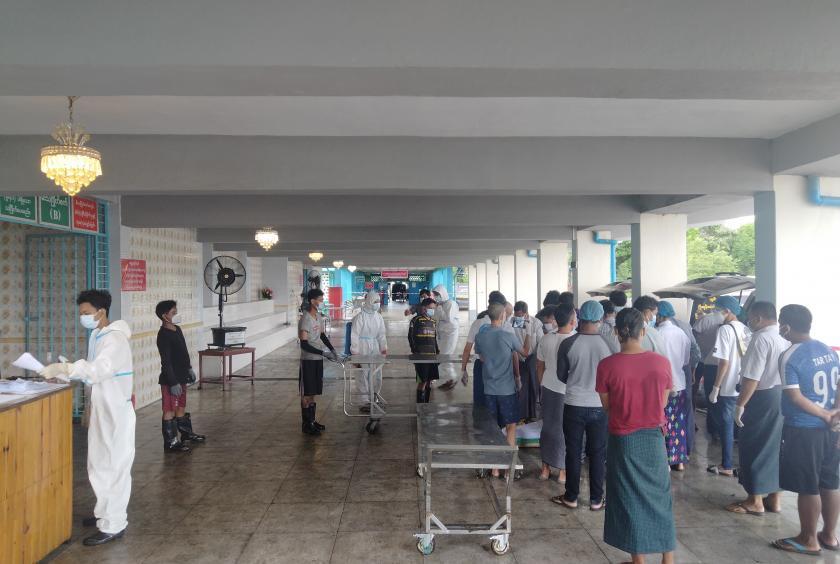
"The situation is not that bad now. We have to carry four or five bodies a day. This is not normal. Before COVID-19 outbreak, we only had to carry two or three bodies for two or three days. Some days we have to sit in the office because we have nothing to do. This is not the case with COVID-19 now. However, compared to July, it can be said that it has declined, but it is not normal,” said Min Din from the Metta Thingaha funeral service society in East Dagon Township.
They sent the bodies to Kyisu cemetery.
"Now there are more than 20 bodies a day in the cemetery. No more queuing like before. But this is also not normal. In the past, there were only seven or eight deaths a day in Kyisu. Now there are more than 20,” he said.
Although the death toll has not dropped significantly, it was declined compared to July, said Ko Thurain from the Sanchaung Auxiliary Fire Brigade.
"Now I have to carry only two bodies a day," he said.
In July, the death toll from the suspected COVID-19 rose sharply in Yangon Region, with bodies being dumped in cemeteries.
During that time, municipal employees working in cemeteries in the region were worked in three shifts to cremate them.
Hla Soe, Chief Minister for the region wrote on his Facebook page during July that the death toll has risen.
"The death toll in the third wave of COVID-19 has risen. The death toll from COVID-19 as well as other diseases (especially for the elderly) has risen sharply. On July 1, the number of people buried in nine Yangon cemeteries increased to about 153, and it is gradually increased to more than 500 on the July 11. Normally, only 300 bodies can be cremated in nine cemeteries a day, so there are many bodies to be cremated,” wrote Hla Soe on his social media page.
Hla Soe wrote on July 19 that more than 1,500 people were cremated in nine cemeteries in the region, including those under the municipal administration.