
by News Desk
PUTRAJAYA, Malaysia (Sin Chew Daily/ANN) - Bilateral relationship between China and Malaysia was back to normal and ties have improved, says Minister of Foreign Affairs .
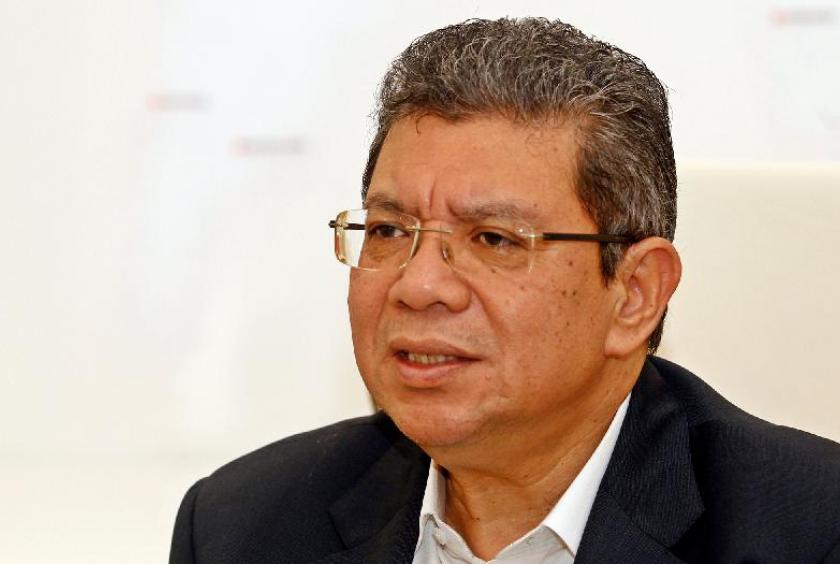
Ties between Malaysia and China have improved, says Minister of Foreign Affairs Saifuddin Abdullah.
He admitted that the ties between Malaysia and China were not smooth when the Pakatan Harapan initially took over the government, especially when the government was forced to put on hold some of the mega projects. But when the East Coast Rail Link (ECRL) project re-started again after a successful negotiation, bilateral relationship between China and Malaysia was back to normal and ties have since improved.
Saifuddin said the commencement of ECRL project is an important yardstick.
In an exclusive interview with Sin Chew Daily, Saifuddin shared the outcome of his visit to China from 9 September to 14 September in conjunction with 45th anniversary of Malaysia-China ties.
“This reflects that leaders of both countries respect each other. Chinese leaders display their open-mindedness for ECRL project to be re-negotiated. When the project started again, this offers positive impact to the business circle and proves that the Pakatan Harapan government is not anti-China,’’ he said.
Saifuddin also said that the Pakatan Harapan government is business friendly. After issues involving the Forest City Country Garden in Johor were solved, this showed the Pakatan Harapan government even more business friendly.
“The government will continue to implement good projects. When the government puts some projects on hold, it must have its reasonable consideration,’’ he said.
Since the Pakatan Harapan government took over the government after winning the election on 9 May last year, several mega projects including the ECRL were reviewed. The ECRL project stopped in July last year. The Prime Minister later appointed Daim Zainuddin to negotiate with China on behalf of Malaysia. After several months of negotiation, both countries reached consensus to re-start the project in April.
The cost of ECRL reduced by 32.8% or RM21.5 billion (US$5.14 billion). The original cost was RM65.5 billion (US$15.67 billion) but reduced to RM44 billion. (US$10.52 billion)
In addition, the ECRL route was modified where the Bentong and Gombak stations were cancelled. The train would head to Jelebu from Mentakab. The final station is Port Klang instead of Gombak.
Saifuddin said ties between Malaysia and China were dated since the Malacca Sultanate when Admiral Zhenghe and Ma Huan, both were Muslims, travelled to Southeast Asia. He reiterated that the formal ties between both countries were not 45 years only.
“Issues are resolved due to the bilateral ties of both countries. If we are calculative about profit and loss, then it will be hard to achieve consensus.”
Saifuddin has described his visit to China as fruitful. He revealed that Chinese President Xi Jinping is expected to attend the Asia Pacific Economic Conference (APEC) held in Malaysia in November. Xi will visit Malaysia again.
Xi’s last visit to Malaysia was October 2013.
On the other hand, Saifuddin is amazed by the rapid development of technology and the cashless transaction in China. He hopes to learn from China.
He said China is without a Silicon Valley, its cashless transaction is very advanced. Chinese nationals who visit Malaysia are making cashless payments too.
He said the local entrepreneurs should be finding ways to ride on the trend to use existing app to gain more business volume.
“Apps are common in China. Even farmers, fishermen and normal people are using apps. They are convenient like Alipay and WeChat wallet,’’ he said.