
A total of 358 in 100,000 populations in Myanmar suffered from TB and the TB transmission rate declined around three per cent every year, according to the WHO’s TB report 2018.
A total of 51 people died of TB. Under the National TB Eradication Program, the ministry gave medical treatment to more than 135,000 TB patients in 2018. The medical treatment success rate was around 87 per cent. The ministry is working to provide medical treatments in remote areas, worksites and prisons.
Union Minister for Health and Sports Dr. Myint Htwe said: “In 2018, those who attended the high-ranking officials meeting on TB at the UN headquarters decided to pay special attention the global TB transmission. TB is especially associated with socio-economic status of people. It is largely related to the facts such as population density, poverty, migration and undernourishment.”
According to the National TB Eradication Program, the Global Fund funded 10 million US dollars in 2018-2019 and the Access to Health Fund, one million US dollars for 2019-2020, for the fight against TB.
Ministry of Health and Sports has directed private hospitals, clinics and laboratories to report the latest information about TB.
For the TB eradication programs, the government allotted a budget of Ks 14 million in 1995-96 fiscal year, Ks5,568 million in 2016-17 FY, Ks 4,241 million 2017-18 FY and Ks over 4,000 million in 2018-19 FY.
In 2017, the Global Fund funded 19 million US dollars and 3MDG, 1.2 million US dollars.
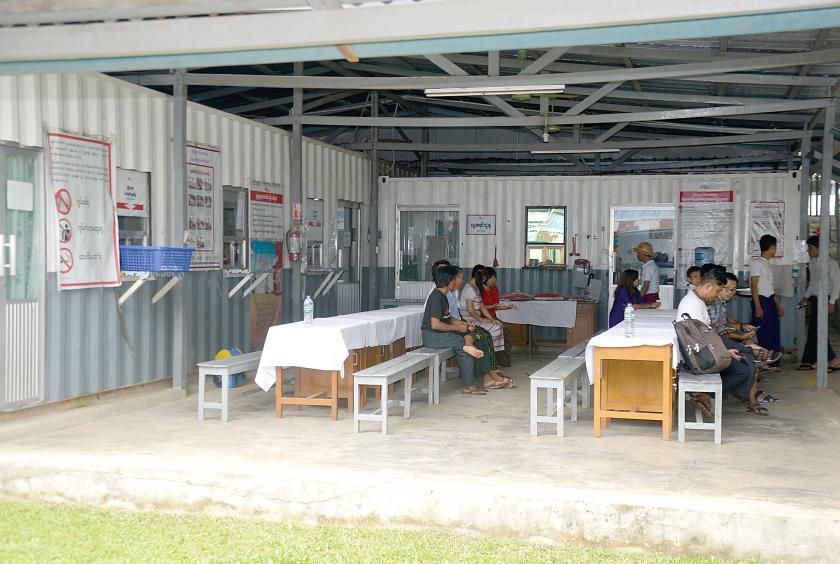
Due to the high TB incidence, the Public Health Department under the Ministry of Health and Sports, will step up its efforts to implement the urban TB treatment and control plan in 13 townships in Yangon, in cooperation with relevant organizations. The move aims to give effective medical treatment to the at-risk patients who are living in places with no easy access to healthcare, in Yangon.