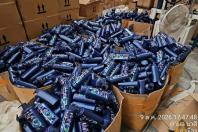

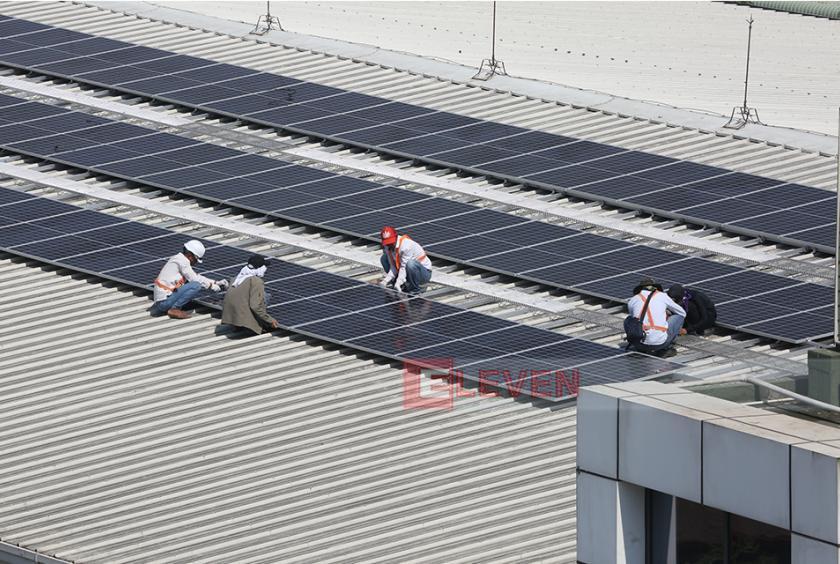
Solar panel prices in Myanmar have nearly doubled amid reports of a possible Super El Niño, with market sources saying prices fluctuate so sharply that morning and evening prices can differ on the same day.
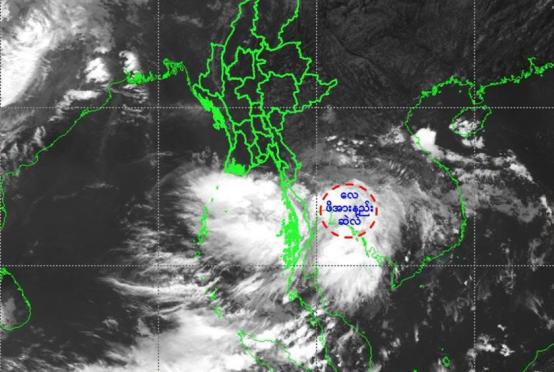
Demand for solar products has surged in Myanmar following weather forecasts warning of a possible global Super El Niño and announcements of rotational electricity supply, prompting consumers to purchase solar systems to cope with power outages.
“Prices are rising at a record-breaking pace. In 2022 and 2023, Jinko 400-watt solar panels cost around or slightly over K300,000 each. Now, popular Jinko 620-watt panels are selling for more than K800,000 to around K900,000 each,” a solar retailer said.
Market sources said a Jinko solar panel, one of the most widely used brands in Myanmar, cost only K550,000 in early August but has now climbed to nearly K900,000. Battery prices have also surged, with a battery previously priced at K7.2 million rising to K9.2 million within just two days.
“The solar market has become one of panic buying and selling. Prices differ between morning and evening, and from one day to the next. Even if we make a profit of K200,000 from selling a battery, we may have to put in another K300,000 to replace it. If we have to add K300,000 for each battery, that means K3 million for 10 batteries. We may technically make a profit, but when asked to show our actual earnings, we cannot, because we have to keep putting in more money to restock. Sellers are becoming fearful, while consumers are rushing to buy wherever they can because they are afraid prices will rise further,” a solar installer and retailer said in a TikTok post.
Solar products are now running critically low in the market, while prices continue to rise. Market sources said suppliers can guarantee quotations for only one day and must recalculate prices for subsequent days.
“Due to frequent price fluctuations, quotations can be guaranteed for only one day. If the buyer inquire again on a subsequent day, the quotation will need to be updated,” NEC Solar announced on social media.
Solar product prices have reached record highs, with shortages also affecting well-known brands.
Solar retailers have warned consumers to exercise caution as lower-quality brands are gaining ground amid near-exhaustion of popular products.
“Stocks of almost all high-quality inverters, batteries and power stations that offer warranties, reliable after-sales responsibility, readily available spare parts and good service are running low, with some products completely sold out. Meanwhile, products of questionable quality, brands that provide warranties but fail to honor their responsibilities, unfamiliar brands that are not used in their countries of origin, products with labels that cannot be found on Google, old stock that has remained unsold for years, and brands that have failed to gain market acceptance are now appearing in abundance. We urge consumers to consider these factors carefully and exercise caution when purchasing,” Power Station Myanmar wrote on social media.
Market sources attributed the shortages and price increases to several factors: consumers rushing to buy solar systems amid announcements of rotational power supply linked to the El Niño phenomenon; delays in importing solar products; rising prices at manufacturing plants in China; and a recent increase in the value of the Chinese currency.
“Demand and supply are out of balance. We cannot obtain as much stock as customers want. Sellers are effectively facing losses, so we have to manage sales carefully,” a solar retailer said.
Jinko is currently the most expensive solar panel brand in the local market, with prices ranging from more than K800,000 to K900,000 per panel. Prices of other brands have also risen significantly, according to market sources.