
MYITKYINA----The residents are now worrying over the flood because the water clearance activities along Uru River in Hpakant region had postponed nearly a whole year, according to the residents.
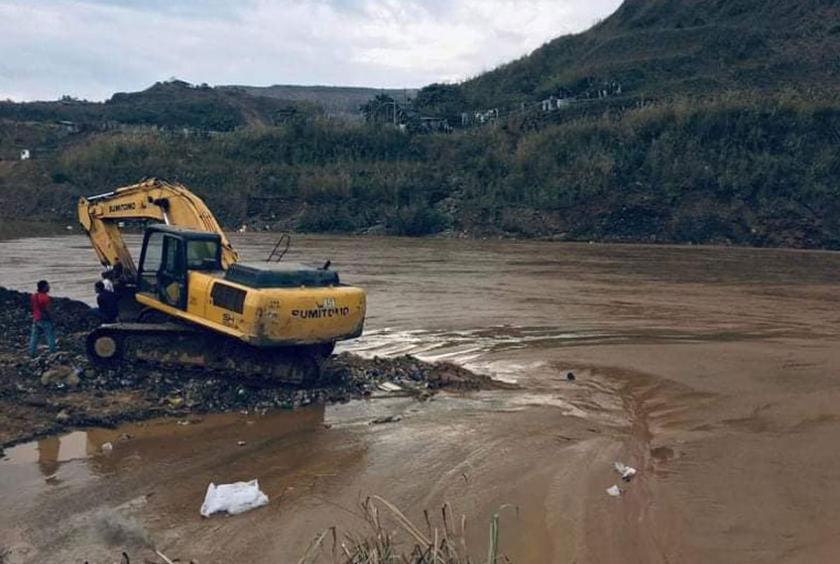
In the recent days, the mud-lake at an old jade mining site near Ma Hmone monastery in Seikmu village-tract, collapsed in Uru River. So, the river had been blocked with the sludge for long days so also the water flowing under the Uru river was dry-up.
“The waste soil had been thrown into the Uru River and then the river had been blocked with the rubbish. So, the water didn’t flow about four days. In the lower part of the river, there were many fishes. When four backhoes removed the waste soils, the water flowed again. Now, the Uru River is dry-up. No one remove the waste soil. I think, the upper part of Hswat Aung village may be suffering from the flood because the waste soils will be floating in the Uru River in the rainy season,” said a villager from Ma Hmone village.
“Due to financial affairs in 2021, we didn’t carry out water clearance activities along Uru River. And then, there had been below average rainfall in last year. So, the locals didn’t suffer a major flooding. In this year, if the rain will moderately pour down in Hpakant, there will be record flooding. In the past, there had been flooding due to the waste soils being thrown by the jade mining sites. Moreover, the houses were built along the embankment of Uru river. So, the river route is narrowed. Currently, the Uru River is full of waste soils. In rainy season, the waste soils will be flowing. Meanwhile, the lower parts may be flooded. We had requested not only local organizations but also overseas firms to remove the waste soils from the Uru River,” said one of the towns-elders from Seikmu village who also had participated in the Uru River Clearance Committee.
Currently, there are four bridges over the Uru River. If the waste soils and rubbish will be removed in timely during the rainy season, the flood will be occurring, according to the Uru River Clearance Committee.
As the jade mining companies in Hpakant region unsystematically threw the waste soil into the Uru River. So, the River had been blocked with the waste soil. It caused the flooding. That’s why the locals complained to the authorities including the vice-president in 2014 about the sustainable development in the villages including Hpakant Township.
The jade mining industry existed in the Hpakant region on a manageable scale since the beginning of ancient Myanmar kingdoms to 1994 before gaining peace with the Kachin Independence Organization.
After 1994, over 500 Jade Mining Companies started utilizing heavy machineries in the jade until the end of May, 2012. Due to commercial exploitation of jades, about 50 mountains and creeks had disappeared in the Hpakant region, which also contributed to floods as well as higher temperatures. According to the government records released in May, there are currently 1,879 private jade mining plots and 79 joint-venture plots in Lonekhin jade land in Hpakant Township.
Decades of massive jade mining had destroyed creeks, valleys and mountains in Hpakant regions. Moreover, flooding and high temperature occurred in the region.