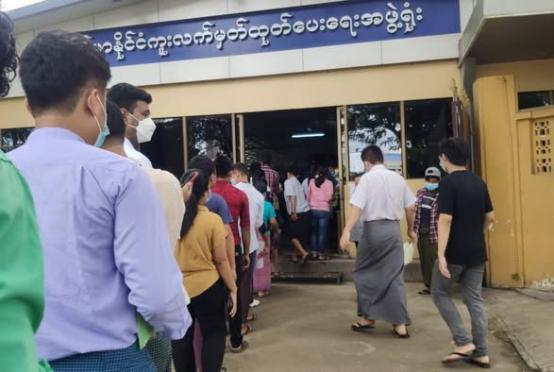

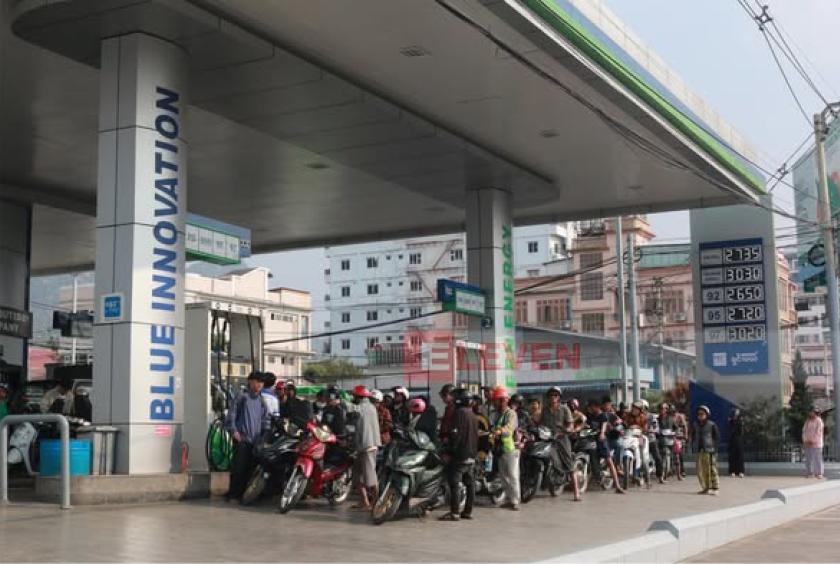
Fuel will be sold using a QR Code system for cars and motorcycles in an effort to reduce long queues at petrol stations, according to the Ministry of Energy.
The system will be introduced on a pilot basis starting March 12 at fuel stations in Nay Pyi Taw, Yangon, Mandalay and Taunggyi.
Authorities said the measure is intended to prevent fuel shortages and ensure that those who genuinely need fuel can purchase it more conveniently. It is also expected to reduce repeated queuing at fuel stations, where some buyers currently line up two or three times a day.
Under the new system, fuel stations will use a mobile application to verify vehicles before selling fuel.
To make the process simple and avoid inconvenience for the public, vehicle owners will not need to download the application or complete any registration. Instead, the verification process will be carried out by fuel station staff.
For cars, the barcode on the wheel tax sticker will be scanned by the shop staff and automatically checked by the system. If a vehicle has not purchased fuel within a day, fuel will be sold as usual. However, if the same vehicle attempts to buy fuel again on the same day at any station, the system will display that the first purchase has already been made and further sales will not be allowed until the next day.
For motorcycles, since wheel tax stickers do not contain barcodes, QR Codes will be issued at the fuel stations. To obtain the QR Code, the motorcycle owner will present the wheel tax to the shop staff, who will enter the vehicle number and tax expiration date into the application. The system will then generate a QR Code.
Motorcycle owners will need to either take a photo of the QR Code with their phone or print it out from the station. When purchasing fuel, they will show the QR Code to the staff, and the system will verify the information to ensure that fuel is not purchased multiple times in a day.
Fuel sales will also be checked according to government policies that regulate the days vehicles are allowed to operate. As a result, fuel will only be sold on the days when the vehicle is permitted to be used.
The application-based automatic verification system will be tested starting March 12 at fuel stations in the Nay Pyi Taw Council Area, Yangon, Mandalay and Taunggyi. After reviewing the trial results and making necessary adjustments, the system will be expanded to other cities.
The Ministry of Energy said that, with public cooperation, queues at fuel stations have already decreased and fuel distribution and sales have begun returning to normal.
The ministry is also monitoring the entire fuel supply chain—including import, storage and distribution—through the Online Monitoring Center of the Petroleum Products Supervision and Inspection Department in Nay Pyi Taw.
In addition, authorities are monitoring fuel sales at stations in major cities, including the type and license plate number of vehicles, the type and quantity of fuel sold, and the selling price, while continuing efforts to ensure domestic fuel security.