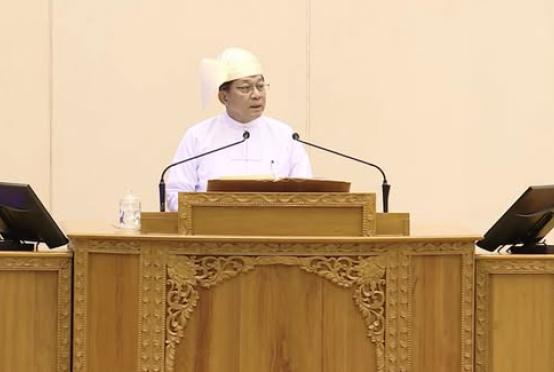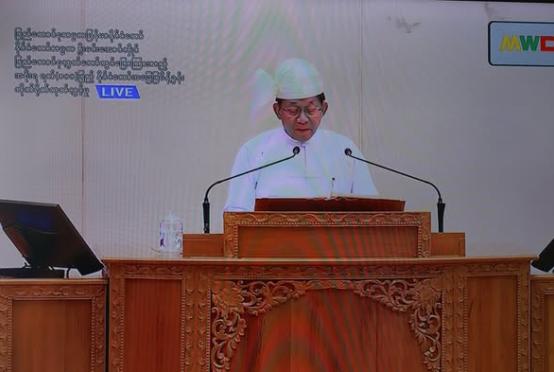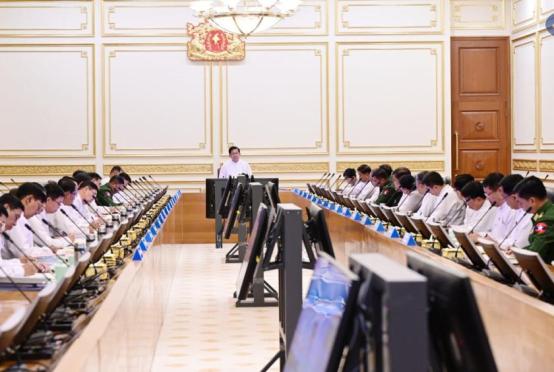

The risks of money laundering and terrorism financing have become more complex due to the expanding use of cross-border money transfers and digital financial systems, according to Dr. Khin Naing Oo, Union Auditor General, Chairman of the Myanmar Accountancy Council, and Patron of the Myanmar Institute of Certified Public Accountants.
He said that as such risks become more complicated and harder to predict, accounting professionals must not only provide accounting services but also play a key role as gatekeepers in anti-money laundering and countering the financing of terrorism (AML/CFT).
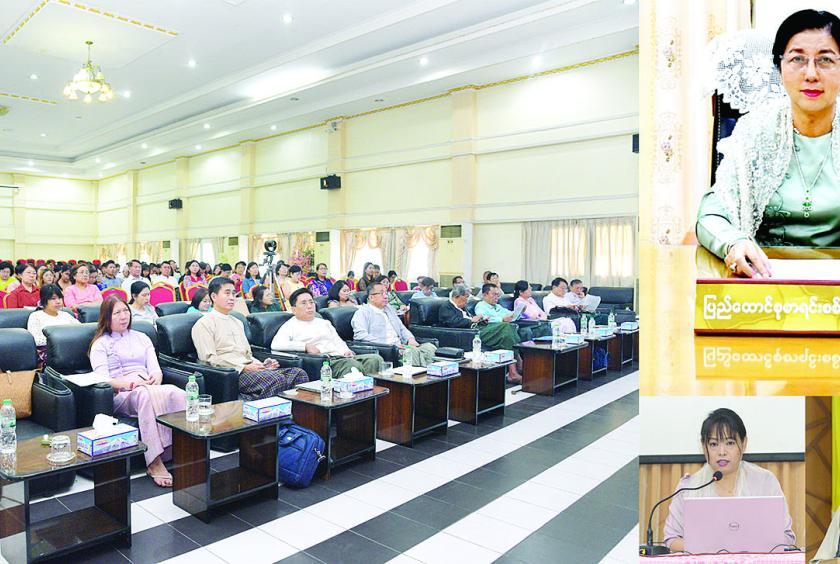
He made the remarks in a video message sent to an awareness-raising talk titled “AML/CFT Compliance Awareness Training for Accountants and CDD, EDD & STR Red Flag Indicator Typologies,” jointly organized by the Myanmar Accountancy Council and the Myanmar Institute of Certified Public Accountants. The event was held in hybrid format on February 16 at the Nay Pyi Taw Hall of the Advanced Accounting and Auditing Training School in Yangon.
The Union Auditor General said that since 2022, when the Myanmar Accountancy Council was assigned as the supervisory authority for accountants, it has continuously implemented AML/CFT measures. These include issuing directives, organizing training courses and talks, implementing national-level strategies and plans, and conducting off-site and on-site inspections.
He explained that the talk was organized to help accounting professionals better understand the requirements related to Customer Due Diligence (CDD), Enhanced Due Diligence (EDD), and Suspicious Transaction Reporting (STR). The topics discussed—CDD, EDD, and STR red-flag indicator typologies—are directly related to the responsibilities and obligations of accounting professionals.
Due to rapid changes in the business environment, increasing cross-border financial flows, and the expanded use of digital financial systems, the risks associated with money laundering and terrorism financing have become more complex and harder to predict, he said. Therefore, accountants must serve not only as service providers but also as key gatekeepers for AML/CFT efforts.
He urged accounting professionals to study and apply the knowledge shared in the discussions to enhance the security and compliance of their professional activities, strengthen adherence to legal and regulatory frameworks, and help build a professional environment aligned with international standards through active participation in AML/CFT efforts.
Afterward, patron U Kyaw Nyunt and President U Wan Tin of the Myanmar Institute of Certified Public Accountants delivered opening remarks. Daw Khine Zin Win, Deputy Director of the Myanmar Accountancy Council, presented on CDD, EDD, and STR red-flag indicator typologies, while U Thurein Aung, Deputy Director from the Special Investigation Department, discussed the responsibilities of auditors and accountants in combating money laundering, terrorism financing, and the financing of proliferation of weapons of mass destruction.