
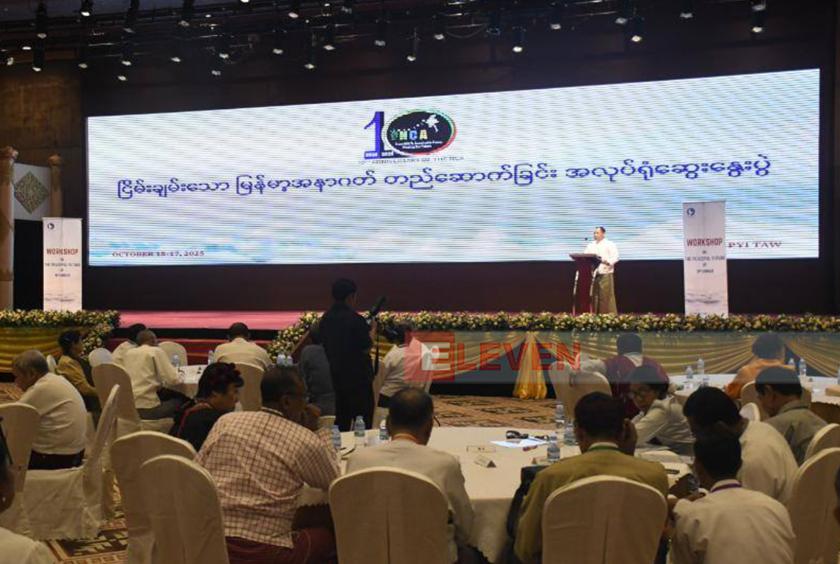
If Wa wants to be recognized as a state, it must seek state recognition through parliament in accordance with the constitution, said Lt. Gen. Yar Pyae, Chairman of the National Solidarity and Peacemaking Negotiating Committee (NSPNC) at the closing ceremony of the third day of the Nationwide Ceasefire Agreement (NCA) 10th anniversary celebration held at the International Convention Center-1 in Nay Pyi Taw on October 17.
"What we want to present is that we should persuade the UWSA and NDAA as well. So, in our area of responsibility, we persuade both the UWSA and the NDAA. Basically, if we don't include the Naga ethnic group, there are 18 ethnic armed groups. So, ten ethnic armed groups have signed the NCA. Three groups have withdrawn. Then there are seven ethnic armed groups in FPNCC. There are KNPP. So, there are 18 ethnic armed groups. So, here we have established the NCA. There are also groups that do not accept the NCA. The NCA is internationally recognized. We will go along this path. However, when we discuss, we can also work with the NCA Plus. What are their desires? We will work based on this. We also discussed with the Wa and Mongla that we can work on this. I think I have already said this during the discussion. That is their desire, they want a "Wa" state. So, if they want a "Wa" state, they should enter the parliament according to the constitution. After entering the parliament, they should demand it. What are the possibilities of achieving that? Where are the places, we will explain them clearly," he said.
During the discussions with the "Wa" and Mongla groups, he explained that they must go through the parliament and demand the "Wa" state issue according to the constitution.
Lt. Gen. Yar Pyae said, "All the people who came to the meeting understood. But when they explained to their leader, their leader disagreed, so we cannot continue. Their desire is that they want a "Wa" state. If they want a "Wa" state, they should enter the parliament according to the constitution. They should hold elections. We have never held elections in that region under the 2008 constitution. So, they pretended to agree at first, but later we did not reach an agreement. We want to share these things with you."
At present, the NCA is strong, and if the ceasefire specified in the NCA is reached, we need to discuss it politically, and political, social and economic agreements are needed, NSPNC Chairman Lt. Gen. Yar Pyae said.
"If we don't get these, the ceasefire will be in a state of collapse. In addition to the ceasefire, the NCA also stipulates that the Union Parliament approves political discussions and agreements resulting from these political discussions, so the NCA must take this into account and implement them. However, we will negotiate at the grassroots level on how to deal with organizations that do not accept this. Therefore, the issues that will be addressed before the election that are currently being discussed, these are also the seven groups that have signed the NCA, and we are discussing them with them. How will we review the NCA with these groups? We have also agreed to discuss these before the election. Then we will implement them and then resume the peace process," said NSPNC Chairman Lt. Gen. Yar Pyae.
NSPNC Chairman Lieutenant General Yar Pyae said that since the Union Parliament has approved the implementation of the NCA, any government that comes to power has the responsibility to implement the NCA.