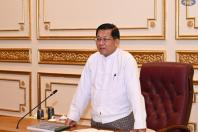

Being able to bar the removal of Section 59 (f) from the Constitution is a victory for the whole country, said Lower House MP U Thaung Aye from Pyawbwe Constituency on 11 March.
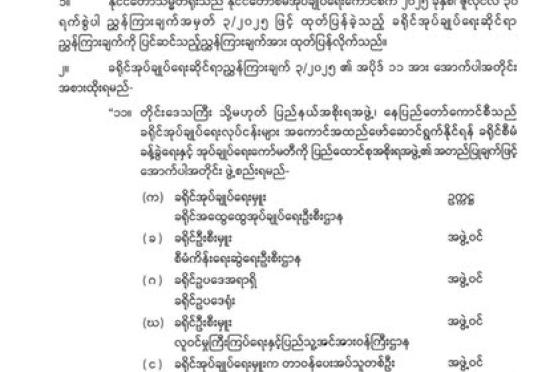
On 11 March, the Union Parliament took votes for the proposed amendments to 15 sections and sub-sections of the constitution.
“In my opinion, it is a victory for the whole country. The constitution is fully drafted to ensure that the country’s sovereignty is kept in the hands of our citizens so that foreign countries cannot interfere in the internal affairs. That’s why most people accept it and believe in it. They don’t want to abolish it. I see that as a victory for all,” said MP U Thaung Aye from the opposition Union Solidarity and Development Party (USDP)
The attempt to bar the removal of Section 59 (f) amounts to protecting the interest of citizens. It is aimed at putting the country’s sovereignty in the hands of national ethnics. We have achieved our goal of being free from foreign interference over the President and Vice-president and enabling them to do leadership without doubt, he added.
Some people with one-sided views will think that the ruling party wants to change the charter though Tatmadaw and the USDP show opposition to the charter amendment. I believe most people will have no such view. The reason is you can see the voting results in the parliament. Some lawmakers joins our stance. Some lawmakers did not follow the charter amendment path. Tatmadaw’ and the USDP’s stance towards the charter amendment is for the interest of our country and our ethnics. Our party has clearly announced that the charter changes will be made at a suitable time, he added.
A total of 15 sections and sub-sections included in Section 436 (a) of the constitution remained unchanged as the proposed amendments got a vote of less than 75 per cent.
Section 59 (f) says: “The President and Vice-Presidents shall be himself, one of the parents, the spouse, one of the legitimate children or their spouses not owe allegiance to a foreign power, not be subject of a foreign power or citizen of a foreign country. They shall not be persons entitled to enjoy the rights and privileges of a subject of a foreign government or citizen of a foreign country.”