
■ India
In a bid to wage war with China’s neighbors, including Myanmar in various forms, the United States has often employed three tactics— classic wars, CIA’s secret wars, and proxy wars. In India, the U.S. employed CIA’s secret war. It played games under its disposal in its own interest by having close contacts with ISI and R&AW and acting under the pretext of mediating between the two parties.
■ Geography and background history
India, officially the Republic of India is a country in South Asia. It is the seventh-largest country by area, the second-most populous country, and the most populous democracy in the world. Bounded by the Indian Ocean on the south, the Arabian Sea on the southwest, and the Bay of Bengal on the southeast, it has a coastal area of 4671 miles (7,517 kilometres) sharing land borders with Pakistan to the west; China, Nepal, and Bhutan to the north; and Bangladesh and Myanmar to the east. In the Indian Ocean, India is in the vicinity of Sri Lanka and the Maldives; its Andaman and Nicobar Islands share a maritime border with Thailand, Myanmar, and Indonesia.
In the first half of the 20th century, the Indian National Congress and other political organizations launched a nationwide independence struggle. In the 1920s and 1930s, millions of Indian people participated in the non-violence movement under the leadership of Mahatma Gandhi. On August 15, 1947, India was granted independence from the British rule. However, according to the desire of Muslim groups, the Dominion of India and the Dominion of Pakistan were established with their independent governments. There years later, India became a republic and its new constitution came into force.
Since its independence, India had gone through religious violence, class discrimination and rebellions in many parts of the country. However, they could have been controlled through tolerance and constitutional reform. Terrorism is a major problem for India’s security. Insurgents were Jammu and Kashmir and Naxalite or Indian communists in northeastern India. Since 1990, well-planned terrorist attacks were carried out in many big cities of India.
India has unsettled territorial disputes with China and Pakistan. The Sino-Indian War took place 1962 while wars between India and Pakistan broke out in 1947, 1965, 1971 and 1999. India was one of the founders of the Non-Aligned Movement and the United Nations (British India). India became a nuclear weapon state after launching an underground nuclear test in 1974 and conducting five more nuclear tests in 1998.
■ Foreign and military relations
Since the independence in 1947, India had maintained warm relations with many countries. India led the effort to urge the European colonies in Africa and Asia to fight for their independence. It got militarily involved with its neighbouring countries two times—sending its peacekeeping troops to Sri Lanka and conducing Operation Cactus in Maldives. India is one of the Commonwealth countries.
In 1965 after the Sino-Indian War and India-Pakistan War, India improved relations with the Soviet Union. But it had strain relations with the United States until the end of Cold War. India fought three battled with Pakistan, mainly due to the Kashmir dispute. Both countries then continued to fight small battles, especially the one caused by the Siachen Glacier dispute in 1984 and the one caused by the Kargil dispute in 1999.
Over the recent years, India has become an influential country in the ASEAN and South Asian Cooperation Association and World Trade Organization. India has been one of the founder countries of the United Nations and long supported it. Over 55,000 troops from India are serving in 35 UN peacekeeping programmes. Despite facing criticism and military embargos, India has consistently refused to sign the Nuclear-Test Ban Treaty and the treaty on the non-proliferation of nuclear weapons. It has paid greater attention to its sovereign power with nuclear power. Its current efforts have led to the substantially improved relations with the United States, China and Pakistan. When it comes to the economic sector, India has close contacts with developing countries in South America, Asia and Africa.
India’s military is the third biggest in the world, and auxiliary forces, coast guard forces and strategic control forces are under the control of the Indian military. The Indian President is also the military chief. India became a nuclear country after it launched the first successful nuclear bomb test with the code name Operation Smiling Buddha in 1974. With more underground nuclear tests in 1998, India faced arms embargos from the international community. Those embargos were gradually lifted after September 2001. India declared nuclear no-first-use policy. The U.S.–India Civil Nuclear Agreement was signed on October 10, 2008. Just before the agreement, India was able to end its isolation after being exempt from IAEA and NSG.
■ India-United States relations
Relations between India and the United States date back to India's independence movement and have continued well after independence from the United Kingdom in 1947. Currently, India and the United States enjoy close relations and have often seen eye-to-eye on issues such as counterterrorism (including concern of Pakistan's involvement), mutual distrust on Pakistan's nuclear weapons program, and Chinese influence in the Indo-Pacific.
■ India-United States military relations
In 1954, the United States made Pakistan a Central Treaty Organization (CENTO) ally. CENTO was formed based on the Baghdad pact on February 24, 1955 in the early Cold War period after World War II to thwart communist influence. The pact belonged to by Iran, Iraq, Pakistan, Turkey, and the United Kingdom. As a result, India cultivated strategic and military relations with the Soviet Union to counter Pakistan–United States.
In 1961, India became a founding member of the Non-Aligned Movement to avoid involvement in the Cold War power play between the United States and the Soviet Union. The Nixon administration's support for Pakistan during the Indo-Pakistani War of 1971 affected relations until the dissolution of the Soviet Union in 1991. In the 1990s, Indian foreign policy adapted to the unipolar world and developed closer ties with the United States.
f_2_0.jpg
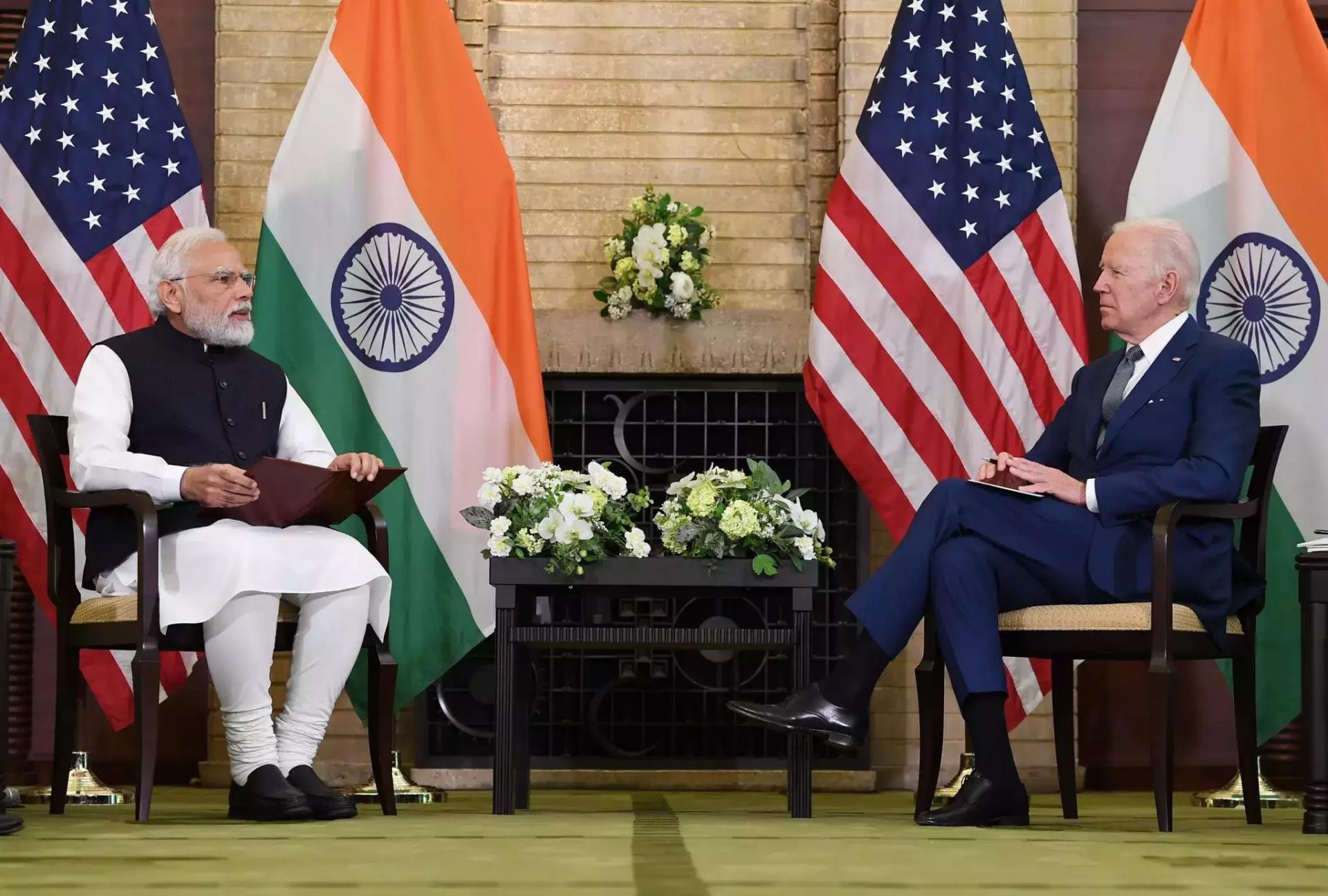
Inida Prime Minister Narendra Modi with U.S. President Joe Biden on May 22, 2022
■ During World War II
During World War II, India became the main base for the American China Burma India Theater (CBI) in the war against Japan. Tens of thousands of American servicemen arrived, bringing all sorts of advanced technology, and currency; they left in 1945.
Meanwhile, India became the main American staging base to fly aid to China. During World War II, the Panagarh Airport in Bengal Province of India was used as a supply transport airfield from 1942 to 1945 by the United States Army Air Forces Tenth Air Force and as a repair and maintenance depot for B-24 Liberator heavy bombers by Air Technical Service Command.
■ Independence (1947–1997)
The United States under the Truman administration leaned towards favouring India. However, during the Cold War Nehru's policy of neutrality was cumbersome to many American observers. American officials perceived India's policy of non-alignment negatively. In 1948, Nehru rejected American suggestions for resolving the Kashmir crisis via third party mediation.
But India did back the US when it supported the 1950 United Nations resolution condemning North Korea's aggression in the Korean War. India tried to act as a mediator to help end the war, and served as a conduit for diplomatic messages between the US and China. Although no Indian troops took part in the war, India did send a Medical Corps of 346 army doctors to help the UN side.
During John F. Kennedy's Presidency (1961–63), India was considered a strategic partner and counterweight to the rise of Communist China. Kennedy said, Chinese Communists have been moving ahead the last 10 years. India has been making some progress, but if India does not succeed with her 450 million people, if she can't make freedom work, then people around the world are going to determine, particularly in the underdeveloped world, that the only way they can develop their resources is through the Communist system.
The Kennedy administration openly supported India during the 1962 Sino-Indian war and considered the Chinese action as "blatant Chinese Communist aggression against India". The United States Air Force flew in arms, ammunition and clothing supplies to the Indian troops and the United States Navy sent the USS Kitty Hawk aircraft carrier from the Pacific Ocean to India, though it was recalled before it reached the Bay of Bengal since the crisis had passed
Relations then hit an all-time low under the Nixon administration in the early 1970s. Nixon shifted away from the neutral stance which his predecessors had taken towards India-Pakistan hostilities. He established a very close relationship with Pakistan, aiding it militarily and economically, as India, now under the leadership of Indira Gandhi, was leaning towards Soviet Union. He considered Pakistan as a very important ally to counter Soviet influence in the Indian subcontinent and establish ties with China, with whom Pakistan was very close.[
During the 1971 Indo-Pakistani War, the US openly supported Pakistan and deployed its aircraft carrier USS Enterprise towards the Bay of Bengal, which was seen as a show of force by the US in support of the West Pakistani forces. Later in 1974, India conducted its first nuclear test, Smiling Buddha, which was opposed by the US.
Despite the return of Indira Gandhi to power in 1980, the relations between the two countries continued to improve gradually, although India did not support the United States in its role in the Soviet invasion and occupation of Afghanistan.
The Reagan Administration led by US President Ronald Reagan provided limited assistance to India. India sounded out Washington on the purchase of a range of US defence technology, including F-5 aircraft, super computers, night vision goggles and radars. In 1984 Washington approved the supply of selected technology to India including gas turbines for naval frigates and engines for prototypes for India's light combat aircraft.
■ Military relations (1998–2004)
Soon after Atal Bihari Vajpayee became Indian Prime Minister, he authorised nuclear weapons testing at Pokhran. The United States strongly condemned this testing, promised sanctions, and voted in favour of a United Nations Security Council Resolution condemning the tests. President Bill Clinton imposed economic sanctions on India, including cutting off all military and economic aid, freezing loans by American banks to state-owned Indian companies, prohibiting loans to the Indian government for all except food purchases, prohibiting American aerospace technology and uranium exports to India. Over the course of improved diplomatic relations with the Bush Administration, India agreed to allow close international monitoring of its nuclear weapons development, although it has refused to give up its current nuclear arsenal. In 2004, the US decided to grant Major non-NATO ally (MNNA) status to Pakistan. The US extended the MNNA strategic working relationship to India but the offer was turned down.
After the September 11 attacks against the US in 2001, President George W. Bush collaborated closely with India in controlling and policing the strategically critical Indian Ocean sea lanes from the Suez Canal to Singapore.
The Post-American World, described George W. Bush as "being the most pro-Indian president in American history."
In 2009, the Obama Administration cleared the US$2.1 billion sale of eight P-8 Poseidons to India. This deal, and the US$5 billion agreement to provide Boeing C-17 military transport aircraft and General Electric F414 engines announced during Obama's November 2010 visit, makes the US one of the top three military suppliers to India (after Israel and Russia).
■ U.S. military tactics over India, Pakistan and China
In February 2016, the Obama administration notified the US Congress that it intended to provide Pakistan eight nuclear-capable F-16 fighters and assorted military goods including eight AN/APG-68(V) 9 airborne radars and eight ALQ-211(V) 9 electronic warfare suites despite strong reservations from US lawmakers regarding the transfer of any nuclear weapons capable platforms to Pakistan. Shashi Tharoor, an elected representative from the Congress party in India, questioned the substance of India–U.S. ties: "I am very disappointed to hear this news. The truth is that continuing to escalate the quality of arms available to an irresponsible regime that has sent terrorists to India, and in the name of anti-terrorism, is cynicism of the highest order". The Indian Government summoned the US Ambassador to India to convey its disapproval regarding the sale of F-16 fighter jets to Pakistan.
In October 2018, India inked the historic agreement worth US$5.43 billion with Russia to procure four S-400 Triumf surface-to-air missile defence system, one of the most powerful missile defence systems in the world. The U.S. threatened India with sanctions over India's decision to buy the S-400 missile defense system from Russia.
Harsh V. Pant, professor of International relations at King's College London, highlighted the importance of India to US strategic planning by saying: "India is key to the US' ability to create a stable balance of power in the larger Indo-Pacific and at a time of resource constraints, it needs partners like India to shore up its sagging credibility in the region in face of Chinese onslaught."
In March 2016, India rejected a proposal by the US to join naval patrols in the South China Sea alongside Japan and Australia. Defense Minister Manohar Parrikar said: "India has never taken part in any joint patrol; we only do joint exercises. The question of joint patrol does not arise.
On October 27, 2020, the United States and India signed the Basic Exchange and Cooperation Agreement (BECA), enabling greater information-sharing and further defense cooperation, to counter China's growing military power in the region.
■ CIA activities in India
1950s
In 1955, a chartered Indian airliner, Kashmir Princess, was bombed. There is substantial evidence that the Kuomintang may have planted the bomb, attempting to assassinate Zhou Enlai, who had been expected on it. CIA involvement is much less clear, although some general claims are made.
In a 1971 face-to-face meeting in the Great Hall of the People in Beijing, Zhou directly asked Henry Kissinger about US involvement, whose response included the line "As I told the Prime Minister the last time, he vastly overestimates the competence of the CIA."[1] Kissinger denied any US policy to kill him, and the two discussed the CIA at some length, in a manner unusual to find in US records.
In 1958, India's nuclear programs were assessed. Speculations are made by the intelligence experts that the CIA orchestrated the plane crash in which Homi Jehangir Bhabha, an Indian nuclear scientist, was killed.
During a period of anti-communist protests dubbed the Vimochana Samaram (English: "Liberation Struggle") against the first elected state government in Kerala, India, which was led by E. M. S. Namboodiripad of the Communist Party of India. The protests were largely funded by the CIA.
After mass protests in 1959, the Indian government finally vowed to put pressure on Namboodiripad, and he was dismissed on July 31, 1959.
siasat.jpg
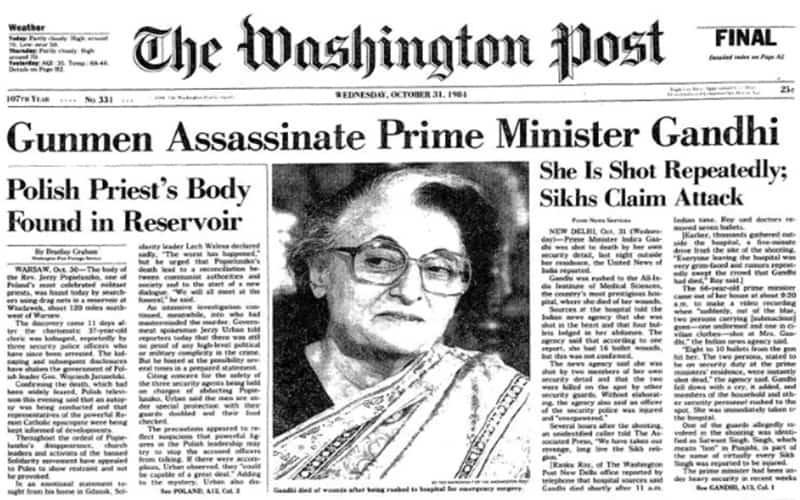
Front Cover of the Washington Post reporting on the Assasination of India PM Indira Gandhi
■ 1960s
In 1965, the Special National Intelligence Estimate Number 31-1-65 examined India's nuclear weapons policy for the rest of the 1960s. In doing so, India's technological capabilities, the pressures for a weapons program and the opposition to such a weapons program are examined. The final section, “The Indian Decision,” attempts to assess the calculations of India's decision, noting that India could attempt to represent any underground nuclear test for peaceful purposes.
In 1966, journalist Gregory Douglas published a book called Conversations with the Crow, who spent four years talking to former CIA operative Robert Crowley by phone. Douglas revealed that Crowley had hinted that the CIA was responsible for the assassination of Homi Bhabha. A bomb in the plane's cargo compartment caused the Boeing 707 passenger plane to crash in the Alps with little trace, according to what Crowley called an "unfortunate accident".
When India formed its intelligence agency, R&AW in 1968, RAW's first director, R.N. Kao, met with officers of the CIA from the United States, SIS from the Britain and KGB from the Soviet Union. Most of the covert relations were essentially political in character - this is today called 'back channel diplomacy' - but the R&AW's special operations and aviation research branch, the SIGINT/IMINT unit, received technical assistance from the US and in return provided information about China.
In February 1967, the American West Coast magazine Ramparts shocked Central Intelligence Agency (CIA) officials when it revealed the long-standing financial ties of American intelligence to several international educational and cultural organizations. In a series of articles reported by The New York Times and The Washington Post, Ramparts documented the CIA's covert funding which made changes to the National Students Associations, the Asia Foundation and the Congress for Cultural Freedom (CCF). There was outrage in India when it became clear that the Indian Committee for Cultural Freedom (CCF), a local branch of the Congress for Cultural Freedom (CCF), had received money from the CIA. The global spotlight on some of the CIA's more questionable activities has had a major and lasting impact on India's perceptions of the US government and its foreign intelligence agency. The scandal revealed by Ramparts became apparent the cultural and political influence the CIA had in Indo-America. For the remainder of the twentieth century and beyond, anti-American elements in India and abroad repeatedly drew on the specter of the CIA as a means of undermining Washington's relationship with New Delhi.
■ 1970s
India's first nuclear test, codenamed Operation Smiling Buddha, took place on May 18, 1974, which shocked the international intelligence community, although only the general nuclear program and the lure of building the bomb had been discussed.
India has conducted an underground nuclear test at a desert site in Pokhran, becoming the world's seventh nuclear-armed country. As CIA analysts have previously pointed out, India has insisted that the test was for peaceful purposes. The top-secret classified material, contained in the Central Intelligence Agency, was passed on to press reports and public releases by other government officials, including Pakistan, and included analyst assessments of the implications for China.
■ 1980s
Sheel Bhadra Yajee later asserted that the CIA orchestrated the Sikh uprising that led to the assassination of Indira Gandhi by her Sikh bodyguards. Sheel Bhadra Yajee (1906-1996) was an activist leader from the state of Bihar who was associated with both the non-violent and violent forms of the Indian independence struggle.
In 1985, Frontline magazine reported that the R&AW's counterintelligence department obtained a confession from a field officer in Chennai that he had passed sensitive information to the CIA and Sri Lankan intelligence. R&AW confronted the officer with video footage showing him having contact with an American national at a beach in Chennai and a resort in Kerala. After the scandal sparked a public uprising, the R&AW sought to tighten internal security. The Chennai case was particularly embarrassing given the momentum of another spy scandal involving French and Polish intelligence.
In 1987, when the Indian Peace Keeping Force (IPKF) was in Sri Lanka during the Sri Lankan Civil War, Paranthan Rajan contacted R&AW officials. He came to the attention of Indian intelligence officials when he formed a political group called Tamileela Iykkia Viduthalai Munnani. Because of his background, analysts believe that Rajan's alliance with Karuna (leader of the Liberation Tigers of Tamil Eelam rebel group) could be the handiwork of the R&AW.
■ 1990s
In 1992, the US State Department threatened to impose economic sanctions on India after it refused to allow US spies to go on an aerial photography mission along the Sino-Indian border.
■ 2000's
The National Intelligence Estimate of India's ballistic missile capabilities has concluded that New Delhi believes that the option to deploy a nuclear-capable missile is necessary to deter a first use of nuclear weapons by Pakistan, thereby preserving the option of limited conventional warfare in response to Pakistani provocations in Kashmir or elsewhere. Nuclear weapons are also a hedge against the possibility of confrontation with China. New Delhi sees not only the acquisition of nuclear-capable ballistic missiles, but its development as a symbol of becoming a world power and an important part of its self-reliance.
Until recently, the R&AW had the authority to liaise with foreign intelligence agencies, a job restricted to a select few by rank. During the era of National Democratic Alliance coalition government, R&AW, IB and DIA may interact with similar institutions in other countries. For example, former Deputy Prime Minister L. K. Advani met with the heads and Intelligence Bureau staff of the CIA and Israel's Mossad. Brajesh Mishra, a former principal secretary to Prime Minister Atal Bihari Vajpayee, was also in direct contact with Pakistan's chief of mutual intelligence.
The meetings themselves are not routine and can lead to a breakdown in procedure and etiquette. For example, intelligence officers will only meet with a foreign contact in pairs, so there will be occasional breakdowns. Because there was little oversight of this process, there were unintended consequences. "Professionals," the term used by foreign intelligence agencies to describe individuals who know their true jobs, are beginning to reveal hundreds of Indian agents.
Rabinder Singh was described by the Indian media as the CIA's man within the National Intelligence Service's Research and Analysis Branch (R&AW). It is not clear whether he is a member of a larger covert HUMINT network or not. Many high-ranking observers pointed to him acting as a middleman or stooge for many Americans entrenched in high-ranking positions in the Indian intelligence community, nuclear and missile development, the military and science departments, as well as other departments in the political establishment. The matter also deals with issues of overall concern over the credibility of the Intelligence Bureau, internal security agencies and security officials.
In 2002, Singh travelled to the United States as part of a counter-terrorism outreach initiative to teach hostage negotiation and hijacking skills. But Singh is only a Southeast Asia analyst who doesn't work on terrorism issues.
In 2002, the last year for which figures are available, the United States, along with 17 other countries in Asia and Africa, hosted 80 courses for officers from India. “Intelligence cooperation and relations have always been chaotic. We can't afford to be complacent anymore,” said B. Raman, a former R&AW official and analyst.
Singh disappeared from India in May 2004 and applied for asylum in the United States. Frontline, an Indian news magazine, described him as "joint secretary handling South East Asia" for R&AW. He came to R&AW as a Captain in the Indian Army who served with distinction in Amritsar during Operation Bluestar, a counter-terrorist operation inside the Golden Temple in 1984. He then again gained the attention of higher officials as someone who had access to U.S. classified documents.
Rabinder Singh's source appears to be one of his relatives who had worked at the United States Agency for International Development (USAID) for more than two decades. It is alleged that Rabinder Singh's relative regularly visits India on official work and sometimes stays at Singh's residence. RAW investigators asserted that this relationship allowed the documents to be handed over by Rabinder Singh with little chance of leaks.
In the early 1980s, the son of the then head of R&AW, Narasimhan, left the US after attempts to approach the spy chief through Singh. Narasimhan's son was denied a visa extension and was allegedly offered an extension in exchange for his cooperation with US intelligence agencies. A senior intelligence officer at the R&AW said: "Few will react to it with dignity."
Singh was charged in 2006. Prosecutors say they have located Singh in New Jersey and should begin the process of obtaining him through extradition. "Now we will have to move to get Singh taken over from the US," the complaint said. The Ministry of Home Affairs had earlier cited the National Security Act and ordered the seizure of Singh's property.
After his first unsuccessful bid for asylum in the US, Singh successfully appealed.
mumbaihpcombo-superjumbo.jpg
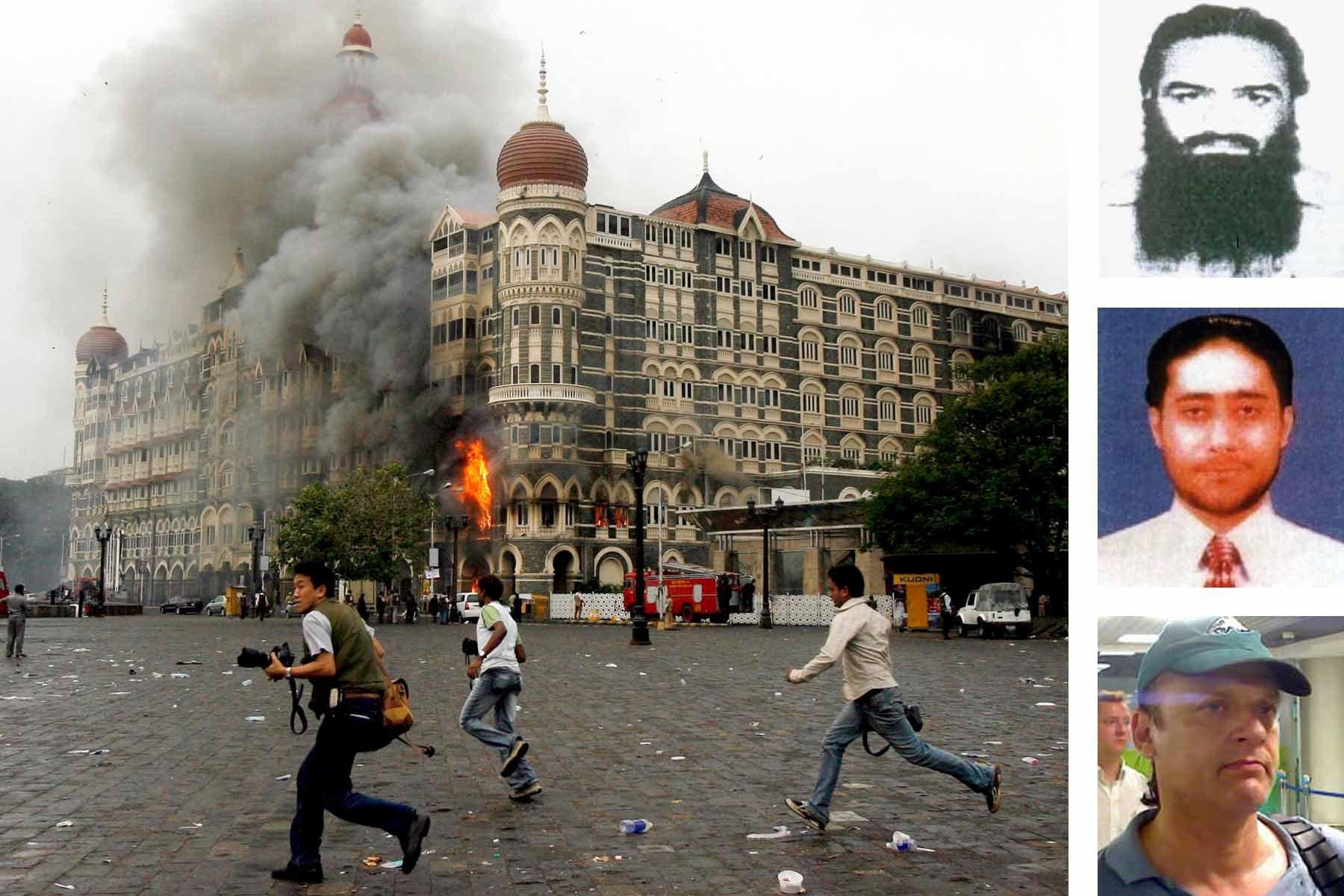
The three men who orchestrated the terrorist attacks in Mumbai. Bottom right is American citizen David Headley.
■ Mumbai attacks: Headley and the United States
David Coleman Headley (born 1960) is an American terrorist. He is currently serving a 35-year sentence in the United States after pleading guilty to 12 international terrorism charges. While working as an informant for the US Drug Enforcement Administration (DEA), Headley allegedly traveled to Pakistan from time to time for Lashkar-e-Taiba (LeT) training. He claimed to be a US Drug Enforcement Administration informant tasked with infiltrating Pakistan's underground gangs while in US custody. His travels to Pakistan brought him to the attention of "Pakistan's Inter-Services Intelligence" (ISI), which attributed him to Lashkar-e-Taiba.
Under the direction of LeT chiefs, Headley carried out five reconnaissance missions in Mumbai to identify targets for the attacks that killed 168 people. The following year, he undertook a similar mission in Copenhagen to help fight the Danish newspaper Jyllands-Posten, which published cartoons of Prophet Muhammad. He was arrested while traveling to Pakistan in October 2009 at O'Hare International Airport in Chicago.
U.S. authorities have allowed Indian investigators to examine Headley directly, but some in India have questioned why US authorities did not share their suspicions about him before the Mumbai attacks. At the trial of co-conspirator Tahawwur Hussain Rana, Headley gave details of the ISI's involvement in carrying out the attacks. Since his arrest and guilty plea, Headley has cooperated with U.S. and Indian authorities and provided information on his associates. Headley, who participated in the Mumbai attacks, was sentenced to 35 years in prison on January 24, 2013 by a United States court. Headley was arraigned by a Mumbai special court in early February 2016 via video from his cell in the United States.
Headley testified in a U.S. court that he was trained in intelligence-gathering techniques by the ISI. Of the US$29,500 received from Pakistani sponsors, US$28,500 was said to have come from an ISI officer.
The U.S. government tried to convict Headley on US soil but refused to extradite him to India. Some officials in New Delhi suspect that the U.S. is trying to protect its fragile relationship with the ISI, fearing that if Headley reveals more details of the ISI's involvement in the 26/11 attacks, it will damage their relationship with them. The U.S. intelligence community was aware of Headley's work for the LeT in Mumbai, but it was also believed to have "overlooked" it in the hope that Headley would be able to help find Osama bin Laden. Interestingly, during the years that the U.S. kept Headley as an agent, the LeT shared the same view that Headley was sent by the U.S. as a spy to infiltrate al-Qaeda, but was used to spy on targets in India. Eventually, the U.S. allowed Indian investigators to interrogate Headley.
In 2007, Headley met a Moroccan medical student named Faiza Outalha in Lahore, whom he would eventually marry as his third wife. Unlike his second wife, Outalha knew that Headley was already married and accepted the possibility of marriage. But their relationship was strained by Outalha's progressive views and Headley's uncompromising religious conservatism. One point of contention was Headley's request that Outalha wear traditional Muslim clothing for women. In December 2007, Headley was charged with assault against Outalha after she had an argument with Headley's maid outside their home in Lahore. After spending eight days in jail, Headley was reportedly released because of the intervention of ISI officer Major Iqbal (who is believed to have coordinated the LET's activities).
During 2007, the LET's plots for the Mumbai attacks were began to materialize and Headley, a Westerner, was identified as the best man to carry out reconnaissance missions.
Using US$25,000 from Iqbal, Headley opened a Mumbai branch office for Tahawwur Rana's immigration business. Between 2007 and 2008, Headley visited Mumbai five times to scout local landmarks where LET terrorists would launch a multi-pronged attack. Headley stayed at the Taj Palace hotel, which was identified as a prime target by Iqbal and Mir, and used his ISI training to record hours of video inside the building.
For their honeymoon in 2007, Headley took Outalha to Mumbai and stayed at both the Taj Palace Hotel and the Oberoi Trident Hotel. The trip ended in a dispute between the couple and Outalha was sent back to Lahore. Iqbal and Mir then pressure Headley to divorce Outalha because they believe Outalha is endangering Headley's cover. Outalha went to the U.S. Embassy in Islamabad and informed about Headley, and interviews with State Department and ICE officials detailed Headley's Mumbai activities. But Outalha later admitted that some of her accusations against Headley were far-fetched, so the Americans no longer seem to be taking her allegations seriously. The U.S. State Department sent her warnings to the DEA, FBI and CIA, but it is still disputed whether these agencies acted on the facts or not. After leaving Pakistan, Outalha divorced Headley.
■ Appointing an Indian-origin as the CIA's Chief Technology Officer
The CIA appointed an Indian-origin as their first Chief Technology Officer on May 1, 2022. Nand Mulchandani, who studied advanced subjects at Cornell, Stanford and Harvard after school from Delhi, became the CIA's first chief technology officer.
The CIA has appointed Indian-born Nand Mulchandani, who came to the U.S. for his college and higher education, as its first Chief Technology Officer (CTO), CIA Director William J. Burns announced on Twitter.
Mulchandani completed his schooling in Delhi. He studied at Bluebells School International from 1979 to 1987 and attended Cornell University for computer science and mathematics. He then went on to obtain a Master of Science in Management from Stanford and a Master of Public Administration from Harvard. Before joining the CIA, Mulchandani was most recently served as CTO and Acting Director of the Joint Artificial Intelligence Center at the U.S. Department of Defense.