
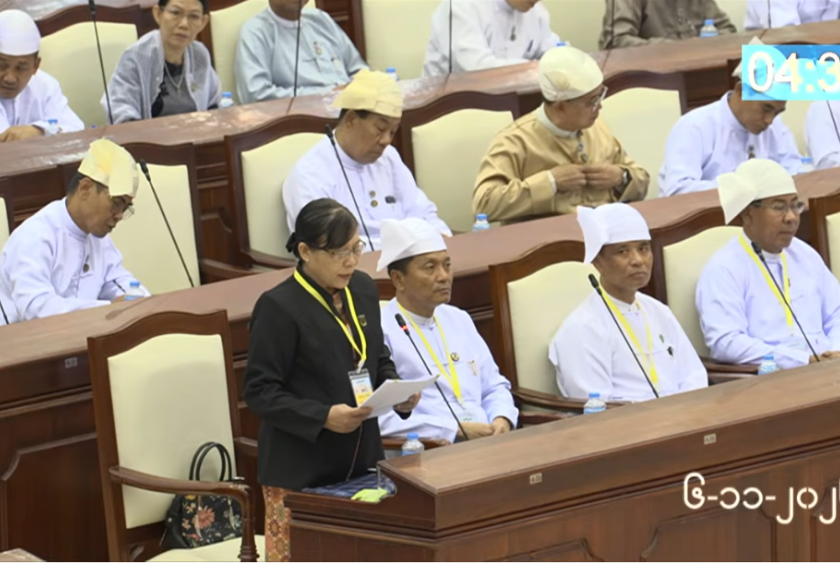
Union Supreme Court Judge Daw Thin Thin Cho said that action was being taken against judges for judicial errors, as well as failures to comply with ethical standards, management requirements and procedures, in accordance with relevant laws, rules and regulations.
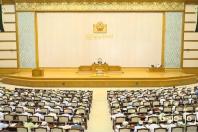
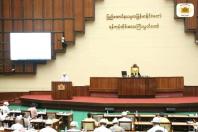
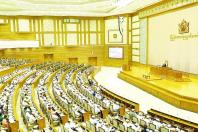
She made the remarks while responding to a question raised by U Kyaw Nyein Aung of the Tachileik Constituency at the Pyithu Hluttaw (People’s Assembly) session held on November 6. The question concerned whether the directive dated December 18, 1990, issued by the former Supreme Court, was still being implemented and, if not, why.
Judge Daw Thin Thin Cho explained that, under the Constitution and the Union Judiciary Law, the Union Supreme Court is the highest court in the country and supervises all courts nationwide, without prejudice to the jurisdiction of military courts and the Constitutional Tribunal of the Union.
Regarding judicial administration, she said that state and region high courts supervise courts within their respective jurisdictions in accordance with the guidance of the Union Supreme Court. Similarly, district courts supervise township courts under their respective jurisdictions in accordance with the guidance of the Union Supreme Court and the relevant state and region high courts.
She further explained that, in supervising judicial operations, the Union Supreme Court ensures compliance with directives previously issued by the former Supreme Court that remain relevant to current circumstances, while also issuing additional directives as necessary.
“The Union Supreme Court is taking action, in accordance with relevant laws, rules and procedures, not only against judicial errors committed by judges but also against failures and shortcomings in complying with ethical standards, management requirements and procedures,” Judge Daw Thin Thin Cho said.
She also disclosed that, in 2025, disciplinary action was taken against a total of 164 personnel, comprising 30 judicial officers and judges and 134 office staff, for disciplinary violations, failure to comply with procedures, management shortcomings and judicial errors. The disciplinary measures included warnings, suspension of annual salary increments, suspension of promotions, demotion, dismissal from positions and removal from public service.
Judge Daw Thin Thin Cho also reiterated that the Union Supreme Court continues to comply with the former Supreme Court's directive as well as other directives currently in force.