
The Karen National Union (KNU), one of the most powerful ethnic armed organizations in Myanmar, has been staging a long-standing revolt against successive governments for its autonomy and equality.
The KNU has been taking up arms for over 70 years since the country’s independence in 1948.
Therefore, the KNU is known to be the world’s longest-standing ethnic armed organization waging civil war.
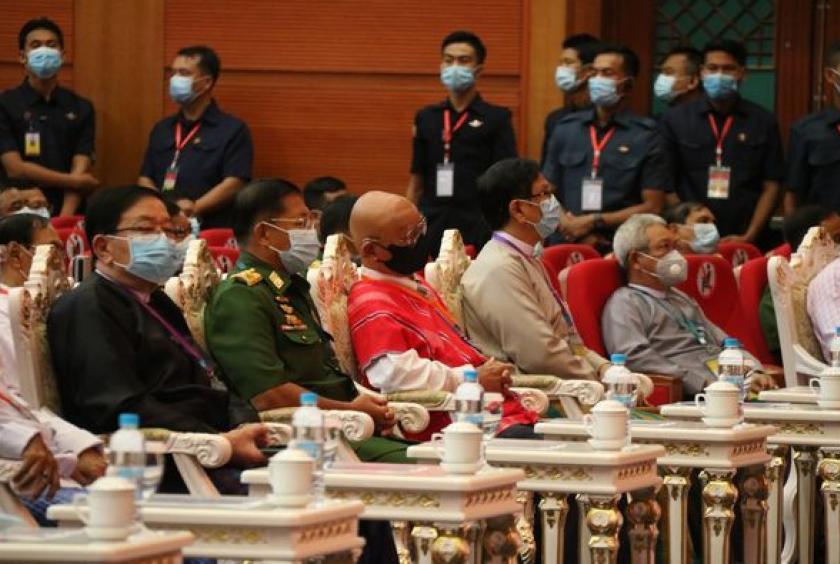
When the Thein Sein-led government took office after the 2010 election, the KNU took a top role in political dialogue to achieve internal peace. After the peace talks, the KNU and seven other ethnic armed organizations (EAOs) became the signatories to the Nationwide Ceasefire Agreement (NCA) on October 15, 2015.
Despite the NCA signing, some EAOs including the KNU have continued to experience clashes with the military, which political analysts blamed for the weaknesses of the peace accord.
Hpa-an, Papon, Kyainseik, Kawkareik, Kyaikdon, Thandaung, Hlinebwe, Taungoo and Nyaunglaybin State are the KNU-controlled areas.
Under it, the Karen National Liberation Army (KNLA) is formed with seven brigades and two special regiments.
KNU Brigade (1) is in Thaton District, Brigade (2) in Taungoo District, Brigade (3) in Nyaunglaybin District, Brigade (4) in Dawei, Brigade (5) in Papon, Brigade (6) in Dupalaya District, and Brigade (7) in Hpa-an District.
The two special regiments are named Central Special Regiments (201) and (202).
The KNU has its liaison offices in Kyaukkyi, Bago Region, Dawei, Taninthayi Region, Hpa-an, Kayin State, Phayathonezu, Myawady and Thaton, Mon State.
According to the research organizations monitoring the EAOs in early 2020, the KNU is estimated to have around 5,000 active-duty troops.
Since military takeover on February 1, 2021, however, the KNU is likely to have built up as more people come to seek political refuge in its some brigades.
After the military took over the state power on February 1, more clashes have occurred between the army and the KNU. Particularly, fighting has intensified between the army troops and the KNU Brigade (5) based in Kayin State’s Papon District.
The political crisis has cut off the relations between military and KNU leaders, ending all formal or informal peace talks.
The KNU brigades have responded to the ruling government with different stances.
Unlike other district leaders, Pado Saw Shwe Moung, leader of the KNU Brigade (6) in Dupalaya District, tends to show his support for the NCA.
Although he has said he has the same standing as the central KNU, he also expressed his different views to the local media.
He sent a letter to the NUG (the shadow National Unity Government) and the PDF (People’s Defence Force) on October 4 warning that they are blatantly carrying out their activities in the KNU-controlled areas and this has contradicted the KNU’s policy and stances.
As acts of terrorism cause losses to innocent people, any organization is urged not to commit acts that contradict the KNU’s policy and stances in its areas, he said his letter.
Likewise, a letter emerged on October 4 giving a reminder of the sixth anniversary of the NCA. Signed by Pado Saw Shwe Moung, the letter was meant for his commanding officers.
In the letter, he points out the NCA remains intact and it has not become null and void by any organization.
The sixth anniversary of the NCA signing between the government, military and EAOs falls on October 15.
In the letter, he also says the EAOs signed together in the NCA promising to build a federal union that guarantees equality and self-administration.
He points out that the NCA was also signed by witnesses from the international community.
He then calls for loyalty to the peace accord and the special need to continue the path in accord with the NCA provisions.
On September 7, Pado Saw Shwe Moung issued a letter requesting the cancellation of the state of emergency declared by the NUG and urging it not to launch military operations in Kayin State as the base.
As the state of emergency declaration is like a declaration of war, he said he was greatly shocked and concerned. The war-torn Myanmar should not be experienced by another war, he commented.
He then called for solving political problems through political means.
Shwe Moung said what he said was in conformity with the central KNU’s policy. But there have been few comments coming from the central level.
Clashes have broken out between the military columns and KNU brigades in KNU-controlled areas since February 1, 2021. Before then fighting was scarce.
Fighting took place between the army and all KNU brigades including Brigade (6).
“The Karen people will decide their own fate” is the KNU’s ultimate aim. But we will have to be watching what will happen next in the country’s political situation.