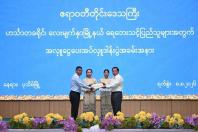

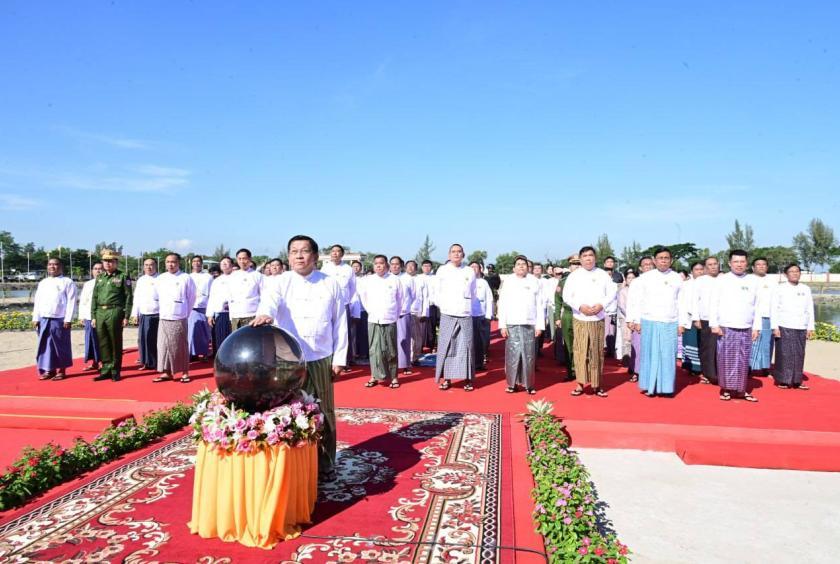
The University of Agriculture and Livestock Breeding (Maubin), established under the Ministry of Agriculture, Livestock and Irrigation, was officially inaugurated yesterday morning.
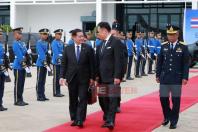
Acting President of the Republic of the Union of Myanmar and Chairman of the State Security and Peace Commission Senior General Min Aung Hlaing attended the ceremony, along with Commission Secretary and Joint Executive Chief General Ye Win Oo; Commission member and Union Minister for Border Affairs Lt-Gen Yar Pyae; Union Minister for Agriculture, Livestock and Irrigation U Min Naung; Union Minister for Science and Technology Dr Myo Thein Kyaw; Ayeyawady Region Chief Minister U Tin Maung Win; senior officials, and faculty members.
Speaking at the event, the Senior General emphasized that opening the University of Agriculture and Livestock Breeding (Maubin) for the 2025–2026 academic year will play a significant role in developing the human resources required for the nation’s agriculture and livestock sectors, thereby supporting efforts to strengthen the national economy. He added that the university aims not only to provide academic education but also to become a research-oriented institution capable of producing internationally qualified agricultural and livestock science professionals.
He noted that the agricultural sector contributes 23.7 percent of the country’s GDP, while approximately 46 percent of the population relies on agriculture, livestock, and related activities for their livelihood. Strengthening these sectors, he said, is essential for increasing rural incomes and achieving nationwide economic growth.
Reflecting on the past, he stated that Yezin University of Agriculture was once the country’s only agricultural university, while the University of Veterinary Science was the sole institution of its kind. Currently, Yezin University produces around 300 agricultural graduates annually, and the University of Veterinary Science produces about 200.
He highlighted that during the current government’s tenure, 19 industrial, agricultural, and livestock high schools have been established, and nine of the 15 agricultural institutes have been upgraded. Additionally, the Fisheries Institute (Twantay) and one Veterinary Institute have been inaugurated, contributing to the development of 8,352 skilled human resources—significantly more than in the past.
The newly opened University of Agriculture and Livestock Breeding (Maubin) is expected to produce 300 agricultural and livestock professionals annually. Plans are also underway to establish a similar university in upper Myanmar and to open agriculture and livestock breeding colleges in every region and state.
The university comprises 13 major departments related to agricultural sciences, 12 related to livestock sciences, and three in arts and science, all staffed with qualified faculty members.
The Senior General added that the university will offer degrees in livestock science, enabling graduates and rural residents to diversify their livelihood opportunities. By engaging in livestock activities during the agricultural off-season, rural households can increase their income and help reduce poverty.
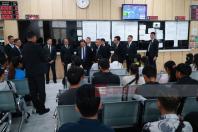
Following the ceremony, the Senior General visited the University of Agriculture and Livestock Breeding (Maubin), the Border Region National Race Youth Development Training School (Maubin), GTHS (Maubin), and Polytechnic University (Maubin), where he provided necessary guidance to officials.
The University of Agriculture and Livestock Breeding (Maubin) aims to develop human resources for the country’s agricultural, livestock, and rural development sectors; to produce qualified graduates in agricultural and livestock sciences; to equip students with modern technologies and applied skills needed in these sectors; and to strengthen practical and applied research activities.