
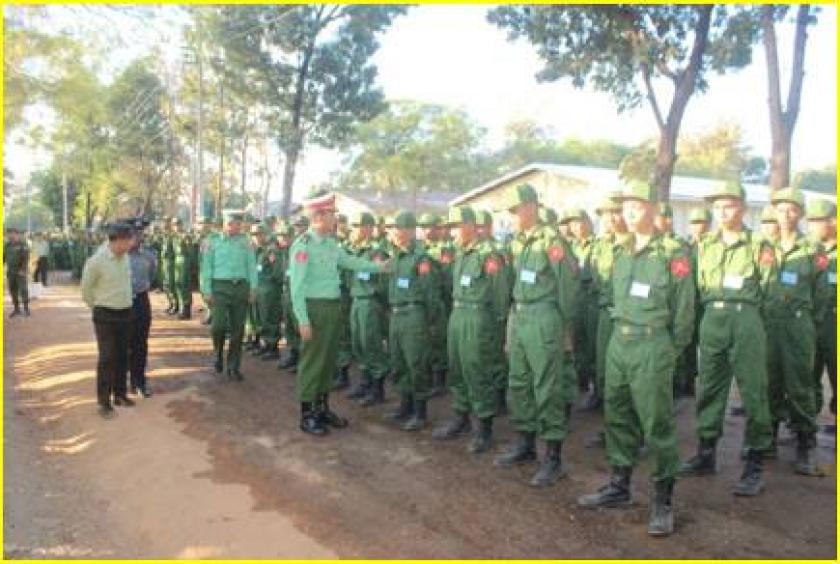
The Ministry of Defence issued the People’s Military Service bylaw on January 23, which includes a provision that a person who has received an order from the township organization for civil service is not allowed to travel abroad without the permission of the central organization.
The regulations are divided into 10 chapters, 59 articles, and 12 appendices: Chapter (1) defines the names and definitions, Chapter (2) determines the age and period for civil service, Chapter (3) establishes the stages of formation and functions of the civil service conscription committee, Chapter (4) lists and registers, Chapter (5) applies to medical examinations and applications for exemption from military service, reduction of the period of military service, or postponement to a specified period, Chapter (6) summons, Chapter (7) establishes and functions of medical examination boards, Chapter (8) provides for the rights of civil service personnel, Chapter (9) organizes military service and Chapter (10) contains general provisions.
The administrator of the ward or village tract shall compile a list of persons who have served in the military service and send it to the Township Committee. The Township Committee shall issue a summons to those who are eligible to serve in the military service to register.
The Township Committee shall then send the list of persons who have served in the military service to the Central Committee through the Region or State Committee. The Central Committee shall determine the number of persons to be summoned for medical examination and send the list back to the Township Committee.
If a person who has passed the medical examination for military service applies for exemption from military service, for a reduction in the period of military service, or for a postponement for a specified period, he or she shall not be allowed to travel abroad without obtaining permission from the Central Committee for such application. The Rules state that a person who has received an order from the Township Committee for military service shall not be allowed to travel abroad without obtaining permission from the Central Committee.
In addition, it is stipulated that if a person who is required to serve in the military service is a member of a political party, he or she shall be deemed to have resigned from the relevant party during the period of serving in the military service.
Furthermore, if any citizen of military age fails to report for registration when summoned, the Township Committee shall visit the family of the absentee and investigate, a family member of the absentee shall report on his or her behalf to register with the summons, along with valid evidence, and if a family member of the absentee cannot provide any valid evidence, the person who fails to report shall be considered to have committed an act of evading military service.
Similarly, if a military serviceman is a civil servant, he or she is entitled to enjoy the salary he or she receives as a civil servant and the salary and allowances he or she will receive in the Tatmadaw, and if a civil servant wishes to continue serving in the Tatmadaw after completing the specified period of service as a civilian serviceman, he or she must apply with the approval of the relevant ministry or organization.
The Ministry of Defence also includes provisions to exempt a civil servant serving as a civilian serviceman from taking a written examination and interview for promotion, and to coordinate with the Union Civil Service Board, the relevant Union Ministry, the Union-level organization, and the relevant Region or State Government to promote him or her to a higher position.
In addition, the employer of an employee serving as a civilian serviceman shall pay the employee’s wages in accordance with the law, regulations, and provisions of the relevant ministry. The regulations also state that the Central Committee shall coordinate with the Ministry of Labour to ensure that when a worker who has completed his or her period of civilian service reports back to his or her original employer, the employer can reassign the worker to his or her original job or, if there is difficulty in reassigning him or her to a similar job.
Similarly, the Civil Service Regulations stipulate that the Central Committee for Civil Service Recruitment shall specify the professional degrees and other qualifications for those who wish to be appointed as emergency enlisted officers.