
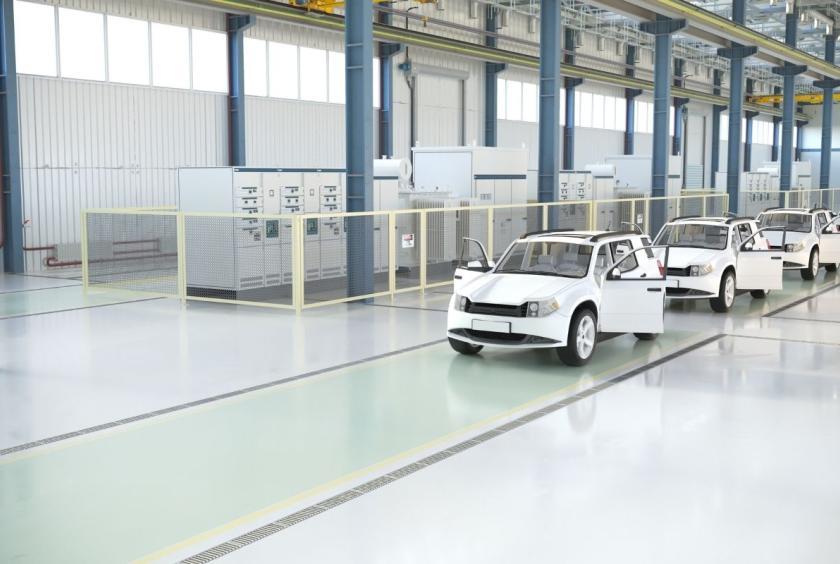
Currently, the auto assembling plants in Myanmar are facing challenges due to US dollar exchange restrictions and import difficulties.
Foreign investments flowed to the country after 2015 to establish car assembling plants.
Among them, Suzuki brand vehicles with nearly 60% of market shares are facing difficulties in its production sector.
“We didn’t announce a factory closure. But we are facing severe shortages of materials in the production sector. We won’t be able to manufacture any more without materials,” said U Myo Min Tun, managing officer of SUZUKI (MYANMAR) MOTOR CO., Ltd, told The Daily Eleven.
Suzuki auto plant in Thilawa suspended manufacturing in November 2020 due to a large stock of over 2,100 vehicles following the government’s suspension of car registration.
It also suspended production on February 1, 2021 when political changes happened in the country, citing internet outages as the reason.
Suzuki brand vehicles were produced in Thilawa Industrial Zone in Thanlyin, Yangon Region, after an auto plant has been established.
The factory produced 48 cars a day. In Myanmar, it sold 11,691 vehicles in 2018 and 10,428 till August in 2019.
The auto assembly and manufacturing plant of SUZUKI Thilawa Motor Co., Ltd is running with a Japanese investment. With an investment of US$35 million, the factory has over 300 workers.
It manufactures four models: Carry Truck, Ciaz, Ertiga, and Swift.
“According to the country’s policy, priority is to medicine and medical equipment. Our product is not included,” he added.
Not only Suzuki but also some other kinds of auto plants in Myanmar are facing uncertainty about their survival.
“It’s not Suzuki auto plant alone. The factory of another car brand with which I have dealership has also suspended manufacturing. It is selling only the products that remain in stock. I don’t think the auto plants can assemble cars without SKD parts,” said a local car dealer, Ko Yan Myo Aung.
SKD car market has possessed a share in Myanmar’s auto market since 2018, but it is about to stop now.
“With its advantages such as new factory products and no much difference in prices when compared with used cars. SKD has a certain market share. Suzuki has the largest share, followed by KIA and Hyundai. Toyota has yet to officially open a factory here. It was planning to open but stopped because of political changes,” a local car market expert commented.
Auto brands from Japan, Korea and China have already possessed their shares in Myanmar’s SKD car market.
However, the dollar exchange restrictions and import difficulties have caused a great blow to them.
The Central Bank of Myanmar imposed restrictions on US dollar exchange in April this year.
Consequently, some SKD car prices have rocketed in the country. The price of a Suzuki Ertiga has jumped to over 60 million kyats from just over 30 million in the past. Meanwhile, the price of a Hyundai Accent has gone up to over 50 million from 30 million.
Moreover, prices of China-made cars have increased by about 5 million kyats depending on brand.
“Car prices are now skyrocketing. With its high demand, Suzuki car prices are the highest,” said a local car dealer.
Local car sales agents are facing such difficulties as availability of new cars from the auto firms, depleting stocks and deposit refunds.
Meanwhile, some agents have to buy back used cars as they struggle to survive.
Ko Kyi Thar Han from Suzuki KL Seven said on his Facebook page: “Please contact my showroom in Ywama for sale of any used Suzuki Ciaz, Swift, Ertiga or Carry Truck. For those who bought the cars with bank loans but not have settled them fully, you can sell theirs. We will pay off the loans and the owners will receive the amount they deserve.”
One car dealership expert said the local car showroom could not cover expenses of staff and land lease as they didn’t have a supply of even a single car a month from the auto factories.
Car assembling businesses with foreign investments rolled in the country after 2015. But after five years have passed, they are facing uncertainty.