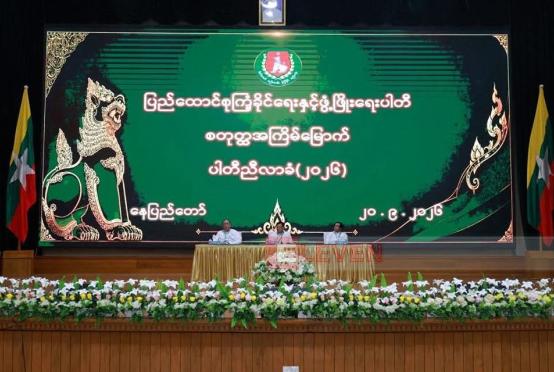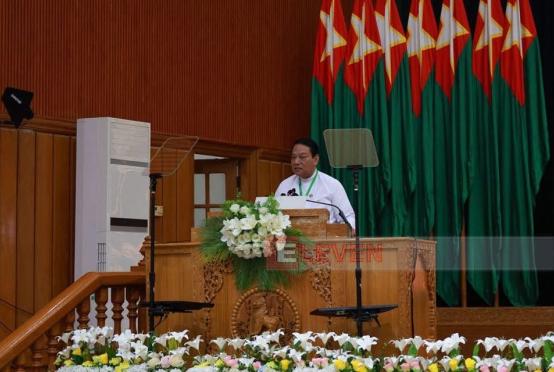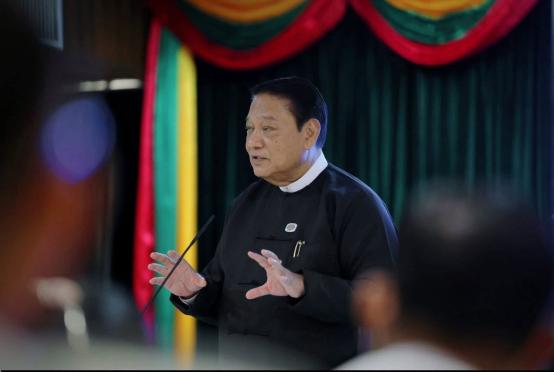

All dialogue partners have the duty and responsibility to adopt a peace process in order to end a long-standing armed conflict of Myanmar, said Tun Tun Oo, Union Attorney General and vice chairman of the National Reconciliation and Peace Center (NRPC).
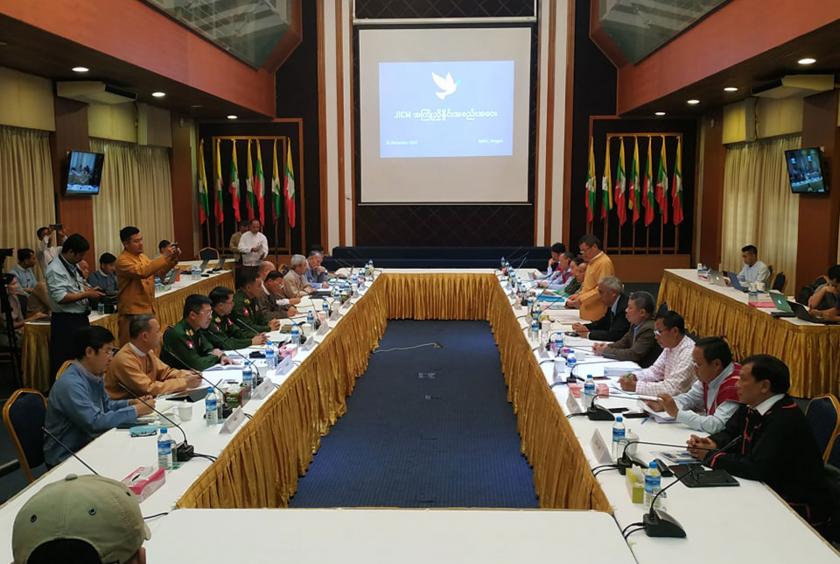
He made the remark during a preliminary meeting of the Joint Implementation Coordination Meeting (JICM) for the Nationwide Ceasefire Agreement held at the NRPC in Yangon on December 22.
"The peace process will prove our goodwill efforts towards the end to over 70 years of armed conflict. To end this long-running conflict, we all have the duty and responsibility to adopt a peace process all can accept until beyond the 2020 general election," said the Union Attorney General.
The common goal of the government and ethnic armed organizations is the establishment of a democratic federal union that can guarantee sustainable democracy. Therefore, all have vowed to implement the provisions of the NCA drawn based on duties and responsibility for lasting peace, he commented.
At the present preliminary meeting, the three future tasks of the government would be outlined for the ethnic armed groups, he said. He then called for discussion of holding further official peace talks through the JICM meetings.
Leader of a JICM group formed with ethnic armed groups, Colonel Sai Ngin, also stressed the importance of holding JICM meetings continuously as JICM is the largest mechanism of the NCA capable of adopting peace policies and breaking the deadlock.
He pointed out that a JICM meeting was to be held every three months, but the failure to hold it until after over a year has passed is not a good sign for the peace process.
The government and the ethnic armed groups, signatories to the NCA, have agreed to hold a JICM meeting after January 4 in 2020.