
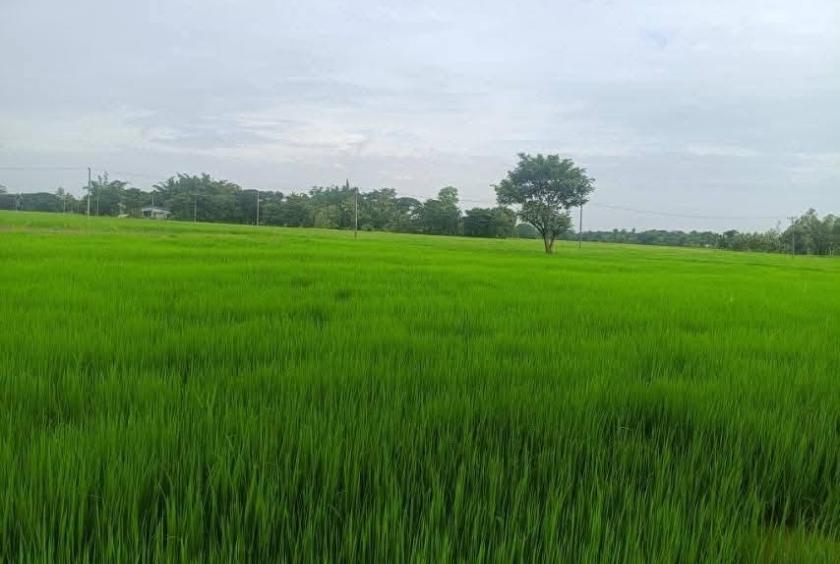
More than 10,000 acres of monsoon paddy fields in Laymyintna Township in Ayeyawady Region have been submerged due to flooding, but this will not significantly affect monsoon rice cultivation across Ayeyarwady Region, according to a statement issued by the regional government on August 3.
The statement said Ayeyawady Region has cultivated approximately 3.7 million acres of monsoon paddy this season, while Laymyethna Township accounts for more than 30,000 acres. Of these, over 10,000 acres were inundated as a result of flooding in the township.
The flooded area represents only 0.31 percent of the region’s total paddy acreage and is therefore not expected to have a major impact on overall rice production. The regional government also noted that Ayeyawady Region currently maintains a rice self-sufficiency level exceeding 473 percent, indicating no cause for concern. In addition, paddy crops can generally withstand submersion for up to 14 days, meaning there may be little or no damage if floodwaters recede within that period.
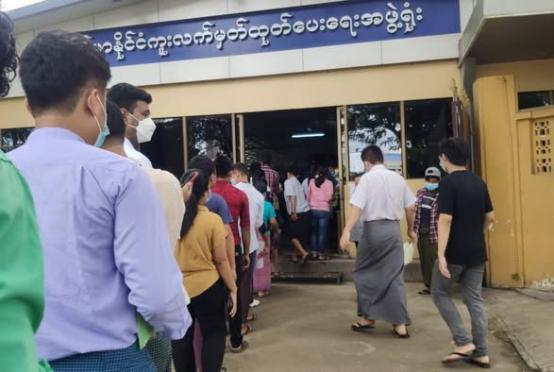
As of August 1, more than 8,300 people from over 1,700 households had been affected by flooding caused by a breach in the Ngawun embankment in Laymyintna Township.
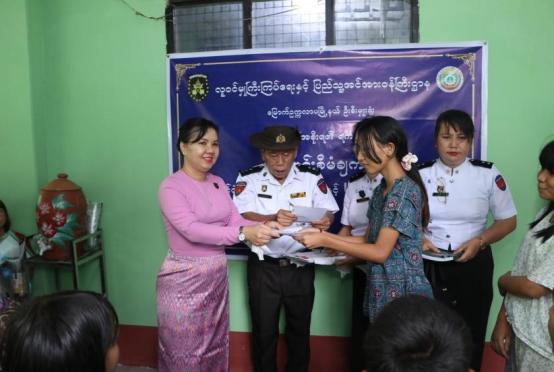
The flooding impacted 1,734 houses in five wards and nine villages in Laymyintna Town, affecting 1,764 households with a total population of 8,382 people. The Ministry of Social Welfare, Relief and Resettlement provided MMK 41.91 million for rice assistance and more than MMK 41.651 million worth of essential food supplies, including instant noodles, canned fish, eggs, and drinking water, bringing the total relief value to over MMK 83.561 million.
On August 1, Union Minister for Social Welfare, Relief and Resettlement Dr. Soe Win, accompanied by Ayeyawady Region Chief Minister U Aye Kyaw, visited the temporary flood relief shelter at the village monastery in Saye Kwin Village to deliver assistance to affected residents.
Officials also briefed the Union Minister on plans to repair the damaged embankment, where a section approximately 30 feet long had subsided by about five feet and suffered a breach measuring around 170 feet wide. The minister coordinated necessary support and arrangements for the reconstruction work.
The Ayeyawady Region Government has issued warnings that the embankment breach could pose flood risks to Laymyethna Town and surrounding areas, urging residents to remain vigilant and be prepared for emergency evacuation.
According to the government, at around 10:45 p.m. on July 30, strong river currents caused a roughly 20-foot section of the Ngawun embankment to collapse. River water subsequently began flowing into the protected area, reaching depths of approximately 2.5 feet. Authorities said the incoming water could spread eastward and northeastward into Myitkyo Inn, Chaungzauk, Saye Kone Creek, and the Daka River.
Residents living in low-lying farmland areas, flood-prone wards of Laymyintna Town, and areas near agricultural land were urged to immediately evacuate to higher ground, factories, schools, religious halls, or designated relief camps. Authorities also advised residents to move valuables, important documents, medicines, food supplies, elderly family members, and children to safe locations as a priority.
The government further warned residents to take precautions against electrical hazards by switching off main power supplies in their homes. Those requiring assistance were instructed to contact local administrative bodies, rescue teams, or fire service personnel without delay. Residents were also urged to remain calm, follow official emergency instructions closely, and relocate to safe areas as quickly as possible.